Chapter 38: Lisa & Laura, When I Lost My Ass & My Job 2,836
You don’t always get what you want, but if you try sometimes, you might just find, you get what you need. From the Rolling Stones.
You’re probably familiar with those line charts people use to track their lives or finances that look something like an EKG reading. If I were using one to rate how my life was going (in the following chapter). My Chart would barely register above flatline, with two exceptions:
Lisa & Laura
Our family was one that showed emotion by hugging and verbally communicating our love. Lisa and Laura were doing well in Dayton, despite me frequently working late (or because of it).
Lisa was on the varsity HS basketball team, and when she graduated in 1987, held the school record for the most rebounds. Laura played basketball as well but was more interested in dating and hanging out with friends.
Both got braces at my expense, of course. Lisa had bad acne, and I found a good dermatologist who successfully treated her. Each had part-time jobs when they didn’t interfere with sports or school. I bought both cars, mainly with the proceeds from selling my seven-year-old 18k Rolex® Datejust.
We went on vacation to see their Grandparents every June and to other places like the 1984 World’s Fair in New Orleans. Great trip. We went to movies, plays, and amusement parks like King’s Island Cincinnati, Magic Mountain Columbus, and Cedar Point Sandusky (All great when we were there in the 80s).
We visited cities like Cincinnati, Indianapolis, Louisville, Lexington, Kentucky, and Columbus, Ohio, all within a hundred or so miles. Parks in the Dayton area, like Carillon, our favorite, included early technology displays, historic buildings, and lots of Wright Brothers Memorabilia. We also visited campuses of universities like Purdue, Ohio, Indiana, Xavier, and others to pique their interest in going to college.
Lisa and Laura graduated high school with good enough GPAs for university admission. They qualified for a VA program for their undergraduate studies and paid most of their fees because of my war record and disability. I sent them money for misc. expenses that the VA did not cover. Lisa chose the Ohio State University, where she graduated with a BA in Social Sciences.
Laura studied at Bowling Green State University, Ohio, and graduated with a BA in Criminal Justice. Both received their bachelor’s in four years. Lisa went on to earn a Master’s degree at OSU, also in the Social sciences.
Because of some lucky planning and a few connections, I had tickets well in advance of the second week in Sept. 1985. The Cincinnati Reds were playing a stretch of home games during that period. It was believed that Pete Rose might break Ty Cobb’s record at Riverfront Stadium, and the twins and I were there to see him play on Sept. 10.
Luckily, I had tickets for the following evening as well. However, I had a prior out-of-state temporary duty engagement for the next several days. I decided to trust the girls (shy of 17) to go to Riverfront the following evening. The twins were two of the 50,000 screaming fans on Sept. 11, 1985, to witness Pete Rose crack a single to left-center (number 4,192) in person, breaking the record Ty Cobb held for almost 60 years.
We were fortunate to attend a couple of Cincinnati Bengals football games less than an hour south, also at Riverfront Stadium. They played in the Super Bowl the last year we were in Ohio. We were regulars at the University of Dayton Flyers basketball games, played in a first-class arena. They were an NCAA Division I basketball team that went to the Sweet 16 during the period we saw them in action
In addition to all the fun events the twins and I attended in Ohio, one was practically in our backyard.
Museum of the United States Air Force, Wright-Patterson AFB, Ohio
The largest display of military aircraft in the world. Admission is Free
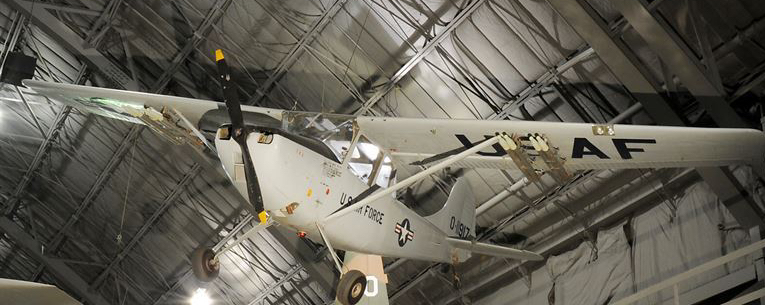
The least intimidating aircraft ever, this O-1G Bird Dog? The VC and others feared this little bird as Forward Air Controllers (FACs) searched for the bad guys and, when spotted, discharged smoke canisters, marking them for fighter jets and other aircraft. Also, it was dangerous for the pilot (219 killed in action in VN) in this slow and unarmed Cessna-TM of the early 1950s. (USAF)Killer Plane. B-29 Bockscar, which dropped the second nuclear bomb on Japan, August 9, 1945, is displayed at the Museum of the USAF. (U.S. Air Force photo by Ken LaRock)The futuristic-looking XB-70 at the Museum of the USAF at Wright-Patt was canceled in 1969 and never went into active service. Unbelievably, in my Village of Shelter Cove (pop. 803) lives 101-year-old Warren Helsley (regrettably, died in 2023), my friend, a WWII veteran and aeronautical engineer who worked on designing this very plane. (US Air Force)
~~
After earning that Spill Promotion (Chapter 36) and my surgery (below), I rewarded myself in a Big Way. This leased ’88 BMW®325is was my track car and, eventually, my race car. (Swan Collection)
Destined for a public relations career? Shown at a community leaders gathering in a high-rent district of Dayton, circa 1988. (Swan archives)
~~
Inspecting Pantera engine at Mid-Ohio Sports Car Course in my flight suit, 1988. I had vigorous workouts three days a week; no fat on that body. (Swan collection)
Does anyone remember the Rantex™ wipes shortage in the mid-80s that I got caught up in? Probably not, unless you needed those as I did. They were the only thing that brought any relief to my anus and rectum. Inflamed from nineteen years of frequent and mushy stools. In my world, my anus felt like the nerve center of my existence.
For some reason, Air Force Rx couldn’t get enough of the wipes for me; then, they couldn’t get them at all. I was unsuccessful in finding any (no Google™). I began going to labs with restrooms that sometimes provided Rantex wipes for patients to clean their private parts before peeing in a cup. (Insert joke here.) When I found some, I would procure a handful. (I am not making this up.)
When DovesCry–Prince, What’s Love Got To Do With It–Tina Turner, Like a Virgin–Madonna played on the Dayton stations.
Back in Mississippi in 1988, Dale had been caring for Momma and Daddy for several months, as best he could, while holding down a full-time job. Finally, he was able to get Momma into a nursing home nearby. Dale continued to care for Daddy and was spending all of his time off work doing so.
At the end of Dale’s work shift, he’d rush to relieve the people (who had been sitting with Daddy for eight hours). He remained throughout the night until his wife came the next morning with food for the day. Then he went to his regular job.
The next day, it was all the same. And it continued for almost a year! My wonderful brother was holding out as long as possible to keep Daddy out of a nursing home, especially one in a different location from Momma. (There were no vacancies at the facility where she was a patient.)
The twins and I went to Mississippi in June 1988 on our usual vacation, but this time I was looking for a nursing home for Daddy. The twins and I wanted to give Dale relief from what had become a burden he couldn’t continue indefinitely.
Here I was on the scene, the educated world-traveler and younger brother in his new BMW®, who had never done a thing to care for either parent. Telling my brother what he should do: take Daddy away from the only home that he had ever known, to a nursing home, close by, or not.
I spent a week visiting every nursing facility within a hundred miles of Dale’s home, and I found one about 40 miles away with an opening. Naturally, I encouraged Dale to place Daddy there before the vacancy was filled. My motivation and reasoning were to provide some relief for my brother.
The girls and I sat at Momma’s bedside in her nursing home for a long and sad farewell, although we shared some light-hearted moments from the almost four years she had so faithfully cared for them.
As for Daddy, we tried to convince him that Dale was running out of options and that if Momma could tolerate a care facility, he could too. We should have treated it more as a farewell, as this was the last time we would see Daddy alive.
I was confident that I had provided some help and had done the right thing; it was still up to Dale to make it all work.
The twins and I left for home, trying to put the stress of seeing Dale and my parents in this mess and the 95-degree heat and humidity in our review mirror. Heading north through Alabama, Tennessee, and Kentucky, we listened to I Want Your Sex–George Michael, Tell It To The Heart–Taylor Dane, and “Roll With It–Steve Winwood; each mile, bringing us closer to our comfortable lives in Ohio.
Several months later, Dale was able to get Daddy into the same nursing home as Momma. He visited them every day to make sure they were adequately cared for.
Losing My Ass & My Job
Daddy died in January 1989 in Amory, Mississippi (six months after being admitted to a nursing home) at age 83, from complications of a stroke. It was just a few miles from where he was born and grew up.
Soon after I returned to Wright-Patt from his funeral, I began having severe issues with Crohn’s Disease.
Within a week, I was lying on a single white sheet that scarcely covered a cold slab of shiny steel. Nurses lifted me onto the warm padding of a surgical table in what felt like a 58-degree Operating Room.
On a stool just inches to the right of my head, the anesthesiologist activated the roller clamp on the IV. Whoa! Propofol surged into my vein — warm, serene, celestial, heavenly — 3.5 seconds of ecstasy.
Advisory: Some paragraphs below contain graphic discussions of human anatomy, disease, and pragmatic surgical procedures. Those paragraphs are in a distinctive font.
The surgeon held a #22 scalpel at an angle similar to a pencil just below my sternum. He pressed the blade to a depth of about two inches into my upper abdominal wall. Then he continued puncturing, slicing, and lacerating straight down through my rectus abdominus, all the way through the obliques and umbilical to just above my pelvis, about nine vertical inches.
Then, with a seven-inch Balfour spreader, the surgeons opened my belly to their satisfaction. Trading for a #15 scalpel, the doctors began the more meticulous and time-consuming operation of extricating my anus and rectum.*
Next, the surgeons permanently closed my anal and rectal cavity with mesh and sutures, then cut about a foot from my sigmoid colon.
The doctors continued by incising two holes, both about two inches in diameter, into the wall of my abdomen (an enterostomy). One was for a mucus fistula, and with the other hole, the surgeon pulled about an inch of my sigmoid colon up through the opening and sutured it into the wall of my celiac. That’s called a stoma. It would serve to discharge waste my erstwhile anus and rectum did. (So much for me modeling underwear for Calvin Klein®.)
After 6 hours inside my abdominal cavity — slowly methodically, cutting-removing, rearranging-revising, and changing my life forever **— the doctors sutured my nine-inch wound. My proctectomy was complete.
A nurse pinched the doctor’s soiled surgical gloves at the top of their palms, gently pulled them away, and deposited them in the same red “medical waste” container where my decaying anus, rectum, and part of my colon had been trashed.
For the tired surgeons, their work was done. For me, it was just the beginning.
I came out of anesthesia sporting a new appendage, an irreversible colostomy! I would suffer from the effects of major-invasive surgery for a few more days before seeing or worrying about my new stoma.
I was wheeled into a narrow hallway just outside the surgical suite, strapped to a gurney, feeling hollowed out and in significant pain.
I spotted a nurse or somebody, and in a voice weakened by six hours of surgery and General anesthesia, “Hey, I was supposed to be on a pain pump,” I pleaded. “You’re on one,” she shouted and kept walking.
With my right hand, I fumbled for the button on the pump and clicked it two or three times*** with my thumb.
Lying there in front of a giant clock (The Chicago Lighthouse), time seemed to have stopped. What seemed like an hour was less than five minutes. “Somebody, please get me away from this clock,” I said to no one there. I tried to calculate how long the worst of the pain would last, five or six hours, I reckoned.
During the worst of it, I was in and out of sleep, yet each time I awoke, I was distressed to see that only a minute or so had passed. I closed my eyes for a moment, but this clock was haunting me, and I kept staring, hoping, waiting, wanting that clock to speed up — just for me.
OK, I’ve never actually had a bowling ball fall dead center onto my lower abdomen from five feet up. But I’m sure of the pain it would cause; the pain I was in right now! And it would not diminish anytime soon.
Eventually, I was rolled into the intensive care unit (ICU). There was no clock in front of me, but, of course, I was still hurting. Then I got the hiccups, and although treated with shots, they agitated me for two days. Each contraction comes like clockwork — pulling at my stitches!
Finally, I fell into a deep, peaceful sleep; I thought: [Screaming] Help me, Chuck’s down, Help me! I’m bleeding out. Help me! Help, Hagemeister’s down! Get me morphine; you’re the only one left. Call Dustoff. Help us; you’re our last hope and the only one left. Help . . .
I jerked awake when a nurse began shaking me from my nightmare of lying on the sandy field at the Ambush site (Chapter 17). The wounded were calling out to me, even those whose dog tags were anchored between the top and bottom of their front teeth. There was nothing I could do. I couldn’t help them. I was here in the ICU.
After a day or so, an ostomy nurse visited me in the ICU and explained how it all worked and what my daily routine would now be. She patiently instructed me and demonstrated how it would function. The nurse placed an adhesive wafer with a pre-measured hole on the skin around my exposed stoma. The bag she attached to it would collect my bowel movements. In my case, the bag (because of Crohn’s) would need frequent changing, and the “appliance” (no kidding, that’s what the wafer is called) requires replacement, care, and cleaning about twice weekly.
Thank goodness for sick leave, stamina, a strong heart, and lungs going into the first surgery.
Every Breath You Take–The Police, Total Eclipse Of The Heart–Bonnie Tyler, Straight From The Heart–Bryan Adams played on WTUE.
I continued in my job as Deputy Chief of Public Affairs after a long recuperation, and I got some good assignments.
A good assignment, eight months after my first surgery. (Swan archives)
In the succeeding two years, I would be in and out of the hospital for three more surgeries. One to close the mucus fistula, one for a hernia around the stoma, and one for revision of the colostomy itself! Two of the subsequent surgeries required slicing open my belly near the original nine-inch incisions. It never got any easier or less painful.
Love Shack–B-52s, Like A Prayer–Madonna, and From A Distance–Bette Midler filled the airwaves in Dayton.
I’d had a stressful job. But it was my job, my dream job, the best of the 32,000 at Wright-Patt, I believed. Now, it was no more. I was medically retired once again in early 1991 because of Crohn’s disease, leaving behind seniority and an annual salary of $119,000 in 2025 dollars.
Or, I could claim, in an alternate scenario, that my retirement was precipitated because my services were less critical, in that the Berlin Wall had recently come down.
*Unsurprisingly, several risks are involved in proctectomy surgery, including impotence, bladder incontinence, or both.
** In addition to the obvious maladies of having a colostomy, there were other anxieties: Like trying to explain to a potential sexual partner, never being able to unwind sitting on the throne reading, awaiting a BM, or taking a long shower without worrying about discharge from the stoma, and occasionally awakened by the smell of my own crap.
***It’s a time-release pump, so pressing the button more than once doesn’t increase the dosage.


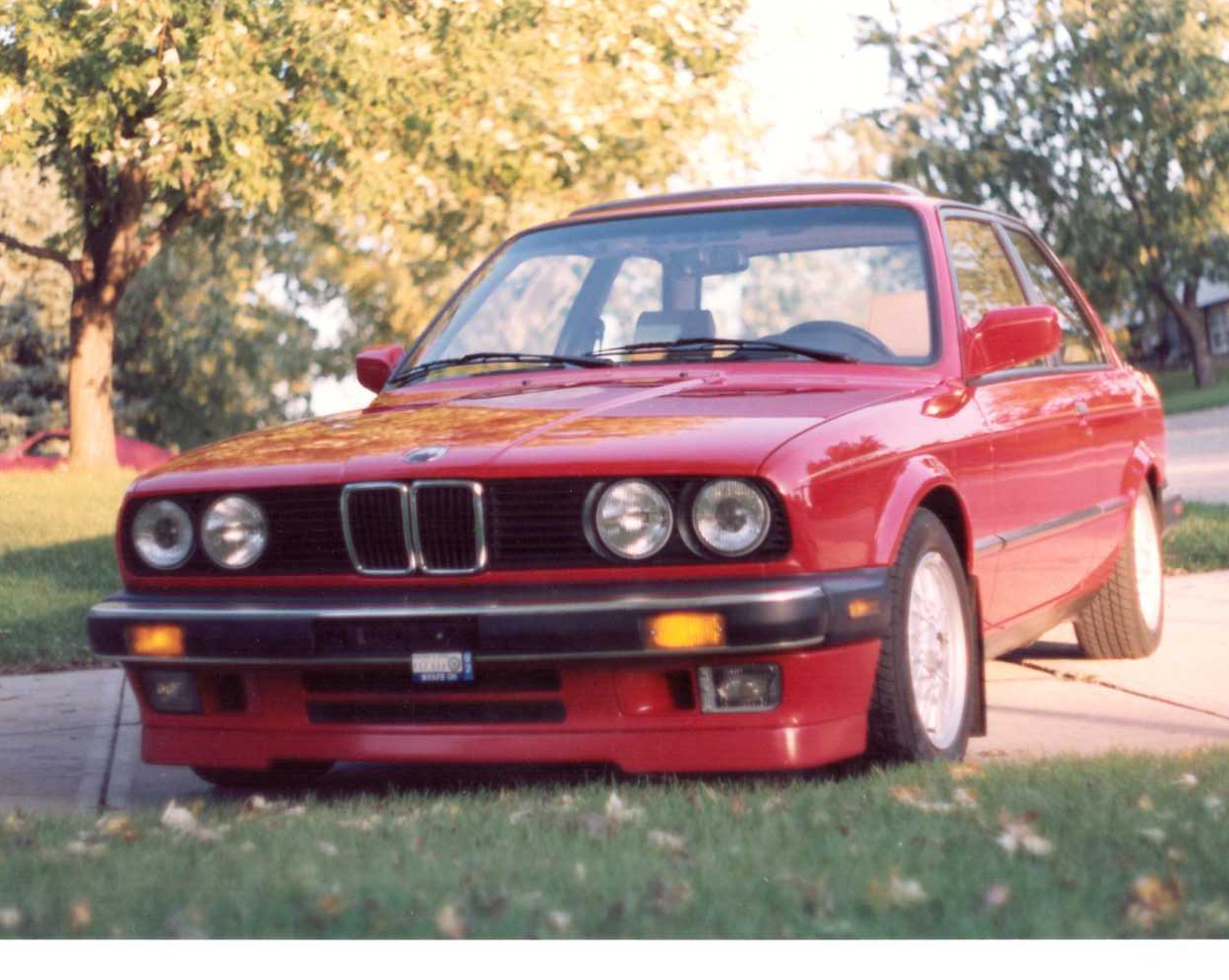 After earning that Spill Promotion (Chapter 36) and my surgery (below), I rewarded myself in a Big Way. This leased ’88 BMW®325is was my track car and, eventually, my race car. (Swan Collection)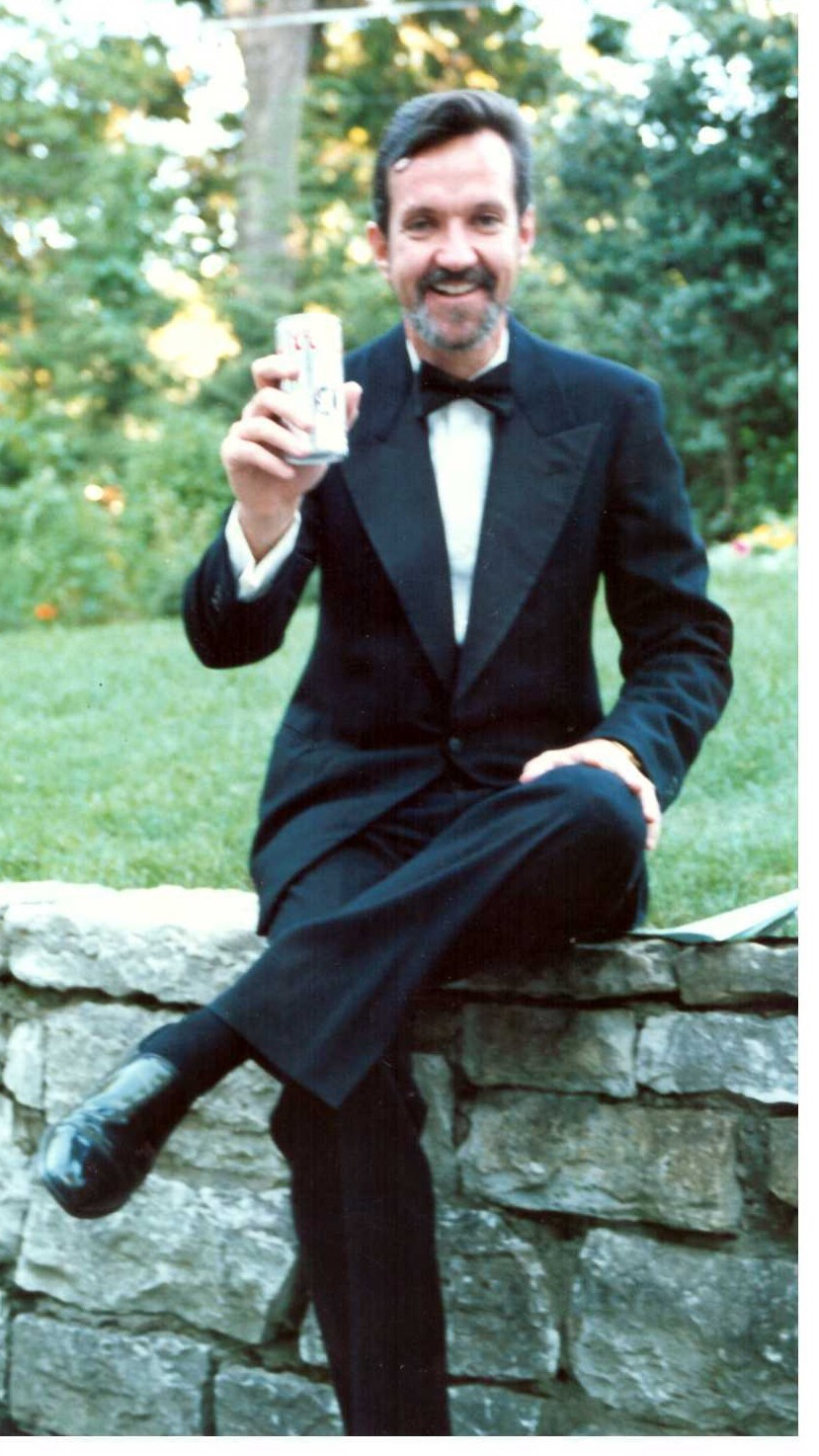


 Swan's Song Series