What’s a young married couple, just starting their lives together, struggling financially, and repeatedly arguing to do? Have a baby, of course.
I was awakened by our alarm clock radio playing Honey by Bobby Goldsboro. happened to be Marty’s favorite song. I quietly eased out of bed and was in the bathroom shaving when Marty pounded on the door.
Her morning sickness had begun. There was no time to comfort or contemplate. I had to make the formation at Ft. MacArthur in half an hour. I left her in our 400 sq. ft. apartment, throwing up. Marty was 19 and away from home for the first time, 2,623 miles apart to be exact.
It was July ’68, and I had less than a year remaining on my enlistment. That was too short for another tour in Vietnam, but, hopefully, enough time left to see Marty through a complicated pregnancy. No civilian doctors were apt to treat her at this stage, and besides, we had no health insurance once my enlistment ended.
Essentially broke and worried about Marty’s pregnancy, I did what a year ago was unthinkable — subjecting myself to another tour in Vietnam — reenlisting in the US Army for three more years! The good news was a reenlistment bonus of about $1,800 (over $16k in 2024 dollars) and continued prenatal care.
My peers on the post thought I was a total idiot, called me a lifer (pejorative term), and ridiculed me even after our top Sergeant told them to knock it off. “Swan, I never saw you as being that stupid,” was one of the milder comments. But none had a wife pregnant with twins!
We made arrangements with the company that financed Marty’s Mustang for an uncontested repossession. Then, with some of the reenlistment money, we bought a slightly used pale blue ’68 Chevy Impala, 4-door.
November 28, 1968, Thanksgiving Day. Twelve hours of hard labor, seven minutes between baby one: Lisa (pseudonym), 6 lb 8 oz., and the breech birth of baby two: Laura (pseudonym), 7 lb 9 oz. Fraternal twin girls — squalling and screaming. Luckily for me, fathers-to-be weren’t allowed in the birthing room. Marty was in no mood for visitors, especially me.
Family leave hadn’t been invented in 1968, so I took all the regular leave I had to assist in round-the-clock duty for the twins. Lisa and Laura overwhelmed Marty and me. With two babies, it was always somebody’s turn.
Imagine young first-time parents with twins waking up at different times during the night, whimpering and wailing. For the first few months, we got little sleep. We did not have the convenience of disposable diapers, and there were no relatives within two thousand miles. Neither of us got a break from the twins, not even a half-hour.
Now I had a lovely stay at home, miserable mom.
Not long after the twins were born, I got a Permanent Change of Station (PCS) notice, thankfully not for Vietnam. We were leaving hip SoCal for the Sacramento Army Depot. We packed all of our worldly belongings in the 327cid Impala, traveling for the first time as a family of four.
We mainly listened to 93 KHJ on the way, hearing songs like Do You Know The Way To San Jose by Dionne Warwick. No, we’re headed for Sacramento, thank you. Then we picked up KYA San Francisco with “Magic Carpet Ride” by Steppenwolf and “Spooky” by the Classics IV. The twins were finally asleep, and I dared not turn up Hey Jude by the Beatles.
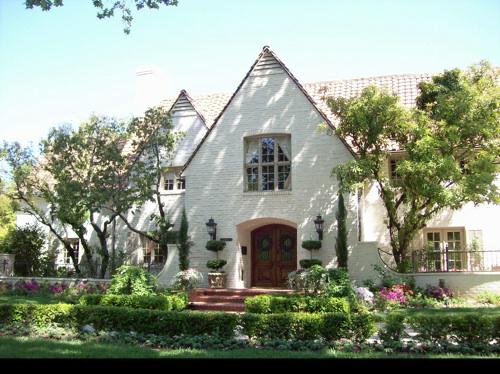
In Sacramento, we would have no trouble getting around after navigating big LA for a year. We rented a small furnished 2nd-floor apartment near the Capitol. I was assigned to the 317th Maintenance Co. at Sacramento Army Depot. It was a phantom unit and a cover for the classified work a small group of us were conducting around Gov. Reagan’s residence. (He lived in the governor’s mansion for just four months.)
I was also an operator-technician at the Military Auxiliary Radio System (MARS) site at the Army depot. Our 24-hour facility took calls from stations overseas, which we transmitted via a commercial telephone line. The person receiving the call, say from Vietnam, would only pay the toll from their phone in the USA to Sacramento.
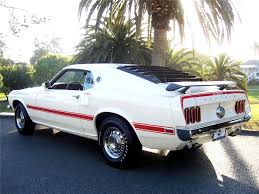
In less than a year, we departed the Depot for another PCS to Ft Lewis, Washington. We headed to the Pacific Northwest in our brand-new ’69 Mustang Mach 1, 351 cid, with rim-blow steering wheel and AM/FM radio.
Why? I still had a few reenlistment dollars and traded the ’68 Impala. I figured the army was a pretty secure job, and we just did it. A smaller car and a larger car payment. It sounded fine to us.
During our drive toward Tacoma, somewhere along the Pacific coast — listening to In the Year of 2525 by Garz & Evans — I saw where the sea and the mountains converge and thought that would be an ideal place to live someday, maybe during retirement.
I might be getting a little ahead of myself. I was 21, married, with two infants and a career to create.
On the four-speaker Mach 1 radio, we listened to Sugar Sugar by the Archies, and wow, two hits by Elvis, finally: In The Ghetto and Suspicious Minds. The latter was his first top ten hit since Crying In The Chapel in 1965.
At Ft. Lewis, I was assigned to the Visitors Welcome Center, part of the Post Headquarters. The Officer in charge of our small unit said he had heard good things from visitors and others about my public relations skills; that I had represented Ft. Lewis and the US Army well.
A couple of months later, I was told to report to Post Headquarters. Major General Willard Pearson called me to attention and pinned on staff sergeant stripes. A below-the-zone promotion to E-6 conducted by a General officer! I had been in the army just over three years. Such a promotion usually took six years or more, and certainly not in a ceremony with the Post Commander.
My monthly basic pay (in early 1970) was $372.98, and soon I began receiving tax-free Proficiency Pay of $50 a month.* A sign over our front door read: SSG SWAN. Inside was our spacious three-bedroom duplex in base housing, no rent, no utilities. As a family of four, our income tax was minimal, and Marty had been doing some babysitting.
D. B. Cooper had recently jumped from a 727, possibly within a few hundred miles of us, but we never attempted to score any of the $200,000 that may have been scattered in the forest. We went instead to Beneficial Finance and left with a check from a high-interest loan we used to purchase household furniture, new pots and pans, and a Philco®-Ford™ Console Color TV.
My monthly salary was still well below the $806 median income for civilians, but “free” health care, tax advantages, and living quarters helped offset some of the shortfall. Finally, our finances were in decent shape, and we would not be getting any more cars that we couldn’t afford.
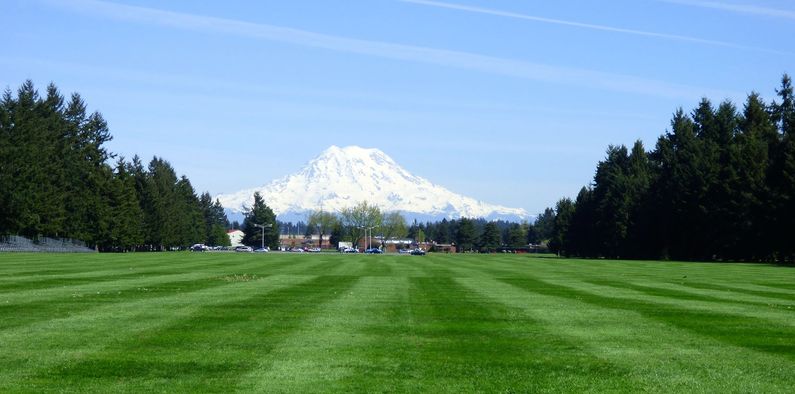
Marty still struggled with the twins. A quick way to strain a friendship, we learned, was to have them watch Lisa and Laura for an hour or two. But I wasn’t on alert status at Ft. Lewis, so I had more time to help with the girls. The Pacific Northwest, with the Puget Sound, snow-capped or covered Mt. Rainier, and rugged forests, made for a magnificent year-round spectacle. Life was pretty good.
It wasn’t to last. We would be leaving the beautiful Pacific Northwest for another PCS and even farther from Marty’s family. A lot farther — 4,309 miles precisely.
*Awarded to enlisted men who scored in the top ten percent on their annual exams and efficiency reports.
 Swan's Song Series