I imagined the cloud I’d been floating on was now soaring to the heavens. Life was good. Not even the sweltering heat of Mississippi bothered me, possibly because I was working in an air-conditioned studio. And soon, I ‘ll be driving around in a convertible.
I had dreamed, wanted, worked, and finally became a DJ motivated by Elvis. And my first time on-air in Mid-63, there was just one Elvis song: (You’re The) Devil In Disguise in Billboard’s top 100. Of course, there were his previous hits to play. But I was anxious to say, “Here’s the latest from The King of Rock ‘n’ Roll.”
When the milestone of becoming a DJ in Elvis’ hometown in 1964, no Elvis was on the Billboard Top 100; Not one. That was not a complete surprise as the Beatles were storming America in April 1964. No less than eight of the Fab Four’s songs made the Top 100 that year, and five of their songs were numbers 1-5 simultaneously! Who didn’t want to hear the risqué I Want To Hold Your Ha-a-a-andfive times in a row? That same month and year, another phenomenon that appealed to America’s youth was released.*
Although many fans thought they heard a new Elvis song in 1964. Instead, it was an Elvis sound-alike, with a slight similarity in looks (but not an Elvis impersonator). It was the handsome Terry Stafford with “Suspicion,” a popular song that peaked at number 22 on Billboard’s Top 100 in 1964.
Then, in 1965, Crying In The Chapel by Elvis made it all the way to number nine on theTop 100. On WTUP’s Sonic 60s survey, it went to Number One. Unchained Melody–The Righteous Bros, You’ve Got Your Troubles–The Fortunes, Little Things–Bobby Goldsboro, and (I Can’t Get No) Satisfaction by the Rolling Stones were big hits in 1965.
Note more Elvis on our survey. (Swan archives)
At WTUP, I did remotes (broadcasting live) at grand openings for car dealerships, furniture stores, record shops, and the like. That exposure led to jobs as Master of Ceremonies (MC) at music venues.
When Jerry Lee Lewis came to Tombigbee State Park near Tupelo for a performance, I introduced him and acted as MC for him and the other bands. Jerry Lee was the headliner with hits like Whole Lotta Shakin’,’Great Balls Of Fire, andRockin’ Pneumonia. I was excited and playing it like a seasoned pro, I thought. When introducing his band members dramatically and asking them to say “Hello Tupelo,” I inadvertently bopped Jerry Lee’s drummer in the mouth with my mic.
Jerry Lee Lewis performs in Elvis’ hometown in 1965. (Photo courtesy Wiki Commons)
I was showing off on stage like I was part of the band when an audience member handed me a request. “Not doing no damn gospel song,” Jerry Lee told me. As of this writing, fortunately, he’s still alive and living in Mississippi.** I hope this doesn’t piss the “Killer” off for me telling this story of his implied disrespect to his audience’s good, God-fearing members.
Although his moniker “Killer” isn’t to be taken literally, he is known to have a mean streak. Hopefully, I am so insignificant that he wouldn’t waste his energy on me. I was given a $20 bill for that gig, about two days at WTUP.
Since I wasn’t working Sunday mornings, I visited Hatley Missionary Baptist Church occasionally and was happy to hear, see, and talk with Bro. McLeod. I thought I probably would have taken my first radio gig without his blessing. But, of course, I didn’t tell him that I’d downed almost an entire bottle of lukewarm Miller High Life® — Baptists don’t have confessionals — from a bootlegger up in Lee County. (Mississippi was a dry state.)
I didn’t like the taste and didn’t have another beer for a year or so, and never in excess. I couldn’t understand the appeal it had for so many. A lot, I assumed, had to do with its illegality in the state. How wrong was that?
I was driving back home from Tupelo one Friday evening in a steady rain when I saw car lights in my lane at an upcoming curve. At about 50 miles per hour, I swerved left to avoid the headlights and rolled the Beetle a couple of times before landing right-side up in a cornfield.
The lights I’d seen came from a telephone utility truck parked partially in my lane and on the shoulder of the road with its brights on; the man drove me to the hospital in his vehicle.
I was met at the hospital by WTUP’s manager (where I was treated and released). He paid the bill and drove me to his house in his white 1965 GTO convertible. I will remember for a long time that ride in his four-on-the-floor 389cid Tri-power Pontiac® and the taste of the coffee he gave me spiked with hard liquor. It was worse than the accident. Like beer, I thought the appeal of spirituous beverages must be small. Wrong again.
The next day, I was sore, but I needed to see the car that hadn’t crushed my head during the flips. The roof of the Black Beetle remained intact from the blacktop scrapes and its tumbles in the field — the engine, front end, not so much. Someone said the speedometer was stuck at 90 mph, its highest reading. (That’s a joke; the Bug would barely do 70 on a slight downhill.) Dale, who had given it to me on a permanent loan, declared it totaled. Unfortunately, there was no insurance coverage.
Now that I had no transportation, the station allowed me to use its almost brand-new news cruiser, a red ’64 Falcon with a white convertible top, a 260 cid V-8, and a stick shift. I was making just above minimum wage, but the fringe benefits, wow. Now, I was motivated to finish high school.
Life was so fantastic the first time I drove up to Hatley High in that cool convertible, radio-blasting House of the Rising Sun; it could have ended right there.
In May of 1965, at age seventeen, I graduated from Hatley High — barely. Then, four months later, I was fired from WTUP.
The same station that allowed me to play Elvis in his hometown, the opportunity to be on-air when the Beatles were taking America, and the gratis use of their convertible was now tossing me to the street. I had made an audition tape of my show, an air-check as it’s known (which was strictly against the rules).
Who had narked on me about making the tape? I believe the same DJ set me up with the girl at their party house not so long ago.
It was my last show in Tupelo, spinning King of the Road on turntable two. I had no plan, nowhere to go. I hadn’t even sent out any of my illegal audition tapes.
I picked up one of the phone lines, expecting a preteen girl wanting to hear Herman’s Hermits, but it was a male caller.
The man identified himself as a Program Director (PD) in Wilmington, North Carolina. North what? They had an immediate opening; did I know anyone at WTUP who might be interested?
Okay, very funny, this had to be a practical joker or a man hitting on me. But I really didn’t think any Jocks at WTUP would have someone prank me. And my audience didn’t know it was my last night on the air.
The PD calling was covering the shift that needed to be filled. He asked me to hold. I heard him announce the end of California Girls and, while giving the weather, said something like, in case you’re going to the beach. Beach?
Yes. Wilmington was a short ride from two popular beaches, Carolina and Wrightsville (Think: Wright Bros). Never seen the ocean before.
Wrightsville Beach, near Wilmington. (Courtesy N.C. Convention & Visitors Bureau)
I surprised myself by negotiating with him on salary and an airline ticket to get there, and I didn’t tell him I was on my last shift.
I would have taken my first two jobs for anything they offered, and although I’d just turned eighteen, I had gained some confidence in being able to deal with the realities of trying to make a living. No more free rent and car.
I was headed to a city about four times the size of Tupelo at more than double my salary. I would be making my first airplane flight — for free.
The last couple of songs I played for the good people of Tupelo were, That’s Alright, and another Elvis song from Harum Scarum, which few had probably heard, Go East, Young Man.
USS North Carolina with Wilmington in the background. (Courtesy Wiki Commons)
Momma, of course, didn’t want me to go. And although I hadn’t lived at home full-time for a couple of years, Momma certainly was not happy for me moving so far away. I had no reservations whatsoever.
Dale was excited for me, knowing I was on the way to fulfilling my dream. He picked me up in his new 1965 Chrysler Newport coupe (that he still has) for the first leg of the trip.
On the radio, I’m Henry (the) VIII, I Am, by Herman Hermits, played. I was so sick of that song; I must have taken a hundred requests from preteen girls. By the time an avid radio listener has heard a song ten times, the DJ has played it twenty.
We silenced the radio and talked as we rolled past mostly harvested cotton and corn fields, vast dusty farmland, baled hay, cattle, and silos. Shacks, trailers, and brick houses dotted the landscape through towns like Verona, Cotton Gin Hill, Nettleton, Union, and Shiloh.
In forty-five minutes, we were at the small Tupelo Regional.
It was early Fall 1965, clear and calm, and after checking one suitcase, I skipped up the temporary ramp where I was greeted by an attractive flight attendant who directed me to a seat.
I don’t remember any safety briefing. The fuselage creaked on the Piedmont prop-driven thirty-passenger relic, and her engines coughed and sputtered as we rolled toward takeoff for the 614 nautical mile flight east.
Martin 404 to North Carolina, my first flight. (Courtesy Wiki Commons)
On my first flight, looking out the windows, I was struck by the farms below and how precisely they were outlined, pretty even; I was not so impressed that I longed for agriculture, though.
Naturally, I thought of my days working in fields like those — the hot sun bearing down on me all day. I wondered why we had lived so poorly. Had it really been necessary? With modern conveniences, Momma’s life would have been so much easier.
As we flew through clouds and over the farms I could no longer see, I finally realized I was out of Mississippi and on my way to the good life “in the big city” in a faraway state.
Heading toward the Coastal city near the banks of the Atlantic, I quit counting after we made about eight stops. The plane bounced to another rough landing at the Wilmington-New Hanover Airport (ILM). The passengers applauded the final touchdown — relieved that the flight was finally over.
During the long flight, I sat next to an attractive woman about ten years my senior for most of the trip. Naturally, I told her about my new and exciting job as a Top-40 disc jockey. I was so excited and impressed with myself that I foolishly tried to kiss her just before we touched down. No airport police were called.
The PD met me at the airport, took me to the station, and put me up in a nice hotel. I was impressed; we were off to a good start.
After covering the 7 pm to midnight shift for a couple of weeks, I was moved to the 10 am to 3 pm shift. That was a quick move-up. WHSL, Whistle Radio, Top-40 Format, great jingles, 10-thousand watts, 24 hours a day operating on 1490KHz.
Best of all, we were the number one station in the market, which meant we had the most listeners. Out of five stations surveyed in our listening area, we enjoyed a 47 share during prime time! Such a large share is unheard of in a city of 75,000 metro. Our PD said we were going to keep it that way.
How, why? WPLO, Atlanta, was one of the 20 or so leading stations in the Country. We had its former extremely popular DJ, Steve Reno, doing morning drive 6 am-10 am, the station’s prime time. The theory is that the station you’re listening to early in the a.m. is the one you will continue with the rest of the day/night.
What was Steve doing here, well out of the Top-50 market segment? As Program Director and morning drive DJ, he was paid handsomely, an educated guess-$350 a week ($3,600 in 2025 money), and had almost singlehandedly turned the station into Number One. Achievements of that magnitude will not go unnoticed in the tight-knit sphere of radio.
I was pretty happy with $125 a week.* Why was I, a just-turned-18-year-old with little experience, following Steve?
My show was the lead-in to Afternoon Drive, the second-most important slot, when people were commuting in their cars, hopefully listening to the radio.
I was spinning Wolly Bully–Sam The Sham & The Pharaohs, For Your Love–The Yardbirds, Go Now–The Moody Blues, Puppet On A Stringby Elvis, and all the great hits of 1965.
In any 15-minute period, WHSL had about as many listeners as the other four stations combined!The daytime audience was estimated at 40,000 potential shoppers who heard our commercials. We could charge advertisers twice as much as the other stations for our commercials — forty dollars for a one-minute ad in prime time. Back in Amory, it was three or four dollars.
I was renting a nice room, eating all my meals out, having a steak every other day, and getting around in my 1959 baby blue Cadillac. With those incredible tail fins, it was arguably one of the most recognizable and prettiest cars of the ’50s and ’60s.
There were scores of pretty girls to date, too. Cigarettes were 22 cents a pack, and Wilmington had lots of liquor stores. Not that I was using them, but it was something new to me.
My car was a lighter blue, otherwise identical to my ride in part of 1965-66. (General Motors)
Life was so fantastic it could have ended right there.
Something is amiss if a decent-looking, popular Top-40 DJ with a Cadillac can’t score. I’m guessing my readers aren’t interested in the specifics of any sexual escapades I might have had. Most of the time, I was dating just one girl. I know, a real gentleman, me. During this period, I would meet my future wife.
A refresher from Chapter Seven: One of the two things that came easily for me was falling in love. She was at another girl’s house when I first saw her.
She had short blond hair, was tall and slender, had a mysterious persona, and was shy. It would not be one of those “love at first sight” things, but I was intrigued.
We soon began dating, but understandably (well, to guys, anyway), I kept seeing my semi-steady girl, Mary. I led both Marty (pseudonym) and Mary to believe that we were in a serious relationship, bordering on love.
10
*From my first paycheck, I sent Momma 100 dollars.
Wilmington the “All-America City” on the Atlantic. It had great beaches, a mild climate, the USS North Carolina, and beautiful historic homes. There were great restaurants and pretty young girls, too. It was a good fit for me.
But my first love was still music and radio, which allowed me to share it with the masses. Songs like You’ve Lost that Lovin’ Feeling by The Righteous Brothers, I’ve Got You Babe–Sonny and Cher, Hang On Sloopy–The McCoys, and These Boots Are Made For Walking–Nancy Sinatra, Down In The Boondocks–Billy Joe Royal and We Gotta Get Out Of This Place by the Animals.
My listeners were more open and tremendously larger than at WTUP, whose 250 watts after sundown barely covered Tupelo proper. Now, I was disseminating 10,000 watts to a potential audience of at least 75,000 in the greater Wilmington area, Southeastern N.C., and ships at sea.
Women, girls-actually, were reaching out to me for all sorts of reasons, calling me for advice on love, marriage, sex, music, and the like. Of course, there was fan mail as well; here’s a sample:
It reminded me of “Play Misty For Me.” * (Swan archives)
These young women felt a connection to their favorite DJ, whose deep, sexy voice plays their favorite songs. We were their friends. They tell us more than they would a psychologist, more even than their hairdresser.
Just listening, giving advice, or meeting with them to fulfill their desires and needs is one of the burdens of being a popular Top-40 DJ.
Was I arrogant, egotistical, and patronizing? I didn’t think so, and I still considered myself a Southern Gentleman.
Hubris and full of myself? Very likely. At 18, I was a leading DJ in a top 150 market on the Number One rock station in Wilmington, WHSL. One doesn’t become a good radio personality without an ego or a line of BS; DJs have to be “on” all the time.
Jan, the receptionist and sometime secretary at WHSL, was an attractive lady in her late 20s. She was friendly to all the staff, except for me. She just didn’t seem to like me, hard as that is to imagine.
No, I hadn’t hit on her or told her dirty jokes. I don’t do that sort of thing, and besides, I had limited interaction with her. She was nothing like Lynn at WAMY.
Certainly, she didn’t think I had exceptional intuition or that I was wise beyond my 18 years, or perceptive enough to suspect that she was sleeping with the married station manager, Sidney Wilson, about 20 years her senior.
But, intuition or not, I believe she suspected I knew long before it was common knowledge to the rest of the staff. So it must have been me who started a rumor about the affair. It wasn’t true, but if she believed so, well.
Another possibility is that she may have overheard me talking with some of the other Jocks (who were laughing with me) about how corny I thought it was that most of our commercials ended with the tag: “And be sure to tell them you heard it on Whistle,” W H i S t L e.
That’s the only incident I could think of that she might tell Sidney that could tick him off. Unlikely because I believe Sidney would have talked to me directly and reminded me that I get paid because of these commercials and to shut my big mouth.
Anyhow, having enjoyed my coveted 10-3 mid-day show on WHSL for several months — playing oldies like Don’t Be Cruel by Elvis, Can’t Get used to Losing You by Bobby Darrin — without any complaint from the PD, listeners, or a slip in ratings, Sidney Wilson confronted me just as I finished my show one afternoon.
He was direct: “Effective immediately, you’re going on graveyards. [Midnight to 6 am] How you like them apples?” I didn’t think he meant to pose that as a question. So, I didn’t reply. I still may have been part country bumpkin, but I wasn’t stupid. So, I kept my mouth shut.
Demoted from an important mid-day slot to the midnight shift is about as close to getting fired as it comes. Steve Reno was flabbergasted. But Sidney’s the man who signs the checks.
I would recover somewhat. After a week or so, I was hosting the 7 to Midnight shift (the slot I did briefly when I first came to WHSL) and was surprisingly filling in for the critical daytime slots, including Morning Drive.
I was playing “Ballad Of The Green Berets” by SSgt. Barry Sadler, a top song in 1965-6.
Other favorites were Bang Bang (My Baby Shot Me Down)–Cher, Seventh Son–Johnnie Rivers, Get Off My Cloud–Rolling Stones, Little Red Riding Hood–Sam The Sham and The Pharaohs, We Can Work It Out–Beatles . . . Lightnin’ Strikes by Lou Christie.
A few weeks after Sidney demoted me, he called my show for requests while lying in a hospital bed with a terminal illness. He mainly wanted something by the Platters, but not dedicated to him. In one of his calls to me, he said that I would have been a good son to him.
My recent demotion was never brought up. I kept my decorum and never asked. I always suspected that it had something to do with his (former) mistress, Jan. He had not reduced my salary and had given me a small raise not long after my demotion.
He called me one last time from his hospitable bed. “Just play some Platters for me, please,” he said sadly and hung up.
That night, I made the most sincere dedication of my short career, and without his permission, I said: “Here are the Platters singing Only You for my dear friend, Mr. Sidney Wilson.” And now, Mr. Wilson, all my listeners about 20,000 know you were indeed my friend.
A few weeks after he passed, I learned that Mr. Wilson had scribbled a note from his hospital bed, asking that I be given $1,000 from his estate. The executor said his family would question his signature and state of mind when the note was written. His family would fight it; although that was a lot of money in early 1966, I did not.
Mr. Wilson, I didn’t need to know why you clipped my wings and kept me on, but you need to know — my friend — all is forgiven.
At just 18, I was shaken by the events. But shortly, I would have pressing problems of my own: The United States Army, you know, the Draft. My number was coming up. I was close to being inducted.
So I decided to enlist, adding an extra 12 months to my commitment — three years total. It wouldn’t keep me out of Vietnam, but it allowed me to choose my own Military Occupation Specialty (MOS), Broadcast-Journalist, instead of the likelihood of going into the Infantry.
As for the ladies in my life, I continued to date both Mary and Marty until the end. I saw them once more just before I left for Vietnam, knowing it could be my last. I told them both I would send my address and asked them to write to me. Regrettably, I never sent my address to Mary or contacted her, choosing Marty instead. We made plans to marry, if and when I returned from Vietnam.
I also said goodbye to another girl I’d wanted to date. Then, while talking with her at the outdoor ticket booth of a local movie theater, I boasted, “Hey, I’m going to Vietnam!”
To Mary:
I have no real regrets in my life except for one, Mary; I should have had the fortitude to write and tell you what was going on and not just blow you off as I did. Maybe you don’t even remember me, but you probably do, if for no other reason than my craven behavior. I wonder what you might have thought when you never heard from me. (Killed in Vietnam before I could send you my address?)
I often think of you and how I treated you. It bothers me to this day after more than 50 years. My behavior was inexcusable, and for that, I am genuinely sorry.
Knowing you as I do and remembering your good nature and kindness, I was probably forgiven long ago, but if you haven’t, please forgive me now.
You undoubtedly found a man much more deserving than me, and I hope and believe you’ve had a full and wonderful life. I, too, have had a good life, and I’m living comfortably in retirement (albeit in ill health) and will soon be a well-known writer. Now, my legions of readers will understand why you were a special person in my life, and so remain. I still have a picture of you smiling, just as I will remember you, always.
My marriage to Marty didn’t last long.
11
*Play Misty For Me, a phrase that’s become synonymous with an obsessed fan. Clint Eastwood starred in the popular movie of the same name about a girl who bedevils a small-town DJ.
The most beautiful sight I’ve ever seen: Ft. Gordon, Georgiadisappearing in the rearview mirror of our taxi as we headed to Bush Field. Okay, I exaggerate a bit, but I hadn’t been in Augusta for the golf and never wanted to visit again. Yet, I felt some pride — gained some confidence and skills — in completing basic combat training at the army post in 1966.
Marty and I wanted to see each other (my girl in NC) before my Advanced Individual Training (AIT), but time and resources prevented it. We talked long-distance occasionally, but the expense ruled out frequent telephone communication. Letters would have to suffice. She wrote to me often; those letters were a gift I’ll always remember and appreciate. We listened to our favorite songs Happy Together-the Turtles and Soul An Inspiration-Righteous Brothers, just not together.
My next assignment, AIT, was at Ft. Benjamin Harrison, a small Army post-Northeast of Indianapolis. It was interspersed with mature hemlock, white cedar, and blue ash trees and dotted with beautiful historic Colonial Revival buildings. The Fort commissioned in 1908 was named for President Benjamin Harrison, who called the Capital of Indiana home.
I visualized its enormous parade field abuzz with thousands of recruits when it was the busiest reception center in the U.S. during WW’s I & II. Now it served as a training center for many clerical Military Occupational Specialties (MOS) and other Army activities. I would be on temporary duty at Ft. Ben several times in my Army and Government career for advanced training.
In the Fall of ’66, I was here to attend the Defense Information School (DINFOS), which trained all branches of the service in journalism for print and broadcast specialties. This is the school I got for giving an extra year to Uncle Sam. I was assigned to print for unknown reasons instead of the broadcast course. Close enough, I thought maybe I could do both, but I had a problem.
I was a poor typist and lousy speller; by the time I pecked out dateline “INDIANAPOLIS (UPI),” most students had completed their first sentence. I fell behind quickly and struggled, and about two weeks into the 10-week course, I flunked out, “Too slow, too many grammatical errors, not imaginative.”
Right then, I could have been relegated to Cook School,* without breach of contract, where people like me, who hadn’t made the grade, were typically sent. “Failure to successfully complete promised training course(s) will relieve the Army of any obligation of said training,” read the agreement.
So, the extra year I was giving the Army,** three years in all, I’d be peeling spuds in an overheated mess hall. I can visualize myself standing in a serving line dumping what GIs consider slop into their trays. And I’d probably be taking guff from a moody old Mess Sergeant.
I needed to think fast and go on the offensive. I had to appeal my case as private (the lowest rank in the military) to an USAF lieutenant colonel. In my best radio voice, I convinced the colonel that I was supposed to have been assigned to the Broadcast course in the first place. The DINFOS Commandant said okay, but I’d have to pass a series of auditions. I started the Broadcast course already in progress, graduated in the top one-half, and was awarded the MOS 71R20.
I was looking forward to spinning Paint It Black & Homeward Bound somewhere.
After AIT, I received my orders: “Report to Reception Station, Oakland, not later than 31 December 1966.” That’s great, duty in the San Francisco Bay Area. But the order continues, “final destination APO 96256.” That’s the number the Army Post Office in San Francisco uses to direct mail to the 196th Light Infantry Brigade in Southeast Asia, uh, Vietnam!
Before my reporting date, I had enough time for a few day’s leave, which I took to see my parents and brother in Mississippi instead of visiting Marty. While there, on Christmas Day, I contracted pneumonia and was admitted to the nearby Columbus AFB Hospital. I wasn’t going to make my reporting date.
*The culinary arts are all the rage these days, and without intending to insult any readers who were army cooks, it wasn't considered the most desirable MOS at the time. If out in the bush, pounding the ground all day and dodging VC popping up from tunnels, Cook MOS might have some appeal. To start as one, not so much. Although cooks occasionally went to the field to feed troops who had been in the boonies for a while and deserved a hot meal.
** (as told in earlier chapters) My number was coming up. I was close to being inducted. So I decided to enlist, adding an extra 12 months to my commitment — three years total. It wouldn't keep me out of Vietnam, but it allowed me to choose my own Military Occupation Specialty (MOS), Broadcast-Journalist instead of the likelihood of going into the Infantry.
~~
Over the past few years, I’ve written several feature articles about veterans and their experiences in WW II, Korea, and Vietnam. I’ve garnered appreciation and acclaim for my writing. The stories appeared in several publications and on the World Wide Web. Some of the details I elicited from these Veterans about their experiences in war were uncomfortable for me to hear.
As a veteran, I had an idea of what it must have felt like for them, their emotions, their pain. It was sometimes difficult to get the men to open up, especially former POW Tom McMahon. He more than once said during the interviews, “What are you doing, interrogating me!?”
I am flattered that he trusted me with his most intimate thoughts and his unimaginable suffering as a prisoner of the Nazis. He had never shared such raw emotions with other writers. Tom was pleased with the story, and for me, that was a compliment of the highest order.
Shortly after my feature on him was published, he quit granting interviews. McMahon died in his sleep February 14, 2021, just shy of his 96th birthday. (See Bonus Chapter II, With Deep Regret, in Part II of this book.)
McMahon in front of his B-17 just before the crash that resulted in him becoming a POW of the Nazis. Featured in With Deep Regret, Bonus Chapter in part II of this book. (McMahon collection)
As uncomfortable as I am sometimes with the details I hear while writing about fellow veterans. It’s tougher still for me to open up about my personal experiences in Vietnam. However, I’ll be writing about that in the following chapters.
“We are not about to send American boys nine or ten thousand miles away from home to do what Asian boys ought to be doing.” President Johnson, October 21, 1964, two weeks before the presidential election.
One of the world’s most vibrant, beautiful, and intriguing cities was socked in on a chilly January day in 1967. But I wasn’t in San Francisco waiting for the fog to break or the Summer of Love. I needed to put that picturesque city in my rearview. I was already a week late for my assignment in Southeast Asia.
I was sleep-deprived and anxious as I boarded the sleek USAF C-141 out of Oakland* for our 7,824-mile overseas flight. With 80,000 pounds of thrust from each of the four Pratt & Whitney turbofans, we quickly pulled up and out of the fog. When I felt the wheels retract into the fuselage, I knew I was leaving the United States, a first for me.
My fellow passengers, mostly silent like me, must have contemplated what awaited us at our destination as we sailed at 567 mph, six miles above the Pacific, with no land in sight.
Repartee was virtually non-existent among the 154 of us, and especially quiet as we got closer to that place, a year before, few had heard of. No young ladies to impress with bravado; our flight attendants were junior enlisted men who served us box lunches.
I wasn’t in the mood for small talk with the passengers headed to war or making any friends, either. A few soldiers aboard were returning from 30 days’ leave in the States. That was one of the incentives for volunteering for another tour in Vietnam.
Others were heading back to the war zone after emergency leave. I had no desire to chat with them either, or to hear their take on living in a Third-World country or on the war. But several lined up to ask “what it was like.” When I reached my unit and the people I’d be serving with, I’d have plenty of questions.
We’d been flying about 10 hours facing backward, in the canvas seats. A day was lost when we passed the International Dateline just before touching down at Wake Island. There, we got fuel and a fresh crew. Smoke ’em if you got ’em.
After seven more hours of boredom and another stop, that I don’t remember, and on-and-off naps, I was awakened by the Aircraft Commander, announcing thirty minutes to touchdown. We would land at our destination, Tan Son Nhut, at 1400 local. No one applauded.
I felt the huge jet rapidly losing altitude as the pilots prepared for a tactical approach, an exceptionally steep descent, for our landing in the Republic of South Vietnam.
As we entered the hot, dense air over the South China Sea, an F-4 appeared at about a hundred yards starboard. The Phantom II rocked its wings, went wet with afterburners, and disappeared in an instant. An impressive welcome indeed, and a free flight over, courtesy of the USAF.
USAF F-4 Phantom II goes wet with afterburners, welcome to Vietnam. Similar to our escort, Jan 1967. (Photo courtesy Wiki Commons) >
Fifteen minutes later, I stepped from the cool comfort of the Starlifter into a blazing sun, saturated with a blanket of stifling heat and humidity. (Maybe we had landed on Venus, the hottest planet in the universe.) The smell was also pretty bad, like vomit, rotting fish, and raw sewage.
Unless severely wounded or killed, this was my home for the next 365 days — or 364 and a wake-up from Jan. 7, 1967.
Subject to duty for every second of the next 525,600 minutes or so, my compensation of $193 a month (including hostile fire pay of $65). I calculated that to be about 27 cents an hour for the remaining 8,726. But it was not without benefits: Free postage on outgoing mail, room and board (such as it was), and complimentary helicopter excursions. Plus, we got to carry some wicked weapons and kill communists.
~~
The DU** Field House was bustling with activity and crowded on a hot afternoon, in the early fall of 1978. Students were selecting courses for the next quarter.
I had just finished talking with my VA representative when a young man behind me with a beard and long hair asked if I was a Vietnam vet. (In the 70s, serving in Vietnam was not a topic for discussion in mixed company.)
He had accosted me for one reason: To tell me why Vietnam had been good for him. He said it was worth all the sacrifice because that’s where he was Saved and found the Lord. If not for the Vietnam War, he would never have found Christ and Salvation, as I understood him.
I was tempted to tell him to di-di-mau (get the f–k away) because I didn’t have the inclination or time to challenge him. As usual, I was in a hurry, college full-time, working full-time, and being a single parent of twins full-time. I was trying to get home before they did from Lewis Ames Elementary.
Unlike the veteran above, the Vietnam War had the opposite effect on me. I didn’t find salvation there; that’s where I lost it! I suppose War is a good enough reason as any to give up on religion or, at least, a reasonable excuse to question it. I would wonder how “God knows Best” or if it was “God’s Will” even when wicked things were happening to decent people.
I didn’t give up on religion without some soul-searching. It didn’t happen in a blasphemous rage. It was not an insouciant decision.
Some would say it is easy to find God in war; at the boiling point of battle, when the heat becomes overwhelming, any hope of salvation and survival comes in turning your fate over to a higher power, even if it isn’t the one you intended to find. (Idea from Keregg P. J. Jorgenson in Very Crazy GI.)
Maybe, if I were bleeding out and alone, with no medic or dustoff in sight, I might have seen religion from a different perspective. I might have been begging for God.
Reflecting on my time in Vietnam at nineteen, I was too young for honest introspection or to vote (had to be 21 then). Nevertheless, I know what I saw, and it affected me intensely. It also tested my religion mightily.
What I saw in Vietnam were young men and boys dying. (Twelve 17-year-olds and a Marine, aged 15, perished in Vietnam.) Many away from home for the first time, flying for the first time, some still virgins screaming, “Mom, Mom!” and seconds later lying motionless. Others were convulsing uncontrollably; blood spurting, teeth shattering, bowels exploding, limbs annihilated, bodies obliterated — All dying. Up close and Personal, I wasn’t prepared for the reality of war; I never saw it coming, somehow analogous to the projectiles these baby-faced 18-year-olds never heard. And I was alive to think about it — remember it — forever.
Only the Dead are out of War. Survivors never leave it.
Boys and young men were dying at an alarming rate, an average of thirty-four a day, the year I served. Sixty-one per cent of US troop deaths in Vietnam were 21 or younger. The average age of the enlisted GI in Vietnam was my age, 19.
~~~
On the same tarmac where we had just arrived were the GIs departing Vietnam. The men in that group looked much older than they did a year ago. Eventually, we would become them, but they would never become us again.
They yelled, “ Shooort, Shooort!” ensuring we knew their status. Soldiers with less than 60 days were short. These guys had less than six minutes. I watched the long line of happy souls disappear into their “freedom bird” headed “back to the world.”
More than 58,000 young men and eight women would die in this Godforsaken country. Most would return, just not in the cabin, with those pretty good-smelling, round-eyed flight attendants. Their destination would be Dover, DE.
Standing here amidst the chaos, soaking in the heat and smelling stink, I had a bad feeling. And I thought I needed to get out of Mississippi.
Advancing with the others in my khakis and low quarters, I tried to aerate some of the stink and heat. The manila envelope encasing the orders that sent me here was an insufficient fan. I don’t know why I thought that would help.
We were quickly and efficiently rushed onto what looked like Prisoner transport buses. Never mind, the sides read “US Air Force.” The steel netting around the windows was for our protection. We didn’t want an injury from a satchel charge before getting a taste of the jungle. Someone on the bus had a transistor playing Daydream Believer. The driver said to turn it down.
Taking in the scenes and scents of a Third World country, Vietnamese were all around us. There were mostly old women and children; not many looked to be of combat age, but I would learn later that it included children.
They wore black clothing that resembled pajamas, and conical hats covered most heads. They sold a variety of wares from roadsides and crapped on the ground in public. Repurposed beer cans covered walls on many houses that read: “Carling Black Label.”
Their language was loud and harsh, as if spoken with a pinched nose. In an uneasy sing-song rhythm without pauses.
Like so:
“ThongDangDongChowThongDangThongDangDongChowThongDangDongChingChowThongDangDong” is what I constantly heard. Their tonal language sounded mumbly and nasally, too.**
Scooters were everywhere, spewing pungent blue smoke. They buzzed around like scurrying rodents, dodging pedestrians, maneuvering around rickshaws, competing for space, with horns reverberating.
Surprisingly, during the few minutes I observed, it appeared they made it around everything, including three-wheeled Lambro and Simca taxis, without a significant crash.
Women carried heavy objects on their heads. Others rested springy bamboo poles around their necks. They balanced a heavy load on each end. Most were spitting beetle juice.
Young girls squatted flat-footed, one in front of the other. They took turns picking lice from each other’s heads. They then cracked them with their teeth.
A short bumpy ride later, I disembarked at the Long Binh reception station.
My overloaded duffel bag dug into my shoulder as I stood in the long, slow-moving line, sweating with the others. Soon, everything would get hotter and heavier.
After finally convincing the sergeant who greeted me that I hadn’t been AWOL, I showed him my note from Columbus AFB (where I’d been hospitalized). I was given a new assignment.
Maybe it was because I was late reporting. Who knows. But here’s what happened: A master sergeant called me over, “You’re not going to the 196th Light Infantry. You’re going up to Cowboy and Indian Country; you’re headed for the Cav son,” he said, smiling. Smoke ’em if you got ’em.
(Now that I’m In-Country, I’ll start counting in meters and Kilometers as we did.)
Ammo dump at Long Binh after an enemy attack in 1967 (Courtesy Hero Browse)
That night at Long Binh, my first night In-Country, I was awakened by a siren to Whoomp, Whoomp, Woosh, Wham, Splat, Splat, over and over.
Mortars landed close to the tents where we were sleeping. Although I didn’t hear of any injuries, it was a good time to change out of my khakis. AFVN Saigon was playing 19th Nervous Breakdown.
First welcomed by a fighter jet from friends, and now by rockets from foes. I suppose the latter makes it official. Welcome to Vietnam. Indeed.
If you’re reading Only the Vietnam Portion of this Book, scroll to Chapter 15.
13
*Flying out of Oakland is my recollection; I am not 100% sure.
**University of Denver
***I’m sure the Vietnamese had an opinion on our English, as well.
It was no cold-stormy-rainy night with the wind whistling through the trees. It isn’t night or cold. It’s just time to take a break from 1967 and get the heck out of Vietnam for a moment. So I’ll make any excuse or write about any subject, however controversial, to delay getting into the gnash of combat for a while.
As I began writing this book, there was lots of news about the “Me Too Movement,” as was the issue of “Racism.” An overwhelming 87 percent of African-Americans say Black people face lots of discrimination in the U.S., and 49 percent of white Americans agree!*
The February 2018 poll was conducted before the Roseanne tweet, which no doubt further inflamed the issue. I’m pissed at her (Roseanne) for two main reasons. First, I liked the show, which I won’t be seeing again, and Second, I’m disappointed; she does indeed sound like a racist. Thanks for flaming the fire, Rose.
Last subject first. By now, no doubt, you know that I’m from Mississippi. “To understand the world, you must first understand a place like Mississippi,” said William Faulkner, the renowned writer from the state named after that river. Then LBJ (not my favorite President) opined, “There’s America, There’s the South, then there’s Mississippi.”
In his book Tell About the South,Fred Hobson said, “The Southerner, more than any other American, has felt he has something to explain, to justify, to defend or affirm.” Guess he was mostly talking about white folk. John Grisham believes, “Suffering that has been self-inflicted by slavery, war, poverty, injustice, intolerance. Great conflict produces great art, and Mississippi has its share of both.” But Malcolm X said, “As far as I’m concerned, Mississippi is anywhere south of the Canadian border.”
On the plus side, Mississippi, in the last few decades, has attracted dozens of writers and aspiring ones (including African Americans) from around the world to Oxford and the Delta. The renowned William Faulkner compiled his immense catalog of works in Oxford. He and John Grisham graduated from the University of Mississippi in the city, where a popular and respected course is offered on Creative Writing. There’s a writing club in Oxford, numbering several dozen, and an eclectic bookstore,Square Books.Authors from the area, who established successful careers elsewhere, have returned to the Oxford area to live and continue writing.
As for me, I can only speak about the people I know who live in the state. My amazing brother Dale, age 85, cared for his invalid wife for twenty years and, for many years, provided for the well-being of our elderly Momma and Daddy. He is a well-respected member of the community and continues to help people. Dale has lived in Mississippi his entire life and resides less than two miles from theold place, the house where he was born. All his children, grandchildren, and great-great-grandchildren live within a few miles of him. Point: He’s a really good man, and no racist, who happens to live in Mississippi.
Many of my high school classmate friends happily reside in, and love, the Magnolia State. Although I have not seen or visited them for several years, they are among my most avid readers. I have rekindled my friendship with Loyd and Boyd Pearson, twins from our high school days; they both still live in the area where they grew up: Hatley and Amory, Mississippi. With another classmate, Joe Howell, I have done the same. All have provided me with inspiration. I would not have remained friends with any of them if I thought they were racist.
I’m not writing, however, to someone or for someone. Instead, I’m writing honestly about myself, my feelings, and my life experiences.
Living in the über liberal state of California, I do not advertise that I’m from Mississippi. I’ve come to that conclusion after extensive travel, interacting with other races, religions, and nationalities, and my experiences in the U.S. Army active duty, U. S. Air Force Civil Service, as a major market Disc Jockey, a University Lecturer, Newspaper Editor, and many other adventures. “Hey there, I’m from Mississippi,” would need to be followed by, “But don’t think for a second, I’m a racist.” It is a counterproductive and time-consuming effort. It’s best for me, initially, left unsaid.
Once I have known someone for a while, my Mississippi heritage is not an issue, and I’m not ashamed of it. If I met someone of African-American descent for the first time and desired to make an acquaintance, I would not consider yelling, “Nice to meet you; I’m Don from Miss-cippi.” If we became friends and, after a while, he determined I was a decent guy and not a racist, fine.
Crunch all the data you wish, and Mississippi will be at the top or near the top as the most racist state in the U.S. (Thank goodness for Texas and Louisiana.) Mississippi is usually at number one as the poorest as well. (Thank goodness for West Virginia and Arkansas.) That is reality.
I, like many writers, may never be able to shake my conscience free of the place because, in Mississippi, nothing is ever escaped.
As for people in Northern states, they are far from angelic on the issue of race, based on my experience and the data that support it. (I’m looking at you, Detroit.) Although I cannot defend Mississippi’s stigma of racism — that many consider indefensible — it doesn’t mean I’m ashamed of my past while living in the state from birth to age 17. Here is what I remember from my personal experiences there.
Growing up in the early to Mid-60s with segregation, race relations, for all the white people I knew and me, was simple, there were no relations — good or bad. That made it easy for me.
Although it was not uncommon to hear the “N-word” in the community at large, I rarely heard it at home. I never heard my Daddy or my brother Dale say the “N-word,” and the few times I heard Momma use it was in the context of “He’s been working like an ‘N.’” It was hardly meant as an insult, but of course, insensitive to express.
And I never heard her or anyone in my family put down Black people or warn me about “Colored” folk. Momma was a good Christian woman. Would she have advocated inviting Blacks to attend Hatley Missionary Baptist church? Of course not, nor would they have accepted.
Theater in Leland, Mississippi (Library of Congress Dorothea Lange photo)
My family was not part of any effort to punish Black folk, and although we had heardof people being in the Klan, our family and friends never considered joining such a group. Of course, one didn’t have to be a KKK member to be racist.
I never thought of our family or anyone we were close to being racists, but in the purest sense of the definition, who knows? And one can be a racist while thinking they are not. None of our ancestors (in our family tree of several generations) were ever enslavers; we were and had been farmers, including dirt-poor sharecroppers, many years ago.
Our genealogy, in fact, revealed that a distant relative (not living in Mississippi) served in the Union Navy. Continuing Slavery was of no benefit whatsoever to any of my relatives past, some of whom died fighting in the Confederate Army, and a few who made it home returned to nothing.
That said, how I’ve treated African-Americans at work,** play, and in my community leaves me without any White Guilt.
Iconic scene from Spotsylvania Court House, Virginia. The eight-day battle in May 1864 resulted in 32,000 casualties. Deaths, in the Civil War, are most often quoted to be 623,026 about 2 percent of the U.S. population then, in today’s numbers, that would be the equivalent of more than 6 million! It claimed more fatalities, by far than any other single war or conflict in the Nation’s history! (Art Courtesy Wikimedia Commons)
Unquestionably, African-Americans have suffered incalculably at the hand of Anglo-Saxons and some of their African brothers, who sold them into slavery. Although the vile behavior and language still exist today toward Blacks sixty years past the sixties, I would never have considered saying or even have thoughts about some of the things I’ve heard — most certainly not now. Approaching the third decade of the 21st Century, such behavior is more disgraceful and despicable than ever.
The persecution of one’s ancestors, of course, does not provide license today for any unlawful or repulsive behavior against the mores of the society at large. That I grew up and came out of the Deep South in the early to Mid-60s with negligible animus toward African-Americans is noteworthy and a source of pride.
(My sometimes Editor — gorgeous wife Cheri — thought that last sentence was self-serving, self-righteous and unnecessary.) For the Record: I am and have for many years been a registered Independent.
Last-minute update: Recently, a NASCAR Cup driver uttered the “N-word” on his team radio. He was a young man who got his break, getting into racing, as part-Asian, through NASCAR’s diversity program! Insensitive behavior, and slurs like this, especially from a young person, continue to astonish me. (Did he hear African American artists who sometimes use such words in rap songs, and it just slipped out?) I’m not excusing his behavior if that were the case, and no, I’m not blaming rap for white people’s insensitive remarks.
Now for the “Me Too Moment.” I doubt you’ll hear of me caught up in that thing. First, I’m too insignificant, and Second, I never asked a girl/woman on a date more than once. Thirdly, I was brought up to respect and honor women and do. Finally, I raised twin girls and taught them to recognize and stand up for themselves on the issue of sexual harassment.
You may remember from earlier chapters when I dated more than one lady at a time, and I may have been guilty of behavior like “leading women on.” However, that was in my very young years, and I never cheated on a partner when in a committed relationship or marriage. Also, note my apology to Mary in Chapter ten.
I’m wondering if this break was such a good idea. This chapter has been the most difficult to write so far. But the chapters ahead, on Vietnam, will be even more arduous.
Do you ever tire of people telling you to “Have a nice Day”? (No, thanks, I have other plans.) They don’t mean it, do they? If you really want me to have a nice day, then quit telling me to. “No, Mr. Swan, your insurance will not cover that. Is there anything else I [can’t] help you with? OK then, Have a nice Day!” And it’s getting even pleasanter. Recently, a lady said, “Have a wonderful rest of your day.” Maybe I am getting a little edgy. Now that I’ve insulted everyone who utters that cheerful greeting, back to Vietnam.
One more thing, don’t thank me for my service, unless it comes with a grande Americina.
*Public Religion Research Institute, reported by CNN.
**My record as a USAF General Manager in promotion and hiring practices support that claim.
The US Army Airfield at An Khe was barely long enoughfor the huge USAF C-130.* After a hard touchdown on the perforated steel plating runway, it quickly reversed thrust and stood on the brakes to prevent overshooting. I had just arrived with 75 other replacements, closer to the war.
Here in the Central Highlands of South Vietnam was a sight to behold: the elite 1st Cavalry Division (Airmobile), headquarters for “The First Team,” with 16,000 soldiers. That included Airborne, Ranger, Pathfinder, and other specially trained Skytroppers. High-tech gunships and support helicopters numbered 434.
An KheArmy airfield in 1966 at Camp Radcliff, 1st Cavalry Division HQ. Long lines of choopers to the right of the airfield. Looking eastward, in the background known as “Dragon’s Teeth,” the Mang Yang Pass is Southeast (to the right), and the An Khe Pass is farther Southeast. (PIO Army)
Hon Cong Mountain overlook, and radar site, Camp Radcliff, (a few hundred meters, directly below the patch), is the Headquarters of the 1st Air Cavalry Division, 1966. (PIO photo)
Because of those expensive weapons-of-war-aircraft and other security concerns, Camp Radcliff** (unlike most other large US bases in Vietnam) was off-limits to Vietnamese Nationals. The enemy made up for this prohibition of their fellow Vietnamese by launching mortars our way almost every night.
My temporary quarters would be at Camp Radcliff, near the PIO headquarters building. It was less than a hundred yards from where our helicopters sat on standby, stationed between revetments. From there, they lifted off for combat sorties and (hopefully) returned for fuel, munitions, and maintenance.
While looking for a place to bunk, I thumbed the small wheel on my transistor for better reception while AFVN Saigon played Bend Me, ShapeMe by the American Breed.
I found a smelly fold-up cot with mildew stains in an empty corner of an old hooch. Although my shanty was leaky and odorous, I didn’t complain much after sleeping in the elements with no shelter, and usually, the dirt while on field assignments.
It’s damn hot here during the day, and if a mythical VC was stoking the flames, they took the nights off to lob some mortars our way. Because it got chilly in the evening.
I was one hut over from the quarters of a slender USAF major from Ohio, the Weather Officer for the 1st Cav. The nightly booms and echoes we heard were unrelated to a weather event. It was our 105-mm artillery (harassment & interdiction) rounds that filled the night.
We lay half-awake and alert for a different sound — the whistling and Whoosh, Whoomph, Whoomph, and splat of incoming mortars. Although the VC typically aimed for our helicopters, we were close enough. Most of us who occupied makeshift shelters near the choppers had access to a bunker.***
The enemy wouldn’t mind if a couple of GIs were also taken out by the mortars, which they frequently sent our way. As for the GIs at base camp, those rockets likely created the most danger, although slim, for those rear-echelon soldiers who weren’t near the flight-line.
Camp Radcliff was surprisingly orderly, even with several dissimilar shelters. There were tents, hooches, barracks, orderly rooms, dispensaries, chow halls, etc. Sandbags were stacked high around most. Trash was minimal, probably as a guard against damage to aircraft engines.
On my first day moving around camp, the heat was in the high eighties, and it was dusty. I encountered groups of weary line soldiers, most on a short break from the field. Almost everybody was talking about one of our undermanned Cav companies being nearly wiped out by the NVA less than two weeks ago.
Twenty-eight of our soldiers were killed, and 87 were wounded at LZ Bird. In one platoon, the six men who survived were saved by the firing of a beehive round, its first use in Vietnam.
The projectile is a canister containing 8,000 fléchettes (darts) of metal fired horizontally and at ground level from a 105-mm howitzer at 488 meters per second. It obliterates everything in its line of sight. (A description of the battle, written by Spencer Matteson, a man in the thick of it, is included in Book II, Chapter III, Bad Night at LZ Bird.)
In the context of that horrific battle — the dead, the wounded, the overwhelming fear and hopelessness — my first detail at the camp, as a honey-dipper, didn’t seem so bad.
A fifty-five-gallon drum cut in half, two-thirds full of diesel fuel, sat below the holes in the camp’s outhouses. When they were about to overflow with crap, someone needed to burn it. That task would go to low ranking enlisted like me.
Here’s a brief indoctrination, for the layman, on the art of burning shit: Grab the rebar-type handles welded near the top and carefully pull the honeypots from the outhouse. Add diesel, stir a little, throw in a lit match, or carefully lower a Zippo®, stand back, and watch it burn and the black clouds rise.
This burning was done in the heat of the day, and during the monsoons, it was not an ideal spot to dry out. On the upside, when you were burning shit, nobody fu–ed with you.
In a few hours, while stirring (making soup), the turds would be crispy enough to dump. Refill the drums to the proper level, then push them back under the outhouse holes. All done. Unsurprisingly, this was known as the shit-detail — literally.
Given a choice, I’d take it over KP without hesitation; working in the mess hall, peeling spuds, scrubbing pots, and taking shit from a grumpy old mess sergeant was a 10-12-hour detail. I got to do plenty of both.
I could have skipped BCT and AIT and come straight over and given the Army an extra fourteen weeks of those fetid details. Local nationals (who usually did that work) were not allowed on the base camp.
Maybe those shit details (GIs did instead of locals) saved some choppers from a satchel charge, perhaps a soldier, too.
Now that I’ve considered the big picture, I should have been whistling Dixie instead of bitching about this wretched duty. Having performed that unseemly work, you are more aggressive in the jungle. Okay, I just made up that last sentence. But it’s possible.
As for actual work, I hosted news media from the states with briefings, some press releases, and a few other viable tasks at the 1st Cav PIO. One such event included a radio reporter from Chicago whom I was assisting. He had just arrived in Vietnam and wanted to go straight to the 1st Cav, where the action was.
I met him at our PIO in An Khe at 21:00 hundred one evening, just as we were getting some incoming.
He turned on his recorder. In a high-pitched voice, he announced. “I’m. . . in An Khe, South Vietnam [heavy breathing, hyperventilating] and we’re under attack [near screaming] at this moment by the NVA.” He was yelling so loudly and overmodulating (as we call it in the business) that he almost drowned out the whoomp, thump, and splat of the mortars.
(I still have a copy of that recording somewhere in my cluttered cottage. But, naturally, not the more significant ones, like my newsworthy interviews and bits of my radio show.)
His recording reminded me of a radio reporter (also from Chicago) who, thirty years earlier, witnessed the Hindenburg crash in New Jersey. He described it as “The worst catastrophe in the world . . . Oh! the humanity . . . .” Although it was a terrible event that killed 36 people (62 survived). The reporter was widely mocked for his over-the-top narrative.
Although there were no injuries here, and mortars are no joke, I got a good laugh from the An Khe recording. The reporter was a bit embarrassed, too. We were a far cry from being “under attack.”
He and other reporters wanted something more substantial than a routine rocket barrage. They wanted to go where there was fighting.
I, too, wanted that. I didn’t go through BCT, become a highly trained killer, and a Broadcast Specialist for shit details.
Unlike most support personnel, I had the option of volunteering for the forward areas. And that I did.
It would prove to be more interesting and a lot riskier than burning shit. Smoke ’em if you got ’em.
The Private at the Armory in An Khe didn’t question my choice or amount of armament once he found out where I was headed.
I had never seen, let alone fired, the recently introduced M-16 I was issued. Find a way to site it, he said.
The Halzone he gave me was for water purification; the salt tablets were to prevent heat exhaustion. Oh, and don’t forget the primaquine, an anti-malaria pill, once a week, he reminded me. “Better take the damn things and try not to get shot,” the Private said.
Getting shot was just one of the things to worry about. The Black supply sergeant who overheard the private reminded me there are a thousand and one other ways to die over here:
“You can get rocketed, mortared, bombed, bayoneted, step on a land mine, a booby trap, or walk into a punji pit.
Your helicopter can crash, or run into its blades while entering or un-asing.
Your bunker can cave in. You can die from heatstroke or from being napalmed by friendlies.
You can ingest ground glass or battery acid; the VC has been known to put in GIs’ beers and Cokes.
You can die from a rat bite, a dog bite, gored or stomped on, or spiked by a pissed-off water buffalo bitten by any number of poisonous snakes.”
The sergeant looked at us with a half-assed grin and concluded, “Man, war ain’t only hell. It’s a Mother F– ker.“
(From LRRPS In Cambodia by Kregg P.J. Jorgensen, and 1st Cav newspaper The Cavalier, with permission.)
Before I left for “Indian Country” farther north, I was told the 1st Sgt. was looking for me. When I stood before him, he said in a raised voice, “You’re out of uniform, soldier.”
I was looking around my fatigues and jungle boots warily when he said: “Don’t worry, Swan, [he said jokingly] your rank is not displayed. You’re a PFC, have been since you got here.” (Enlisted and officer insignia were not typically displayed in the field.)
“Thanks, 1st Sgt,” I said, “Wish I’d known that last night when I was on the Greenline pulling guard duty.”
What had happened was that the other trooper with me in the guard tower kept ordering me around. Even though we were both privates, he’d reminded me he had been In-Country longer, and I fell for the petty rank-pulling.
As a PFC, I would have said, “No, you’re going to check the Claymores**** this time.
Then, the 1st Shirt wished me luck, told me to keep my head down up there, and not make too many friends.
When I lumbered onto the ramp of the C-7A Caribou at the An Khe Airfield, bumming a ride to Bong Son, I had with me just about all I could handle. So did the Caribou, with room for just one more, me.
Let’s see, M-16 with bayonet and six magazines of ammo with eighteen rounds each instead of 20 (less chance of jamming). Check. Six M26 grenades. Check. M-79 launcher (thump gun) with six 40mm rounds. Check. Mk V .455 (not army-issued) sidearm with lots of rounds. Check.
You get the idea; I also carried beaucoup pills, a gas mask, first aid supplies, razor/toiletries, and an entrenching tool.
Then there was mosquito repellent, a net, a poncho, a liner, and C-Rats with a P-38 can opener. I carried five canteens of water, an extra pair of socks, a pistol belt, and a rucksack to keep it all together.
Finally, there was my 10 x 10-inch Panasonic® RQ-1025 reel-to-reel tape recorder, with an improvised strap, extra batteries, Marty’s letters, and about 50 lbs.
C-7A Caribou touches down in dirt on an unimproved runway in Bong Son. (US Army photo
Although the strip at An Khe was long enough for a leisurely takeoff, the pilot “pulled the guts” on the little Caribou. He executed max vertical takeoff, and we were at speed and altitude swiftly.
I had no preconceived notion of whom I would encounter on board. But I wasn’t expecting what I saw: A half-dozen Green Berets with CAR-15s (Modified M-16s), Chopped M-79 Grenade Launchers, and sidearms I didn’t recognize at the time. They weren’t wearing berets. Their headgear was green cravats with uniforms in leaf-pattern camo, sans patches, name tags, or insignia.
Onboard for the short lift to Bong Son, they weren’t engaging in horseplay. They were quiet and looking straight ahead. I thought it unwise to ask, “Wassup?” (Oh, wait, that trash-talking hadn’t been invented yet.) I surmised that saying or asking nothing was wise, and that’s what I did while sitting atop my helmet in the droning Caribou.
Several Marines were also abroad; they had a small detachment in Bong Son. They weren’t completely stoic, but were not loud, laughing, or telling jokes either.
Special Forces CAR-15 (Courtesy Wikimedia)
The Caribou we were guests on is a short-takeoff-and-landing (STOL) tactical transport aircraft. It can land with as little as a thousand feet on an unimproved strip.
These twin-engine prop jobs were workhorses that kept US troops moving. It freed up valuable helicopter time for our soldiers who needed to get in real close. Bong Son would be that place.
The pilot touched down in the dirt, reversed thrust, and rolled to a quick stop. The crew chief dropped the already open ramp further to the ground, and we disembarked forthwith — Special Forces, Marines, then me.
15
*In 1967 alone, 35 souls were lost to C-130 crashes at the An Khe airfield.

**Named after the first 1st Cav casualty near the camp, an army major.

***At base camp in An Khe, once the mortar alert was sounded, everyone was required to rush into the bunkers (when available). Some just slept through the warnings, rhetorically asking "what are you going to do, send me to Vietnam?"

**** A curved 3.5 lb Antipersonnel mine that scatters 700 steel balls when activated  by wire, directions embossed on the weapon: "This side toward the enemy."
“Darkness comes, and the clouds turn black with threatening rain. An eerie feeling creeps into your whole being as the beautiful trees of daytime turn into laughing demons from the cold night wind.” A Pawn in the Game: A Vietnam Diary.
Sgt. Bruce F. Anello, Killed in Action, May 31, 1968
But today, it’s hot — hotter than usual in the high eighties, and we’re not even in the hottest season. The sun bore down on me; my fatigue shirt stuck to my back as if it were part of my skin. My neck stung from the burning sun, and the straps of my heavy rucksack dug painfully into my shoulders.
The ingrown toenails I’d experienced for a year had returned, only worse, with the sharp nails piercing into soft and wet skin around my big toes. The stabbing and burning sensation was even more painful in these hot and sweaty, ill-fitting jungle boots.*
A slight whirlwind of red dust followed me on the narrow, hard dirt path. That subtle breeze would be the last I’d encounter for a long while.
Thankfully, it was just a short walk from the airstrip where I had just landed to the tent city at LZ English, the forward outpost of the 1st Cav. I was here for a new assignment. I had volunteered to go where the action was.
As I got closer, I picked up the bustle of what sounded like a large wilderness camp. There were jeeps, generators, a bulldozer or two, and people moving about.
I vacated that fantasy immediately when 155 mm (penny nickel-nickel) cannons began popping. And gunships in the distance were letting loose with M-60s, 20mm miniguns, and 2.75-in rocket artillery.
Near the edge of the outpost, I spotted a GP medium (18′ x 36′ tent) next to a sign shaped like a cross stuck in the dirt. The white horizontal strip was neatly hand-painted in black lettering: “Bong Son PIO.”
When I raised the flap, I was immediately hit with the unmistakable musty-mold smell typical of these fifty-year-old relics. Despite the sides rolled up on the OD tent, it radiated heat, lots of it.
Inside stood a few soldiers in jungle fatigues, most of whom wore no visible rank insignia. Their uniforms were already soaked through with sweat in the usual places.
They were gathered in front of a map showing the Central Highlands. On a board to the right, grease pencil markings on acetate read: “CBS SF, WTOP, ABC Net, Baltimore Sun, and Stringers.” It looked like they could use some help.
TA 312 crank field phones rested on makeshift desks of empty ammo crates. Wires were strung on the dirt floor, and a flickering light bulb hung from the tent’s apex.
A few men in military-type clothing, whom I assumed to be reporters, were loungin in the tent chatting. Several were puffing on filterless cigarettes.
I felt a bit awkward with my heavy load and tape recorder competing for a natural resting spot with my gas mask. I hunched down and dropped my butt onto a stack of empty ammo crates.
I stood when I saw a tall, thin man in his mid-twenties with a side-wall haircut (hair shaved short on each side) coming my way. He was in jungle fatigues with a 1st Cav patch on the shoulder of his left sleeve.
It was 1st Lt. Blankenship (pseudonym), the officer in charge (OIC) of the 1st Cav’s small PIO detachment here. I would keep him apprised of my actions while operating out of Bong Son.
The Village of Bong Son was situated approximately 113 kilometers northeast of An Khe in Binh Dinh Province. It was 18 clicks (kilometers) west of the South China Sea in the Central Highlands of South Vietnam. Located along Hwy. 1, several acres were dedicated to LZ English (aka Bong Son).
It was the forward outpost for the 1st Air Cav. A substantial perimeter surrounded the tent city. An artillery battery and some of the Cav’s most lethal helicopters were supporting line units or on standby here.
The outpost was busy with several hundred troops coming and going, using it as a strategic base to launch combat operations closer to the enemy.
The mission in and around Bong Son was straightforward: Search out the enemy, kill him, destroy his matériel, and keep a count of enemy fatalities. Now that’s more like it, until you are in the field and do encounter the enemy.
Still, I’d rather be out with the men in the bush, the ground pounders, and I volunteered for those assignments.
Although there was a mess hall and outdoor shitters at English, I never got stuck with either duty. I had a full-time job with PIO, but I didn’t escape details completely.
I assisted the engineers in building bunkers and filling sandbags. I helped in the digging of slit latrines and pounding spent Aerial Rocket Artillery tubes into the dirt for us to piss in.
For me, a 14-16-hour day was typical, seven days a week, naturally.
An unidentified Skytrooper, his M-16 in low ready position. Bush towel around his neck is to help keep him cool and insects from his collar. (U.S. Army-Charlie Haughty)
In Vietnam, there were no front lines per se. If there were a firefight, ambush, or a specific operation with likely enemy contact, it could be considered a front line while it lasted.
Even the Base Camp back at An Khe could become a frontline if the enemy gained significant access, as happened in February 1966.
It’s safe to say that the vast Binh Dinh Province, where we operated, was one of the Cav’s most active areas of operation, if not the war’s.
My first field assignment would be my most significant. That is, considering the eventual publicity and culminating at the highest level: The White House.
It wasn’t all killin’; a 1st Cav soldier helps an old lady. (Dang Van Phuoc)
Blankenship, the OIC, knew me from nothing. I was a Private First Class with no field experience.
I had no record of anything and had been In-Country for two months.
He undoubtedly saw me as just another soul sent from HQ (at the member’s request) for whom he’d be somewhat responsible.
Days of the week didn’t mean much to the troops out here. But today was Monday, around 0800-hundred, 20 March 1967. AFVN Saigon was playing Happy Together by the Turtles.
Back in D.C., fourteen hours behind us, LBJ wasn’t to be briefed on the situation in Vietnam for several hours unless Hanoi surrendered.** Or he could buzz over and see for himself. He, McNamara, Rusk, and Westmoreland were in Guam meeting with the President of South Vietnam and other Vietnamese officials on 20 and 22 March.
I was in the PIO tent, daydreaming about the world and girls, answering phones, sweating, and taking in the scent of a letter from Marty,*** when I got a message from G-2.
Several clicks farther north, one of our Cav companies was in trouble. Members of the 1st Brigade involved in Operation Pershing were in jeopardy of being overrun by a superior enemy force. Requests for reinforcements had just been flashed messaged Z.
I rushed to my tent, gathered most of my gear, and volunteered to go to the scene to document 1st Cav activities in the field and for AFVN news. I would try to chopper in with some of the reinforcements.
My Lieutenant — no doubt, thinking I was incapable of getting a lift — did not object. Ten minutes later, I was about to mount a Huey for my first ride in an Air Cav chopper.
I rushed to the helipad and made my case to the pilot in the left seat (usually the Pilot in Command) under the fluttering chopper blades. Halfway through my appeal, he pointed a thumb toward an open door.
With one foot on a skid, I hopped aboard with my gear, pivoted backward, grasped a D-ring cargo tie-down, and slid my butt on the grey metal-reinforced floor (but incapable of stopping a bullet).
Surprisingly, I remembered my Webley .455 Mk V sidearm in the holster around my waist. I quickly secured in a safer spot before losing it in the bush, where we were headed.
Once airborne, I’d need both hands to hold on to this giant bird.
A first-timer like me inadvertently tumbling through a wide-open door at height would be detrimental to the mission. The battalion commander would undoubtedly have some tough questions for the pilots.
Finally, an unlucky clerk would be tasked to explain my “non-combat death” diplomatically— for the commander’s signature — in a letter to my next of kin.
As the rotors gained RPM, a trooper made room for me, where he was sitting at an open door. We pointed our M-16s straight and rested the weapon under our crocth (safety on). We swung our legs just outside the open door, above the skids.
At about 6,000 pounds, loaded with us and the equipment, the pilot pulled pitch, and with 1,100 horsepower, the UH-1D had no problem lifting us above the palms.
In less than a minute, we were airmobile and cruising at 100 knots in a 1st Cav slick. (Without side-mounted weapons, a logistics ship; although some had door gunners, ours did not.)
After gaining altitude, the pilots pushed the cyclic completely forward and pulled way up on the collective. And with the nose slightly down, they were rushing us to our destination, wherever that was.
On our left, an elongated shadow of the chopper followed us, and hues of green farther west flickered from the picturesque Annamite mountain range (2,819 meters at its peak).
To the east, waves from the South China Sea crawled gently onto the sugar-white beaches. Our flight seemed more like a sightseeing expedition than a military operation.
Upon closer observation, the landscape below was dotted with bomb craters. Some were recent, while others reflected bright sunshine from the still rainwater.
Finally, the air at our altitude was cool. We would meet up with other Skytroopers and be ready for what awaited us.
The pilots were on ass-and-trash duty (non-combat passengers and supplies) when they were diverted to Bong Son (LZ English) to pick up troopers needed to assist the Cav company farther north.
On board was a squad of six infantrymen. They were laden with M-16s, M-79s, fragmentation grenades, and an M-60 with several bandoliers of ammo (about 45 lbs alone). One carried a PRC-25 radio with extra batteries. They were loaded with more than usual: munitions, extra canteens of water, C-rations, and a bunch of other stuff. It was a heavy load, for sure.
The men appeared anxious. Just minutes ago, one of the troopers was probably sleeping. Another might have been listening to a tape from home. Some perhaps played poker and had to fold a good hand when told to grab their gear NOW and move out to the helipad.
Sitting atop his helmet near me, one of the older-looking soldiers (like 21) raised his voice over the din of our vibrating, amped-up bird. “There must be beaucoup g–ks out there if a Cav company is in trouble.”
Another trooper on the canvas seat looked my way and said, “Who the f–k are you?” I was tempted to say (with no rank displayed), “I’m your new Platoon Leader.”
Then he asked, “You been out there, out there in the shit?” “Yes, No, I mean, No,” I stuttered. He shook his head and went back to adjusting stuff.
I would have felt even more out of place had my jungle fatigues and boots not been broken in. That’s a quick tip-off for being a FNG (F–king New Guy).
Another trooper dangled a Pall Mall® from his lips, unsure if he was allowed to smoke. Or if he could light it, even with his Zippo at this altitude with the doors open.
Our unarmed chopper would not fly near a suspected NVA battalion. Nor near where the feared .51 caliber or 12.7mm anti-aircraft guns were thought to be, to insert the seven of us. But it would get us closer.
After about fifteen minutes, in flight, I felt the chopper bleeding off speed as they pulled back on the cyclic and lowered the collective, decreasing altitude.
As we neared the ground, rotor wash swayed the vegetation at low hurricane speed.
The uneven ground was too rugged for the chopper to land.
The pilots flared the Huey and maintained a slight nose-up hover, about eight feet above the irregular terrain. I was new to helicopter flight, but thought we were a bit high to un-ass. I barely cleared the rails as I followed the others to the ground in an awkward knees-bent landing, shoulder-high in Elephant Grass.
We had hardly hit the hard ground and were struggling to get a foothold when the pilots pulled power back to 6,600 rpm. Now 1,700lbs lighter, the Lycoming T-53 turboshaft jet engine ingested all 1,100 horsepower, belched JP-4, combined collective and pitch, and quickly made altitude and 130 knots.
They disappeared way too soon for my comfort.
With nowhere to land, 1/9th Blues quickly dismount on the run, well above the bush jungle. (US Army PIO).
I thought about the popular and prudent military truism, “Never Volunteer for Anything.”
In a few months, the Cav would get the new H model with 300 more horsepower, which was easily felt when I flew in it. The new model was well-loved by the crews and became a mainstay in our units, especially for Dustoff, with significant improvements in patient transport.
The seven of us had just been inserted into the Plains, about 20 clicks Northeast of Bong Son, and alone. With the departing chopper barely audible, it was quiet except for the whir and buzz of swarming insects and a monkey or two sounding off in the distance.
Now, we were getting a taste of what it must be like for the elite Long Range Reconnaissance Patrol (LRRP). (Arguably one of the most dangerous postings for a soldier in Vietnam.) They are dropped off in small numbers and on their own for several days. We weren’t expecting to be out that long. But, still.
We were in the Central Highlands, of rugged mountains, high plains, bamboo forests, and dense jungle. And it had a reputation: Troopers dead or dying, daylight patrols, nighttime ambushes. It was also known for Air Assaults into hot LZs, body bags, body counts, grunts shitting blood — SNAFU, Situation Normal — All F–ked Up.
The weather in the Central Highlands was about to change from dry to monsoon. Although rain could come quickly in the jungle, it could disappear just as fast. We didn’t receive any precipitation today; instead, we were rewarded with high humidity and unseasonably warm temperatures.
The weather in Vietnam can be described as follows: Extremely hot with high humidity. Muggy Rainy-Hot, Muggy Monsoon-Hot. And Chilly many nights. I’d still be here in July, when a record temperature in South Vietnam was 120 degrees.
Today, we were directly under the sun, in the hottest part of the day, where the sun’s full intensity is felt, and we had little protection from the sparse vegetation. Chalky-white residue bordered the wettest spots on our uniforms.
There were no known friendlies except for the Cav platoon we would reconnoiter (meet with). Where? We didn’t know exactly. Our best intel from G-2 and our long-gone pilots) indicated several clicks farther to the Northeast, closer to the South China Sea.
We would begin our journey on rugged terrain with minimal cover and few concealment possibilities. We hydrated.
The point manhad a round in the chamber, safety off his M-15 at low-ready. (Not all carry positions are uniform in name.)
The rest of us chambered a round, safety on, and moved out in a single file. About 20 meters of spacing was maintained with the almost 9 lb (loaded) M-16A1 in a collapsed low-ready position.
Close to the difficulty of the Point man was the Drag man, who had the difficulty of mostly walking backwards, looking for the enemy from behind.
When the terrain began closing on us, which would be soon enough, we shifted to a squad file, now with about ten-meter spacing. Our sergeant kept reminding us not to bunch up.
We had a compass, maps, a prick twenty-five (PRC-25), impressive armament, and aid kits. There was enough water and C-rats for about a day and a buck sergeant to lead us.
If we met enemy resistance larger than a platoon, well, I tried not to think like that.
I had no input, nor should I, in planning our route or tactics. My responsibilities would entail scanning the terrain, remaining in the prescribed formation, and taking orders from the squad leader. And do nothing stupid, like shooting one another. Sounds easy enough.
The standing joke was, don’t worry about the bullet with your name on it so much as the one that reads: “To whom it may concern.” Soldiers duck involuntary, never mind the one you hear — really — never hits you. Some would say, “There’s nothing more exhilarating than being shot at and missed.” It hadn’t happened to me yet and I doubt I’d call it exhilarating
I lathered up after pulling my bottle of army-issue bug juice, 100% DEET, from the band on my helmet. It was somewhat effective for insects but excellent for removing the dreaded leeches. A lit cigarette works, too.
I was told to be careful of swatting insects, as the enemy knew only GIs did that. I would also learn that the injection stem often remains embedded in the skin when insects are slapped, especially the dreaded misquotes.
Before taking a break, our sergeant chose an appropriate spot that would afford each of us a good field of fire as we rested. We feasted on C-rats, where I got affirmation of what I’d heard all along: few GIs are fond of the ham-and-lima-beans entrée. I loved them. I could trade almost anything (even crackers, coffee, salt, or sugar) for a can of that nourishing mix.
But what I really wanted was a Snickers® bar. Had one been available, I’d smack down 20 MPC dollars (military pay currency and several days’ wages) without hesitation. I’d savor until the milk-chocolate covering the nougat, caramel, and peanuts had melted, in my hand; then I’d lick it.
One in Vietnam must keep things in perspective. On another day, I might be satisfied just to have something dry to wipe my ass. Smoke ’em if you got ’em.
In the distance to the West, purplish black clouds formed above the dark green mountains as we slowed near a grassy knoll. Had I not been color-blind, I would have been more descriptive.
But it was certainly dark and dreary around those mountains, looking foreboding. Seagrass swayed around us in a light breeze.
Everyone in the patrol exchanged glances as we continued through green fronds of cinnamon ferns, carefully looking for any signs of disturbance.
A web of jungle lay ahead. Even though it slowed our advance, we stayed off paths that were well-traveled,
By the time we had covered a couple more clicks, we heard sporadic clack, clack, clack in the distance, indicative of AK-47 small arms fire. We took a few sips of water and moved out toward the gunfire in case it was the platoon we were to join that might be the recipient of the AK-47 fire.
Some grunts had their magazines taped together, one up and one down, for a quicker change (and less noise). However, it was a challenge to carry it in that configuration.
My inflamed and infected ingrown toenails throbbed with burning pain. With each step, the tops of my snug jungle boots pressed down hard, digging the sharp toenails into the soft, sweat-soaked skin in and around the big toes of both feet.
I’d already found open blisters elsewhere on my feet during our last break. So here I was, trying to keep up with foot soldiers and having foot trouble.
Of course, I wouldn’t complain to the men in the squad. But, soon enough, I’d see pain from a different perspective.
After a cautious and calculated advance for another half hour, the jungle began to clear. And from our elevated position, we spotted unidentified troops at about 3,000 meters
We quickly moved into an area that provided better concealment. Unfortunately, no one had field glasses, and our RTO was still unable to reach any friendlies.
We became whisper-quiet, communicating with hand signals and not smoking. We checked our gear to determine if any equipment was making noise as we walked. (Dog tags were already taped together or secured in the tops of our jungle boots.)
When we were within about 300 meters of the troops we had spotted earlier, our squad leader determined they might be friendlies.
Nevertheless, we spread out, crouched in the vegetation, and began to high-crawl, weapons at high-ready.
Finally, our RTO made contact. Our squad leader popped smoke to ensure they knew our location and the direction we were coming from. We moved out to join the men.
We found the haggard foot soldiers in a sandy field lined with palm trees and dotted with ant hills and grave mounds of dirt. Some were over a meter tall.
We had made it to our objective: Find some 1st Cav troopers and join them in search for the beleaguered Cav company.
The soldiers were in 1st platoon (A Company, 1st of the 5th Cav), down 15 men and far from fresh troops.
The seven of us shared one canteen of water, enough for a few sips for each.
Haggard Trooper, (unidentified) in the Binh Dinh area, near the ambush site in March 1967. (licensed from Almay)
Meanwhile, the NVA was finalizing its plan to ensure that no Americans reached its objective.
Hot and tired, I backed away from the group of soldiers and stood alone watching. I wondered whether I would have a story to file, and how and when I would return to Bong Son. Let alone An Khe, where I could get a hot meal and maybe some new, better-fitting jungle boots.
Today, I’d made my first aerial sortie and trekked about five kilometers through plausible enemy territory (it all is) with an infantry squad.
We had finally caught up with a platoon from the 1st Cav we’d been searching for; it was down to almost half-strength. There were seven more compliments of our arrival, now all of 27.
Several soldiers sat atop their steel pots, field-stripping their weapons on poncho liners. With both hands busy, smokers squinted as their cigarettes burned short. Others stirred on the sandy field, eating, complaining about, and trading C-rats.
A few, wearing unzipped, sleeveless flack jackets, were posted around the perimeter, M-16s close by.
But none were horsing around, joking, cursing, or name-calling as GIs typically do. It was unseemly, I thought. If they were on edge, should I be worried? Hopefully, it meant they were alert and ready, like the Green Berets I encountered on their way to Bong Son.
It was still plenty hot (about 90 degrees) as the late afternoon sun neared the horizon directly ahead. Soon, I would realize the true meaning of heat.
No salutes were exchanged when our squad leader reported to the tall, slim 1st Lt., who was the leader of 1st Platoon. His weathered face belied his age of 24.
An army-issued Benrus hack-capable watch hung from the left pocket of his jungle fatigues. A shiny black leather holster encased his standard-issue M-1911A1 .45 caliber pistol on his right hip. He held a laminated map and checked his compass.
The Lieutenant (who had just minutes to live) was scheduled to rotate back to An Khe the next day. Now he met with his platoon sergeant and squad leaders. The plan was simple: his platoon would find and consolidate with other troopers thought to be in the vicinity.
For now, we will proceed a few meters and look for a suitable area to establish a night defensive perimeter for a RON (rest overnight). And probably dig in.
I didn’t expect to have any watch requirements, and I’d wake up (hopefully) rested after sleeping on the ground for a few hours.
We would rise at 0500, down some C-rats, have someone cover us while we took a crap, and be ready to move out at first light. We’d saddle up and head NE toward the hamlet of Truong Son near the Village of Tan An.
In the group of soldiers, unknown to me at the time, was the platoon’s young medic. He was from the Midwest, the youngest of four children, and the only boy. His mother struggled to take care of the family of five after his father died when he was just three.
After a year at the University of Nebraska, he ran out of funds and was working at a warehouse in his hometown of Lincoln.
The local draft board took an interest in him. Soon, Uncle Sam came calling and welcomed him into the fold of the U. S. Army on May 19, 1966.
His Expert rating on the rifle range during his basic training just a few months ago at Ft. Polk, Louisiana, would soon serve him and the rest of us well.
There would be a calamity that would cause me to remember him forever.
*Some readers may be thinking, what’s the big deal with ingrown toenails (with all the other shit going on)? Consider this, they hurt like hell, and on many occasions, in Vietnam, they were infected, discharging pus. In the hot confines of Vietnam, with too small jungle boots made it worse. Because the toenails have been removed so many times, the deformity of the nail plate caused my big toes to become dystrophic. They resemble rough and uneven redwood burl splitting, are that color, and don't extend to an unusual length, unless I stub my toe; it’s no big deal, aside from their appearance. Women who see them often are  like, “Whoa, what happened to your toes!?”

**The frequent letters from Marty, my girlfriend in NC were a life saver.

***That's the White House version; he micro-managed the war, and some days, he required multiple updates.
Graphic images of Death and Dying in this chapter.
This chapter is not supposed to be in all italics. Don’t ask.
                             Sunset, 20 March 1967, near the village of Tan An,
         Bong Son Plain, Binh Dinh Province, Central Highlands, South
                                                               Vietnam.                                                                                                                                                                                                                                                                                   .
Captivating orange and red hues painted the sky before us as we moved out onto the mostly open field. Another picturesque sunset and, in just hours, another day marked off our short-timer's calendar to get away from this (so-called) tropical paradise, half a world away from where we wanted to be. But the war dragged on.
Lying in Wait:
Over a hundred well-equipped battle-hardened NVA, supplemented by local VC, were huddled in dozens of concrete bunkers, awaiting our platoon of 27. And these anxious combatants were mustered just a few meters ahead on our right!
Fighters from the 22nd NVA Regiment couldn’t believe their luck; tactics, their leaders said. A US Army platoon from the fiercely hated 1st Cav was about to walk into an L-shaped ambush.
Weapons had been rechecked, and assignments were repeated. The Point Man would be first to fall, immediately followed by the RTO and the Leadership. Snipers were adjusting their sights from their perch in the tall palms adjacent to the bunkers.
They were dead set on preventing us from reaching our stranded company. They were determined to kill us all. Well, maybe not all. But a fate possibly worse, as there was a monetary reward for a captured 1st Cav combatant.
Suddenly, as we were moving out, our Point Man shouted AMB---! He took a bullet in the neck before he could finish the warning: AMBUSH!
Our Soldiers Screamed and Scattered. Blood Squirted. Bones Splintered. Abdomens Exploded, and Skin Burned.
The Pink mist of Brain matter sprayed from Skulls.AndMutilated body parts rebounded on the field in a ghastly spectacle.
Eighty-one-mm mortars with the force of small artillery hailed from above, sshhh, BOOM, BAM, SPLAT.Fragmentation grenades, Russian RGDs, landed with THUMP-BWOOM. Explosions unleashed shards of searing metal in a ruthless ring of enfilading fire. The earth shook.
The NVA owned the element of surprise and, for now, the night and our destiny. We were at a considerable disadvantage in being taken by surprise, caught off-guard, flat-footed, in an L-shaped ambush.
There was no doubt we were in grave peril — outnumbered and outgunned.
Near me lay a cluster of bodies — lacerated and degraded — cut down by supersonic, coruscating bullets and munitions. Blood-covered cigarettes near a Pall-Mall pack lay alongside one of the bodies with a severe groin injury. He looked like the trooper who was on the chopper with me on the way in from Bong Son.
My first experience in combat was Horrific beyond anything I could have imagined. Shocking and more Terrifying by the second, worse than I’m describing. To this day, no vocabulary exists to illustrate the Noise of battle. The Speed, the Blinding Flashes, the Blasts, the Smoke, the Smell, the Crack of Automatic Weapons, the Thump of Explosives, and the Shaking Earth.
Seeing my comrades, my fellow soldiers, in a death spiral was almost unbearable. Witnessing men taken down with a life-altering injury racked my brain and tormented my soul. All were at the random determinate of who lived and who died.
Nothing, not the military, not my psyche, nor religion, prepared me for this nightmare. In the moment’s hysteria, though, I cared only about my own survival. The barrage was about to strike me, as well.
Before I could react or grasp the melee and chaos that overwhelmed us, a concussion blast launched me into the air like an invisible club to a rag doll. I was thrown several meters before landing flat on my back in bloody sand, separated from my M-16, helmet, and other equipment. The upper part of my chest was stinging like a nest of pissed-off hornets was trapped under my fatigue shirt.
My ears rang incessantly.
There was the metallic taste of blood, bitter bug spray, and grainy sand. My nasal cavities were overwhelmed with suffocating acrid smoke. I knew I needed more but less tainted oxygen to regain my breath. I fanned much of the fetid smoke away and debris from my nostrils by coughing and blowing them clear. I slowly breathed air into my nose. Then, I steadily exhaled through my mouth.
I pulled up my knees, and finally, I extended the rest of my body. My hearing was shot, too, so I opened my mouth as wide as possible, with a couple of yawns, and worked my jaws.
It was then that I found the source of my stinging sensation — specks of flaming shrapnelthathad pitted my jungle fatigues and punctured the skin just under my neck. Though painful, the burns were minor and confined to a small area. I patted out the smoke and picked out tiny pieces of shrapnel.
I raised my chin toward the heavens, observed the darkening sky, and tried to take in untainted oxygen, only to inhale more acrid smoke.
Then, I squinted through sweat and sand, tried to clear my eyes, spat dirt, and checked my body parts. The warm liquid running down my thigh turned out not to be blood. (If you guessed piss, you’d be correct.)
Then, reality sank in. I was lucky to be alive.
I felt my heart throbbing in my throat, my veins bulging, my ears burning, my butt puckering. My mouth dried, my fear intensified.
But my senses were more acute, colors were brighter, and I could taste the gunpowder. Never before have I felt more alive, but so close to death.
For a brief moment —struck by fear and confusion — I couldn’t move. I was overcome with the emotional rupture of impending death. Ricocheting bullets and whining lead snapped all around and ripped at my sanity. It seemed hopeless. And we were less than tenseconds into the ambush. Except for my modest revolver, I was unarmed.
Staff Sgt. Joe Musial of 1st Batt. 8th Cav in ambush at Binh Dinh.. Note the boot of a fallen soldier (middle left) and the hand of another cavalryman in the foreground. (US. Army photo Robert Hodierne)
No one in attendance will likely forget this day. I will not forget this day. Not the faded green uniforms and kaki pith helmets of the NVA. Not the pungent Odor of sulfurous dioxide that overpowered our senses, the dreaded copper-metallic Scent of blood, and the sulfurous smell of Burning flesh. Not the despicable spectacle of Eviscerated Organs. We’ll not forget the Loud, Deep, Slapping sound of a Bullet hitting Flesh and Smacking into Bone.Not the sound of men Yelling-Screaming–Crying-Dying.
So this is what Hell’s like.
Only the Dead are out of War.
I lay still but observant, lucid enough to observe the tangerine tint of the sky as it dimmed toward darkness. But I was drawn to the carnage that surrounded me.
My mortality was in grave danger, and I thought death was imminent. Bullets exploded like wildfire. Guns popped, roared, and thundered. Ordinance was whizzing and whistling, faster than a T5 tornado. My chance of survival diminished by the second. And I had no rifle!
In a flash, I was slammed violently onto the scorched earth by a 7.62mm bullet that blasted into my chest at twice the speed of sound. The burning deep inside my chest was Inexpressible — Indescribable.
This much suffering shouldn’t be possible. It’s been said you can’t die from pain, no need for nuance now.
But massive blood loss and a sucking chest wound sure can, and they were stealing my life away. Adrenaline kept me alive long enough to know I’d be dead in about two seconds.
The quickness of the bullet is sometimes slower than the quickness of thought. In a nanosecond, I recalled special memories like Momma’s apple turnovers, catching my first fish, my ride in Tommie’s Tri-Power GTO, and my first radio show. All these beautiful memories, including my first kiss with Marty, would all melt away — disappear forever. Although just nineteen, I’d already aged far beyond that. Those memories seemed to be a lifetime ago.
I wasn’t going to go willingly, but no fight remained; I’d just lost my last battle. White light and heat were fading. I screamed, MEDIC!, but nothing came out, not even a whisper. Then I heard someone shouting — to me, I think — “Don’t die on me, Don’t fu–king die on me!”
Where would Momma be when the Army came? Working behind the house in the new ground, cooking, quilting, or coming home from church after visiting Hugh's grave. Would an olive-drab sedan be parked in the front yard —Soldiers admiring her flower garden?
It took a powerful concussion blast to forestall my rational, but epic nightmare above. My breath was momentarily taken when my sweat-soaked body landed, confused and groggy, just a meter or two away.
When it’s all said and done, I’d rather have my name carved in that Black Wall of granite than be one of the (est.) 60,000 cowards who fled to Canada, the 500,000 who successfully resisted, and the equal number who deserted!
I’m not much of a believer in Karma anymore. So, here’s my take on how these people fared. Most who choose Canada, or elsewhere, likely found good jobs, had a loving family, enjoyed good health, had no nightmares, and lived long.
And if someone were curious (if anyone cared) about one’s Vietnam service status, the person from the US would reply by saying they served at a top-secret outpost outside of Montreal or some city where they fled. Then everybody would high-five and laugh for several minutes.
Undoubtedly, most have perfected a good argument contrary to cowardice. And I would probably be accused of dispensing hate speech by calling them pusillanimous, disloyal ingrates, just what they were.
Some in the US and other countries considered the resisters heroes for making a stand. So, they are perfectly fine with their decision. Some Progressive Left-Wing pundits opined that the draft resisters’ actions were braver than most of us who served in Vietnam.
The dissenters would stand as the real patriots and go down in history for making a grand and noble gesture that would live on.
But that bravery thing lost a bit of its luster in that Jimmy Carter gave those who fled to Canada and all draft resisters a full and unconditional pardon. They suffered no consequences at all from the US Government. Thinking, “See, we were right along, ha, ha.” Bill Clinton (who did not go to Canada) said of Carter’s Pardon, ” I feel vindicated.”
A story in GQ in the early nineties, Bill Clinton (when at Oxford) said something to the effect that while contemplating and worrying about the draft, or how to get out of it, the stress of it all had been detrimental to his love life.
I think we can all agree that if that were the case, his libido rebounded just fine.
Approximately 570,000 citizens were draft evaders, using a number of schemes. Furthermore, an estimated 500,000 men in uniform deserted, for which there was no clemency. (These estimates vary, sometimes widely, among statisticians.)
We suffered casualties in the Vietnam War because we were typically undermanned. Draft resisters and deserters contributed to the problem, as there were not enough men to replenish the ranks.
Some have estimated that the US Army was short by 1 million because of the resistance. (Yeah, I know if all men had refused to serve, there would be no Vietnam War, and not much of a standing army, either.) But there was an army, and there was a war.
Do I wish resisters ill will? No. I do wish, however, that those who flipped their noses at the USA had an inkling of what the fallen, wounded, and survivors endured during the ambush of 20 March 1967 and the endless number of other battle deaths, while those who fled to Canada were safe and raising a Molson.®
Many gave some, some gave all, and many, like the men above, gave nothing.
“I was that which others cared not to be. I went where others feared to go and did what others failed to do. I asked nothing from those who gave nothing. And reluctantly accepted the thought of eternal loneliness — should I fail, I have seen the face of terror, felt the chill of fear, and warmed to the touch of love, hoped, and cried. But, foremost, lived in times others would say best forgotten. At the very least, in later days, I will be able to say with greatest pride that I was indeed a Soldier.”
George L. Spypeck, Dak To, 1968.
As smoke from the ordinance floated about, what little cover I had imagined was gone. Movement or remaining still seemed hopeless. Bullets kicked up dirt, rocks, and twigs. Sharp spines flew from the swaying palms. White-hot lead whistled and cracked all around me.
Just a few meters to my right, I spotted a helmet, ammo, and other gear near where a fellow soldier lay still, dead or dying. Desperate, I low-crawled, hugging the earth, and collected them as my own. Among the equipment was a rifle, the most beautiful sight ever, an M-16.
I placed the weapon at an angle under my chest, controlling it with all my strength. I wasn’t about to let this one go. Finding a different rifle may have been a blessing, as I hadn’t sighted my misplaced M-16. Although this one was harder to handle, a grenade launcher was attached beneath the rifle’s standard barrel.
The helmet was a different matter; I twisted and pulled down hard on the too-small steel pot, trying for a better fit and more protection, without success.
I tried to make myself invisible.
I hugged the earth, eating dirt and wanting to dig into the sand, but my hands were busy holding on tightly to the black plastic handguard of my M-16. To reach the grave mounds for any cover, I’d have to crawl several meters through the volley of fire. It was akin to suicide, I reasoned.
Combat is utterly Astonishing, Terrifying, and Intoxicating. Some combatants say you haven’t Lived until you’ve almost Died.
No one was coming for us, well, not in time. There was no way out except to shoot it out.
From our training, we knew the only way to survive an ambush was to charge the line, try to stay alive while returning fire immediately, and not run or try to escape. We had to do it aggressively and unhesitatingly with all we had. Easier said than done, as we would soon realize without a Platoon Leader or Platoon Sergeant.
I can describe how fear feels, but not courage; we needed a hero, a miracle. We didn’t have to wait long. It has been said that a cell of self-doubt lurks in the brains of even the bravest. It does not, however, apply to the man I’m about to introduce. He was tall and slim, with a handsome oval face and dark, closely cropped hair, and he was our Medic.
Dr.William Shucrat (battalion surgeon) treats a wounded soldier from the 1st Cav Division (note wedding band on injured soldier) during intense combat in Binh Dinh, similar to the heroics of our Medic, Spec. 4 Hagemeister, who was awarded the Medal of Honor for his superhuman efforts, near this site, March 20, 1967. (Photo by Kyoichi Sawada, Courtesy Lincoln-Star Journal. He was later killed while photographing the war.)
The Spc. 4 sprang into action immediately. He grabbed an M-16 from a severely wounded comrade, quickly and selectively returned fire into the ambush.
He snatched an M-60 from a dead gunner, gave it to a rifleman, and instructed him to use it for more firepower. The valiant soldier, now with the machine gun, remained in action through the long battle.
Without pause, our Medic dashed through withering fire to aid his wounded comrades; every move drew a hail of bullets.
Sometimes, he crawled, totally exposed, and repeatedly refused cover. Bullets struck the rolled-up poncho in the small of his back; streaking lead cracked all around him. He was barking orders to the platoon while answering calls of “Medic! Medic!”
With hand grenades from an abandoned pistol belt nearby, he straightened the pins on several. He lined them up for quick access and then rapidly grabbed one after another, pulling the pins, launching them swiftly, in unison around enemy machine gun emplacements to kill and shatter their resolve.
He spotted the sniper harassing us from a tree, aiming at the flash of the NVA’s gun, and took him out with one shot from his M-16.
Then he seized an M-79 grenade launcher and single-handedly smoked two machine gun positions! When the enemy tried to outflank the platoon, he commandeered another M-16. With his weapon on Rock ‘n’ Roll (automatic), he sprayed the enemy, killing two and putting down another, along the width of the seemingly endless ambush site!
It was then that he found his Platoon Leader with a gunshot wound to the head. As he was administering a shot of morphine, chunks of debris landed on them with the crack of more bullets. Hagemeister saw the shooter silhouetted by a burning village nearby. He quickly grabbed the lieutenant’s M-16, pivoted, aimed, and eliminated the shooter.
Then he turned his attention back to his Platoon Leader, whose breathing was ragged, shallow, and slow. Hagemeister did his best to comfort him in his last moments. But there was no time for reflection.
In war, death leaves no room for rest.
One of his two machine gunners was KIA, and his Platoon Sergeant, like many others, was severely wounded.
The lowly Spc. 4 assumed command. He was now Platoon Leader!
I expected we would already have been overrun by a frontal assault. But I believe the NVA, having witnessed our Medic, was caught off guard just long enough for us to seize the opportunity to press them harder.
They didn’t expect to see one of our men take out so many of their men. The enemy must have been thinking, Who is the crazy possessed SOB that’s charging and killing our men? There must be a much greater force somewhere, given how aggressively he’s charging us.
Without any stay in his life-saving mastery, Hagemeister found his RTO wounded near where his platoon leader lay dead or dying. After pulling him to a safer spot, he searched for his iliac artery and applied pressure to stop the bleeding.
Then, he grabbed the PRC-25 handset and succeeded in reaching his Company Commander. Our Medic informed the Captain of his Platoon Leader’s imminent demise and the grave injuries to his NCOs, and that he’d assumed command. Although they were in the shit too, the Captain said when he heard the din of battle (the ambush), he’d sent third platoon. But they couldn’t find us.
Where’s the platoon now, and what’s your grid location, he asked the Captain. I need to clear the area, contact arty support, and bring in some heat, 105s like now. The commander told him third platoon had returned to his location. But the Captain cautioned Hagemeister; he was on his own, bringing artillery close to his men.
“We have dead and wounded and are about to be overrun; we need help now! And your platoon couldn’t find us?” Astounded, Hagemeister shouted, “I’ll find them!” His face showed fierce determination.
Our platoon had alreadylost half of its mento death or serious injury, and the NVA continued closing in. He needed the big guns NOW! There would be no time for a second opinion or a valid reason, no time to adjust fire. It was Hagemeister’s responsibility alone as platoon leader (acting or not).
If his decision is correct, he might get an insignificant medal; wrong (if he survives), a court-martial, and agonizing guilt for life. Not to mention Fort Leavenworth.
He rechecked the grid calculations — he was about to relay to the FDC (Fire Direction Center) — and confirmed our location based on his RTO’s last reading.
Hagemeister warned his men, radioed the 1st Battalion, 77th Artillery (Red Team), supporting the 1st Cav, to stand by for a fire mission. Coordinates (grid location) were given to the FDC, and Danger Close was declared. Then Hagemeister ordered, “Bring Smoke.” He hit the deck, covered his head, and opened his mouth to protect his eardrums.
At 2,500 meters NW, the Fire command was shouted. Immediately, the 105 gunner gripped the lanyard and pulled it with vigor. A deep rumble, a whoosh, and a booming thud blasted the 35lb cannon our way faster than the speed of sound. In less than two seconds, the shell was here.
Where we lay, deafening thunder roared, the earth shook, heat enveloped us, and debris from the projectiles landed all around. Yes, that was Danger Close.
Again, Hagemeister made the right call as NVA guns were silenced near us where the 105s landed. Further strikes were ruled out. The enemy was too close; we were lucky once, but maybe not a second time.
Our Medic took a breath, tried wiping blood from his fatigues, flexed his jaw muscles, and rolled his neck. Then he pulled his hands down his face and promptly resumed his courageous fight to repel the NVA, to slow the tempo of the ambush that was annihilating us.
He told his wounded RTO that he would be OK and that he’d return. Then, Hagemeister secured his aid satchel, took the RTO’s radio, gathered more ammo, shoved a fresh magazine into his M-16, and cradled it in his arms. The medic pulled himself up on one knee, secured a foothold, and covered his advance with suppressing fire. Leading a volunteer, they ran a distance, weathering a storm of bullets, and quickly returned with men from third platoon who would help us repel the ambush.
Thanks to this one man’s heroism, other men were motivated to respond more aggressively, and they did so in his absence. Upon his return, they were even more inspired and continued their ruthless charge upon the ambushers with a vengeance. Even some of the barely able wounded joined in.
Author’s Note: Too important to be in footnotes.
I know the names of some of the men who bravely fought in the ambush. But I will not disclose any for fear of leaving some out or mischaracterizing their remarkable contributions to those of us who made it out. You know who you are, and you have my Eternal Gratitude!
Simply it is this: Many were Brave, one was Medal of Honor Brave
Trained Killer: Swan dispatches his M-16 somewhere in the Binh Dinh Province, similar to the action at Ambush on 20 March 67. (U.S. Army PIO photo)
Despite being hot, scared, thirsty, and under fire, our superhero encouraged me, too. I was hugging the earth, M-16 at the ready, helmet unsteady.
I had no advanced infantry training or a squad leader anymore; what could I do? Lie still and play dead? NO!
With a barrage of bullets whining around me, I lay as flat as imaginable and cautiously eased off my rucksack with my thumbs and placed it in front of my face.
Initially, I brought my M-16 up horizontally and, at the last second, placed it on my rucksack, toward the enemy. I raised my head slightly, flipped the lever to Rock ‘n’ Roll, aimed where I had seen two muzzle flashes, and gently squeezed the trigger. In hopes of hitting two targets, I shifted my direction of fire (side to side) about 10 degrees while keeping my aim level.
(Don’t laugh, I didn’t get the extra thirteen weeks of weapons training that Special Forces did.)
Unloading 18 rounds on automatic should keep the enemy occupied long enough for me to make a move, which I did. But it is usually not an efficient use of ammo.
Dragging my rucksack along and squeezing my rifle tightly, I performed two body rolls toward the grave mounds, shoved in a fresh magazine, and chambered a round. I dispatched another load of lead toward the ambushers, this time, on semi-auto. I continued my moves until I finally reached some cover.
(Don’t laugh at my tactics; I never claimed to be an Army Ranger.)
I didn’t keep my head up long enough to gauge the effectiveness of my M-16. But for the next civilian who asks how many I killed in Vietnam, I’m going with an estimate of 151. Though I fired just 36 rounds, I might have scared some to death. And how about those I shot at later? I’m going for 351 now. And the next civilian who asks me, “How many?” I can add him to my total, 352.
(For extra sensitive readers, please know that the last sentence, above, was written in jest.)
With the extra manpower and weapons from third platoon (brought by Hagemeister), there seemed to be adequate firepower on the enemy emplacements to our right. But that would leave our left flank unprotected. We would surely be overrun if the NVA attacked us from that direction, too.
Maybe there was something I could do to discourage the enemy from flanking us. I wasn’t exactly expecting a pincer movement, and this was no World War II. But dead is the same, no matter the war.
After quickly getting the go-ahead from a rifleman, I high-crawled a few feet and dropped to the prone position. I aimed my M-16 west and, on semi-auto, gently squeezed the trigger, firing three bursts.
Recoil pounded my shoulder, and a reverberating BRRRRRT, BRRRRRT, BRRRRRT rumbled as the magazine emptied.
With the ejection port on the right and me shooting left-handed, hot brass flew into my face like confetti. But it stung like Mississippi fire ants.
I loaded another magazine and disgorged 18 more rounds of 5.56 toward our left flank. The M-16 I’d found was an over-and-under with an attached grenade launcher (XM-148). It had a reputation as difficult to operate and slow to reload, but I knew it had exceptional punch. So, I gave it a try. On my knees, I tipped the grip forward and shoved a 40-mm round into the breach, pulled it back, activated the cocking handle, aimed at an arc through the quadrant sight, and gently squeezed the trigger. Shss-Dook-Thump echoed, and a fierce explosion erupted at 200 meters on our left flank in less than a second. With that much fire going down range, I took a moment while lying flat and adjusted the borrowed helmet to my satisfaction. Then, I continued firing both. It felt good.
Reinforcements from other platoons brought in by Hagemeister were united with our men. In a piercing but comforting clatter, at least five M-60s pigs sprayed 650 rounds per minute into the swarming NVA. Pith helmets bounced on the battlefield near them.
Hot barrels glowed orange on some of our guns as they kept the pressure on enemy redoubts. Some of the wounded gave up precious water to pour on the smoking machine gun barrels.
Rhythmic gunfire directed toward the enemy at supersonic speeds — with troopers helping to keep the M-60s fed — was non-stop. M-79 Bloopers were thumping 40mm grenades at 75 meters per second, wreaking havoc on everything in and around enemy concentrations. Could the cataclysm be turning in our favor?
Then I heard that beautiful sound: Hueys in the distance, Dustoffs, maybe gunships. The moon was out, but not providing much light in the bush jungle. Although the village of Tan An and the hamlet of Troung Son, near us, were afire, providing some illumination and a good reference point for the choppers.
That’s what I heard, alright. Hagemeister made sure “the tubes were empty” from our recent artillery barrage, making a clear route for 15th Med Dustoff.
The medevac pilots requested gunship support for both ingress and egress during the pickup of our casualties. So, Hagemeister secured an escort from the, not too far distant, 2nd Battalion, 20th Aerial Artillery (Blue Max).
The gunship kept the enemy occupied while the medics (on the Dustoff) triaged the wounded and tried to save lives. It also kept us on our toes as we were peppered by debris from the gunship. We realized they were a bit too close.
But the D-model Dustoff sped away with all of the wounded and most of the dead without trouble.
As for the survivors who gathered and loaded bodies and body parts of their dead friends and fellow soldiers: They would Never be the Same. Those who had built a wall around themselves in an attempt to avoid being caught up in the horrors of war were seeing cracks in that wall tonight.
I interviewed Hagemeister after the Medevac departed, and when there was a respite in the battle, in case we didn’t make it through the night. My recording might be found by friendly forces who would learn of our Medic’s unselfish bravery, the bravery that saved so many of us.
As I questioned Hagemeister, he echoed what many brave fighting men have said after superhuman feats on the battlefield. “You’re there to take care of your men; that’s what you’re supposed to do. I did it for the love of my fellow soldiers. I was just doing my job. I didn’t have time to be scared. But I’ve never seen so much fire in my life.” Then he added that the ambush had really pissed him off.
“Soldiers may fight for their country, but it’s the love for their comrades that keeps them going in the darkest of times.” Blaze of Glory
Few men are more lethal than an Air Cavalry trooper with sufficient weaponry. He was motivated and unstoppable against an enemy that was attacking and slaughtering his fellow soldiers. Hagemeister had charged and decimated the NVA like he was possessed — possessed in a good way.
Our incredible soldier, Spc. 4 Hagemeister, still too young to vote, saved at least seven of his fellow Skytroopers. He killed at least 10 of the enemy. He encouraged and directed his men, treated the wounded, called in the Medevacs, supervised the evacuation, and brought in the artillery! The twenty-year-old draftee fought for and led what was left of 1st Platoon (and the replacements) for six more hours.
Hagemeister was not about to let his guard down after his incredible feats during the ambush. He assumed the NVA would hit us again.
We were the Air Cavalry, and our Medic was bound to get us some serious air support.
1st Cav Huey Gunship spraying lethal 7,62mm fire from M-134 minigun (note expended shells behind barrel). US. Army photo)
Hagemeister, a lowly Spc. 4 (although acting platoon leader), contacted Cav Air and persuaded them to support us with all available gunships. And sure enough, choppers were quickly mustered from the Cav’s vast arsenal of gunships and assigned to Hagemeister’s operation.
Not so far away, the sing-song of g–ks was louder than usual, if that were possible. Spoken in a panicked timbre I’d never heard. I may have imagined something that wasn’t real; it had been a long night.
Soon, a beautiful noise resonated from the east over the South China Sea. A sound I was sure of. An Air Cav Squadron, an Eagle Flight of gunships, including frogs and hogs, raced to the ambush site, landing lights defeated. The ACH-47 ascending from An Khe made up for the distance by speeding toward us at 322kp/h (nearly 200mph).
Now, six gunships were upon us, ready for an immediate assault. The attacking birds came in low, settling in an offensive battle formation on one of the first helicopter-only night assault missions of the Vietnam War.
These bad boys were members of the formidable 227th (Winged Warriors), 228th (Guns-a-Go-Go), and 229th (Winged Assault) Battalions. They were about to exact some payback on the enemy that remained in and around the ambush site.*
Suddenly, two recently activated Firefly choppers (below) broke formation. They approached opposite ends of the ambush site and flooded the fortifications with an estimated 64 million candlepower.
Early Firefly system, with M-143 rotary machine gun in the background, on UH-1M in Vietnam. US. Army)
Assault from hover is not typical due to its stationary position, making it an easy target. But our warriors were lined up for just that: a frontal assault on the bunkers while stationary and simultaneously. It can also be difficult for gunships to hover when fully loaded, but our guns were ready. They adjusted pitch with the stick, pointing the nose slightly toward the earth, and checked RPM. Then the guns settled into an offensive hover-fire position.
In a flash, three gunships unleashed a torrent of deadly firepower. At supersonic speeds, more than eighty-four-foot-long, twenty-pound rockets thumped from pods on the airships. About 200 chin-mounted 40-mm grenades blasted from each chopper’s nose. XM-140 auto cannon mini guns spewed 6,000 rounds per minute from UH-1Cs, generating an unforgettable burp and whine of doom. And eight 7.62mm machine guns blazed 800 rounds per minute, creating a resounding wall of fire.
Observe (in front of chopper) where 2.75-inch rockets streak toward enemy concentrations near Binh Dinh from an ACH-47 Guns-A-Go-Go, similar to the one used to destroy ambush fortifications. These Gunships were 1st Air Cav-exclusive. US. Army PIO photo)
ACH-47 Gun-A-Go-Go “Easy Money” on standby at An Khe, created for 1st Cav missions, with 3 tons of armament; skull painted in front below the rotors. US. Army PIO photo)
The ACH-47 remained in action as other gunships took their turns. The twin-rotor 5,300 hp chopper flaunted another ton of munitions. In concert with the ACH-47, two turbine-powered gunships punched hundreds of twenty-pound rounds of rockets, each with 2,200 individual darts, repeating what the others had upended.
Several hundred more rounds of 7.62mm projectiles and scores of 20- and 30-mm cannons, along with dozens of 40mm chunker grenades, generated devastating chaos, annihilating enemy redoubts and bunkers. Blasts raised vast chunks of earth and shook the littered field. Hellish flames triggered small fires.
Dirt, rocks, and concrete danced around the site while knobby stems, fronds, and sharp spines flew from swaying palms. Troopers gathered to see the amazing early evening display, quickly fell back a few feet from the reverberating, ear-splitting thunder and intense heat generated by the ordinance.
Finally, only small pieces of concrete and smoking rubble remained on the shattered earth. No enemy resistance was observed during the two half-minute cannonades, just body parts.
A pair of UH-1Cs quickly followed with a parting shot. Faster and more nimble, these birds echoed loud burps from the chopper’s twin miniguns. Spraying 60 rounds per second of 7.62 and 30mm directly into the rubble of what were (before the Cavalry arrived) formidable enemy fortifications.
The display of firepower, lighting the night and thundering across the sky, was a sight to behold. What remained of our platoon roared with gratitude.
There were no enemy body counts, as most commanders insisted upon. But we considered our fight a success because we weren’t overrun after being ambushed by an enemy that outnumbered us 6 to 1.
Our fearless Medic, displaying incredible bravery, emboldened us, and we charged the enemy, fighting them with tenacity and fortitude, which allowed us to overcome the L-shaped ambush. I believe we gave more than they got. And the gunships, no doubt, made a lasting impression, taking out some in a dramatic fashion.
Still, less than half of our platoon escaped death or serious injury. The initial assault (at the ambush) resulted in heavy casualties, where seven of our troopers perished, and six were wounded, some seriously. Reinforcements from the platoon that assisted us also suffered casualties.
With the guns silent for now, no reflection was needed — there was no doubt — we were in the presence of an unequivocal hero. Proclaiming Charles C. Hagemeister: THE BADDEST ASS IN THE JUNGLE!
The skull just below the “Easy Money” Go-Go ship’s rotor was visible in the rocket’s hue. The unmistakable 1st Cav logo of yellow and black or unit patch was affixed to other gunships.
A cool bead of sweat ran down my neck, and a sense of pride swelled within. There was no question; the 1st Cavalry was indeed Airmobile and lethal. They had come to Vietnam with the right stuff and were determined to win the war. (Had I been serving in 1970 and with another unit, I might have had a different attitude about the war.)
We felt pretty good about ourselves and were impressed with the chopper’s display of weaponry. But the gunships were gone, and we would have been foolish not to believe that some may have escaped through the tunnels, while others may have blended into the hamlets. And those survivors, the enemy, might have some fight left.
Unfortunately, we had scarcely enough troops to sustain a traditional night defensive perimeter (NDP) and just three claymores. Hagemeister sought out troopers with experience in setting up NDPs, and they went to work.
An all-around defense, similar to a wagon wheel formation, was established, creating a tight perimeter, hopefully suitable for a single night. The claymore clackers, which held the firing wires, were given special instructions.
With the occasional sniper and the enemy periodically probing us with mortars, we were on heightened alert. It was a long night with little sleep. We were relieved by another regiment at daybreak.
~~
As the first rays of sunlight filtered through the tattered palms, the enormity of the ambush and the ensuing battle was unmistakable. It was a barren wasteland of sorrow where many of our men were cut down before they fired a single shot.
Yet, the sun rose, insects still buzzed, Mother Nature still called, distant guns still sounded, and all the misery that is Vietnam began a new day.
~~
Part II: The BaddestAss In The Jungle
Just after dawn, another helicopter came calling with Maj. Gen. John Norton, who was a former enlisted man. The 49-year-old commander of the 1st Air Cavalry Division was also an Army aviator.
He came to pay respects to the fallen. A heroic airborne trooper himself in WW II, Gen Norton was an early proponent of the air assault concept.
He stood six feet tall with a slender frame, had a ruggedly handsome face, a slightly bulbous nose, and closely cropped graying hair. The General holstered a Colt Commander .45 APC on his right hip. His customary slender cigar hung loosely between the index and middle fingers of his left hand.
Our memorial was on the battlefield where it went down. It was where our brothers in arms — our friends — had fought and fallen beside us.
Memorial similar to ours, the morning after the 20 March 1967 Ambush. (US Army)
As the battle-weary soldiers stood at rigid attention, some became emotional. The dead were honored with bayoneted weapons spiked into the soil, helmets atop, and boots in front. Heart in the throat, raw with solicitude and emotion — a ceremony that no one in attendance would likely forget.
The dead are out of war; The survivors never leave it.
The commemoration continued with the 1st Cavalry Division Commander. The general pinned the Silver Star (third-highest award for valor) on the left pocket of Spc. 4 Charles C. Hagemeister’s shoddy, blood-stained uniform. The award was for his ineffable courage, the previous evening serving as a medic with A Company, 1st Battalion of the 5th Cavalry Regiment (Black Knights).”I’m gonna’ put you in for the Medal of Honor, boy.” Maj. Gen. John Norton.
After at ease was called, and just as I was feeling a bit like an intruder, a couple of the foot soldiers approached and patted me on my back. One described the battle as sounding “Like the roar of a locomotive just over our heads.” He described Hagemeister’s actions as “The most courageous thing I’ve ever seen.”
I would not see these honorable soldiers again nor remember their names.
After a respectful pause at the end of the ceremony, I taped a quick interview with Gen. Norton and non-verbally determined it was okay to salute him (in a combat zone), which I did. Someone had opined earlier, “I don’t think too many g–ks want to show up this morning after the pounding they got last night.”
I approached Hagemeister once more. His oval-shaped face finally relaxed. I gestured to his Silver Star and rubbed it between my index finger and thumb.
The hero told me several of the men in the fight were new replacements who had never been in the field, let alone in a firefight. That included me.
As we examined bullet holes in his rolled-up poncho in the small of his back, we laughed nervously.
Earlier, Hagemeister had said there was no time for fear. Now, he admitted that some fear actually motivated his response to the ambush.
Someone said, “Courage is not the absence of fear; it’s acting in the face of fear.” That describes Hagemeister precisely. I call it his Blaze of Glory, except he didn’t go out. Unbelievably, Hagemeister had not been wounded during the battle!
He had danced with death and never missed a step.
A simple thank you for saving our lives didn’t seem nearly enough. But for now, that and a Silver Star were good enough for the man from Lincoln.
Thankfully, I was interrupted by Gen. Norton. He shook Hagemeister’s hand once more. Then, he saluted him. Finally, he said, “I’m about to rotate back to the States. I’m gonna’ put you in for the Medal of Honor, boy.” Smoke ’em if you got ’em. Indeed.
Swan interviewing Maj. Gen. John Norton, Commander of 1st Cav, the day after the ambush, near the village of Tan An. Note clip, locked and loaded on M-16 below Swan’s elbow. (US. Army PIO photo)
The whine of the turbines from the General’s helicopter brought me back to the reality of my job. It was time for me to move on to another story about the (quickly becoming famous) 1st Cavalry.
I bummed a ride back to An Khe with the General, who did a double-take when I hopped aboard carrying two M-16s (the one I had lost and the one I had found).
I was also on board with the biggest scoop I’d get during my 12-month tour.
The General’s pilot pulled the starter trigger, twisted the throttle to 6,600 rpm, pushed the cyclic forward, pulled up on the collective, and executed a vertical climb.
As we ascended from the erstwhile battlefield at 2gs, an olive-drab poncho liner fluttered among the dust and debris above the hallowed ground.
I kept my eyes on the men — what remained of 1st platoon — until they shrank, then disappeared in the distance. For the brave soldiers who fought and died there, I will revere and cherish for all time.
~~
EPILOGE
In about forty-eight hours, in cities and towns across the United States, teams were formed near the hometowns of the fallen. Casualty officers and chaplain would be notifying the next of kin.
They were triple-checking addresses before ringing the doorbells or knocking on doors where Mothers, Fathers, Wives, and others were about to get the worst news possible. “The Secretary of the Army has asked me to express his deepest regrets . . . ” That’s about all the next of kin would remember once their loved one’s name was uttered.
Outside of yesterday’s ambush and maybe graves registration in a battle zone, these officers were tasked with the worst duty in all of the US. Military.
It is sometimes said military service is the least “individual” undertaking. The individual must, of necessity, always remain “expendable,” to be sacrificed, if necessary, for the greater good — the mission must be accomplished for the nation to survive.
Over time, that principle of supreme sacrifice by the individual has been turned on its head. The Vietnam War greatly precipitated that reversal. (Partiality from What Remains by Sarah E. Wagner, Harvard University Press, with permission).
When the battles of the Vietnam War were written, this ambush would hardly merit a mention. It had no name. No hill was conquered.
We never reached the Cav company that was in trouble. However, they received reinforcements from other units. The company was not overrun. They made it out with fewer casualties than expected.
After my initial foray with an Infantry platoon, I would see action and adventure with different cavalry combat units, including combat assaults. Many skirmishes involved an enemy that we hardly saw. But nothing that rivaled the Ambush of 20 March 1967.
Those adventures, times when scores of NVA were intent on killing us all, don’t make me a foot soldier by a long shot. Next time, though, I won’t stutter when a ground pounder asks me, “You been out there, out there in the shit?” I won’t feel like an interloper, not like an intruder at all.
~~
Parts of “Baddest in the Jungle” are historical fiction*** for several reasons. Historical fiction allows authors to present their version of certain aspects of the battle, as they see it. It provides their perspective on the weapons employed. It clarifies the sequencing of events for enhancement. It also protects the privacy (when desired) of soldiers in the ambush. Archival scrutiny would not necessarily match the events exactly as I describe them. For sure, this is not an official after-action report.
However, the above chapter, “Baddest Ass in the Jungle,” is an event that occurred on the date, at the approximate time, and at the place described. And, Charles C. Hagemeister was awarded the Medal of Honor for his incredible valor, which I recounted in my description of the ambush. Indeed, I have written this chapter and the entire Vietnam narrative to honor Charles C. Hagemeister. Rest In Peace, my Comrade. I’m sorry I didn’t tell your story while you were alive to read it. But you would probably have said, “What I did during that bloody ambush was no big deal… just doing my job, for the love of my soldiers.” Indeed.
*Those who escaped into tunnels or blended back into the villages would live to fight another day, as so many did throughout the war.
**1st Battalion, 5th Cavalry Regiment, received the second award of the prestigious Presidential Unit Citation for actions that began on 20 March 1967 (described above) and other operations in the Soui Ca Valley of the Binh Dinh Province. An excerpt: “[1st Battalion, 5th Cavalry Regiment] distinguished itself by extraordinary heroism in action against a superior heavily armed enemy force . . . .”
***Historical Fiction is set in a real place during a culturally recognized time. The story’s details and actions can mix actual events and ones from the author’s imagination as they fill in the gaps. Characters can be pure fiction or based on real people (often both).
Given the choice of experiencing, Pain or Nothing, I would choose Pain. — The Wild Palms
After the carnage, killing, and courage at the Ambush, soon-to-be Medal of Honor nominee Hagemeister was promoted to Specialist 5. He was reassigned to Headquarters Company in An Khe, never to return to the field.
I was also back in An Khe for a debriefing at PIO with the Chief, Maj Witters. There, I received kudos for my reporting from the Ambush, including my interviews with Maj. Gen. Norton and Hagemeister.Yet, I remained a PFC for five more months — nine in all — a lot longer than my peers. Later, I was told that it was a “clerical oversight.”
My previously unreported minor shrapnel burns from the Ambush were noted and treated at the dispensary in An Khe.
My infected, ingrown toenails were treated and partially removed with a wedge excision. The toenails, and sometimes the lack thereof, were intensely painful, which dogged me throughout my wet, hot, and humid tour. (Military-issue jungle boots were known to be a bit uncomfortable, even when one found the proper size. I also had ingrown toenails in BCT, which were partially removed.)
After some respite in An Khe, I imagined my first field trip since the Ambush would be uneventful. My rendezvous was with a platoon from Bravo Company, 1st Battalion, 8th Cavalry (Mustangs). On a “search and destroy” mission somewhere north of Bong Son, they discovered a dispensary recently occupied by the VC or NVA.
It was still March barely, early afternoon of Friday the 31st* when I arrived at the former enemy aid station. I taped an interview with one of the troopers who had discovered it. I don’t remember much about it (except an empty vial of penicillin labeled: “North Korea”) or the nearest village, but I clearly remember the rest of the day.
One of their troopers was down with a high fever, headache, and vomiting, all symptomatic of malaria. The platoon leader called for any Medevac that was not engaged or on standby for expected battle casualties. It was a low-priority request, although a person with malaria is really ill. In addition to combat wounds, heat strokes, accidental injuries, jungle-related disease, and other disorders resulted in requests for Medevac.
Since I already had my story, the platoon leader suggested I accompany the sick soldier on a flight to An Khe. He reckoned that I would replace a medic that might be needed more urgently elsewhere. I don’t think that was plausible. A Medevac was probably not allowed to fly a mission without a medic. Such an arrangement would happen, only in exceptional circumstances. That was the plan, nonetheless.
It’s possible he just wanted me out of his way. Reporters were not usually a welcome sight. We were extra baggage until the commanders heard of the positive stories we generated.
My rank was not displayed, but, of course, I wore my uniform and Cav patch. Some Army correspondents wore “U.S.” insignia on their collar instead of grade. They did this in case officers tried to intimidate reporters. To my knowledge, all reporters were enlisted. Sometimes, civilian reporters wore military-type uniforms. They could be confused with military correspondents. There was no media censorship during the Vietnam War by the US military.**
A medevac was called for the man with malaria, but the platoon leader- lieutenant had not bothered to see if there was a suitable Landing Zone (LZ). So, the platoon sergeant and about five others volunteered to find the best spot to make one. They choose a location several meters away, across a small stream. I was near the site where they were clearing, awaiting the Dustoff, with the man to be evacuated.
The troopers made good progress with their machetes, but it wasn’t enough. With a small fire already burning, they molded C-4 around the base of the saplings. It worked well as the explosives detonated, clearing a huge area, but caused a fire which spread quickly.
All around us, bamboo was popping in an eerie symphony as flames raced up their stalks. We were feeling the heat literally.
Besides the fire, the problem was the threat of explosions from the packs and pistol belts. These included flares, grenades, and ammo the crew ditched as they entered the small opening toward the clearing. Now, it was not a safe escape route.
The Medevac, now on-scene, hovering above the makeshift LZ, realized his rotors were stirring the fire out of control. The pilot increased rpm, pulled up on the collective, and cleared the area safely.
The fire surrounded us on three sides; our only escape was 10 meters away. We had to get to — then through the triple jungle canopy behind us.
I’d lost sight of my patient in the haze of the smoke and fire. Then, just as I turned to pursue, and sooner than I could process, an explosion thundered behind me. Flaming shrapnel struck me with a piercing sting — spiking the soft skin of my upper left shoulder. Immediately, another slashed into my left lower back, impaling me and slapping me to the ground! The pain was intense, like nothing before, from white-hot-burning fragments. The ordinance was cooking off with deafening explosions.
Flat and face-first on the jungle floor, I thought my skin was afire, burning from the inside. I couldn’t reach or see the wounds, and if I had, there was little I could do.
Calling for a medic was futile; my surroundings were going up in flames. And any medic was across the stream, fire and water keeping him at bay.
My ears were ringing, and I felt my heart throbbing on the sandy soil where I’d landed. My mouth dried, my fear intensified, and I smelled burning skin and hair.
A scene similar to action near the stream with my patient and me scrambling to safety in March 1967. 1st Cav soldiers are unknown. (Photo courtesy Task & Purpose)
Once again, I found myself in the throes of plausible death — doomed by fire? There was no time to revisit special memories like Momma’s fried chicken, pinned in my seat when cousin Jackie floored his Biscayne 409, the first time I heard Elvis sing Are You Lonesome Tonight, my inaugural shift at WAMY or my most recent letter from Marty. No time for any; they would vanish, evaporate, and be extinguished forever.
Pain be damned, I needed to get up, remain lucid, and escape this chaos. Get up hell; I needed to stay flat, make myself as small as possible, and hug the earth.
We had to get through the web that surrounded us if we were to escape the fire. Should I ditch my gear so that we could move faster? Are we going to die in a fire our fellow soldiers started? Not exactly the heroic battlefield death I had envisioned.
Banyan tree roots in Vietnam, similar to those we had to bypass before reaching the stream. (123RF Stock)
On our knees, with the flames licking dangerously close, we faced the triple canopy, and moved towards it rapidly; the pain of my wounds secondary.
We broke through with bare hands and bayonets, penetrating the Wait-a-minute vines, thickets, brambles of prickly pear cactus, and the anthills that damned us.
I struggled to maintain my M-16 as we moved into the maze and banyan tree roots. The flash suppressor tangled with every conceivable obstacle until I could control it no more. Separated from your weapon is about as bad as it gets, but we weren’t being shot at presently and had to keep moving quickly to survive the fire.
Helmets, canteens, grenades, ammo, aid kits, and C-rations disappeared as we moved quickly and haphazardly, losing our footing in the soft sandy soil, nearly choking ourselves as we tangled on the abundant obstacles. We stumbled, fell, snagged tree roots, and rolled 15 meters until we landed in water, precious water.
My patient and I were in the comfort of cool water, marvelous H2O, our liquid gold — our salvation. I wallowed like a pig in mud, reveling in a foot of cool water, nursing my pain.
Considering what we had already survived and were now relatively safe in a foot of water; my tape recorder lying submerged in the stream’s bed didn’t bother me.
We were going to be stuck here for a while. We were not getting back to level ground, and through the mess, we’d just fallen from, well, not quickly or in time for the medevac if they were coming back. Yelling probably wouldn’t work either, especially if the chopper was in the area.
One thing I didn’t lose on the way down was my tightly packaged pistol, which I had secured much earlier. If it wasn’t too wet, I could try to signal anyone still in the area.
I didn’t know of any SOS using a gun. I thought a three-shot volley might work. The British .455 probably doesn’t sound like any gun the enemy would be using.
It was, for sure, worth a try.
So I fired three shots at about two-second intervals. We were surprised and delighted when troopers found us in just minutes.
With their strong arms, they formed a chain with hands clasped to one another in a long line. We were pulled up and carried back to level ground and the LZ (including my misplaced M-16). People laughed at my little pistol early on, but I thought it might come in handy one day.
Sooner than I could fathom, came the most beautiful sound. Finer than an Elvis ballad, sweeter than Marty’s voice, more soothing than Momma humming a gospel tune; the unmistakable thumping of a Huey — a Dustoff chopping through dense air over the jungle, rushing to collect me and my patient.
Aided onboard, I was distracted by the rubber tire smell of occupied body bags lying crossways between the open doors.
The medic’s retrieved my munitions, cut off our wet uniforms, and inspected my shrapnel wounds (I declined a morphine stick-syrette.) They documented the malarial symptoms, of the other soldier, validated our dog tags, covered us with blankets, and secured us for flight.
Now, as a frequent flyer, I knew what was happening in the cockpit. One of the pilots pulled the starter trigger, twisted the throttle to 6,600 rpm, pushed the cyclic stick slightly forward, and raised the collective pitch.
The Dustoff broke contact with the earth and, with her nose tipped slightly downward, bolted us south toward An Khe.
Under the care of those 1st Cav medics, we were in cool air at altitude. Rotors rushing the air in that beautiful bird at 110 knots on the way to medical aid for my (erstwhile) patient and me.***
~~
18
Certain portions of the above chapter are Historical Fiction. But it is from a real event. The story’s details and actions can mix actual events and ones from the author’s imagination as they fill in the gaps. Characters can be pure fiction or based on real people (often both). Furthermore, the years have wreaked havoc with my memory
After a Lidocaine injection, shell fragments were removed from my upper back-shoulder, and my lower back wound was cleaned and disinfected. Both were stitched at the 17th Field Hospital in An Khe, and I was given antibiotics and a tetanus booster. I overheard the doctor tell a medic that some of the shrapnel (in my lower back wound) entered dangerously close to my lower spine, and they elected not to remove the fragments.
The doctor requested a profile status of 72 hours light duty, “workload permitting,” gave me care instructions, and told me when to return for follow-up care. After three days of limited activity with the PIO in An Khe, I was ready and anxious for more field duty.
*Another thing burning that day was Jim Hendrix’s guitar; he set it afire in London.
**Except for obvious things like releasing names of fatalities before NOK was notified, etc.
***I never learned the name of the soldier with malaria that I assisted that day, and I do not take credit for saving his life — helping a bit, maybe? I’m no Chuck Hagemeister. But we both arrived in An Khe for prompt treatment, and that’s all that really mattered
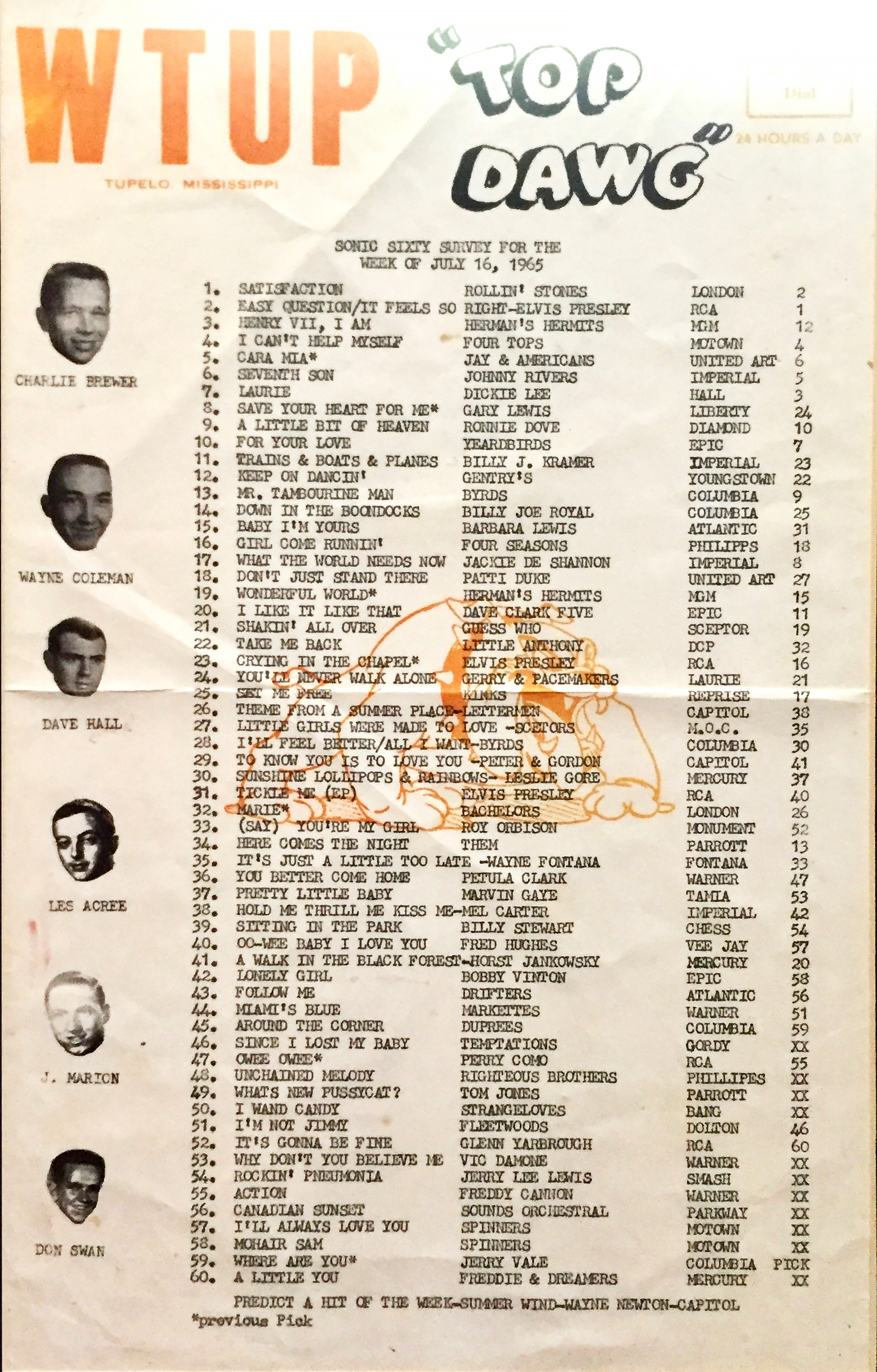
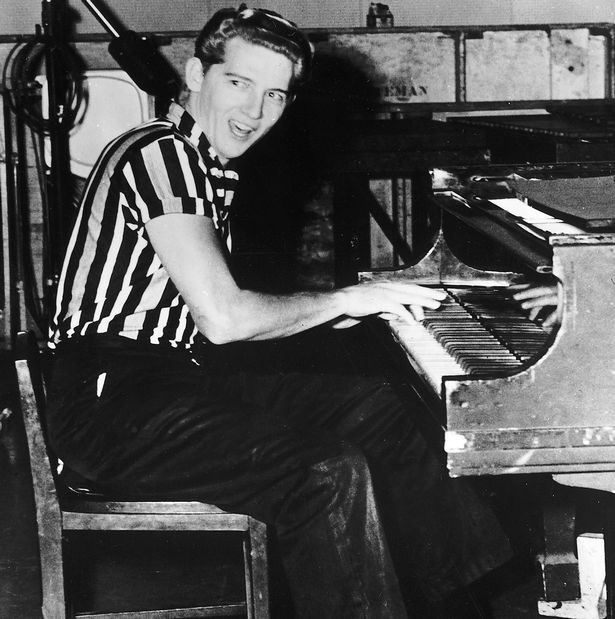
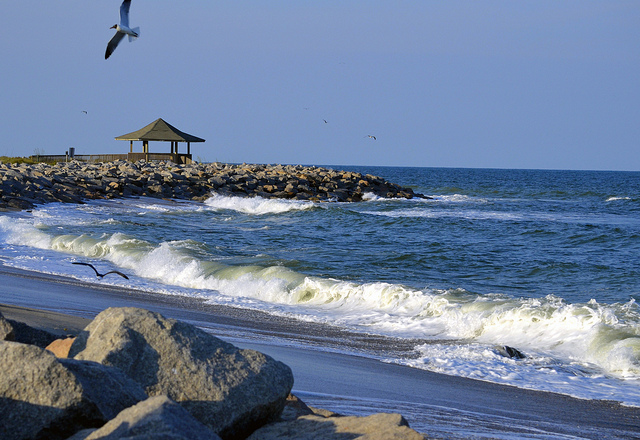
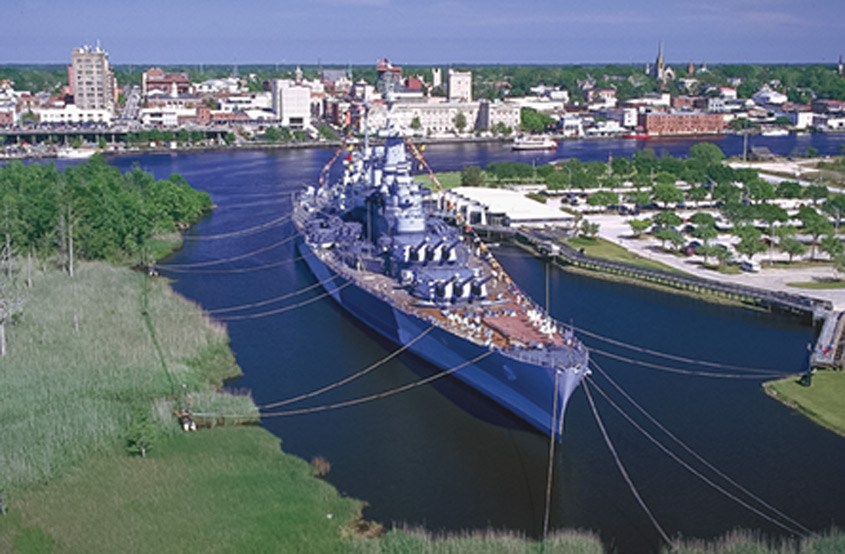


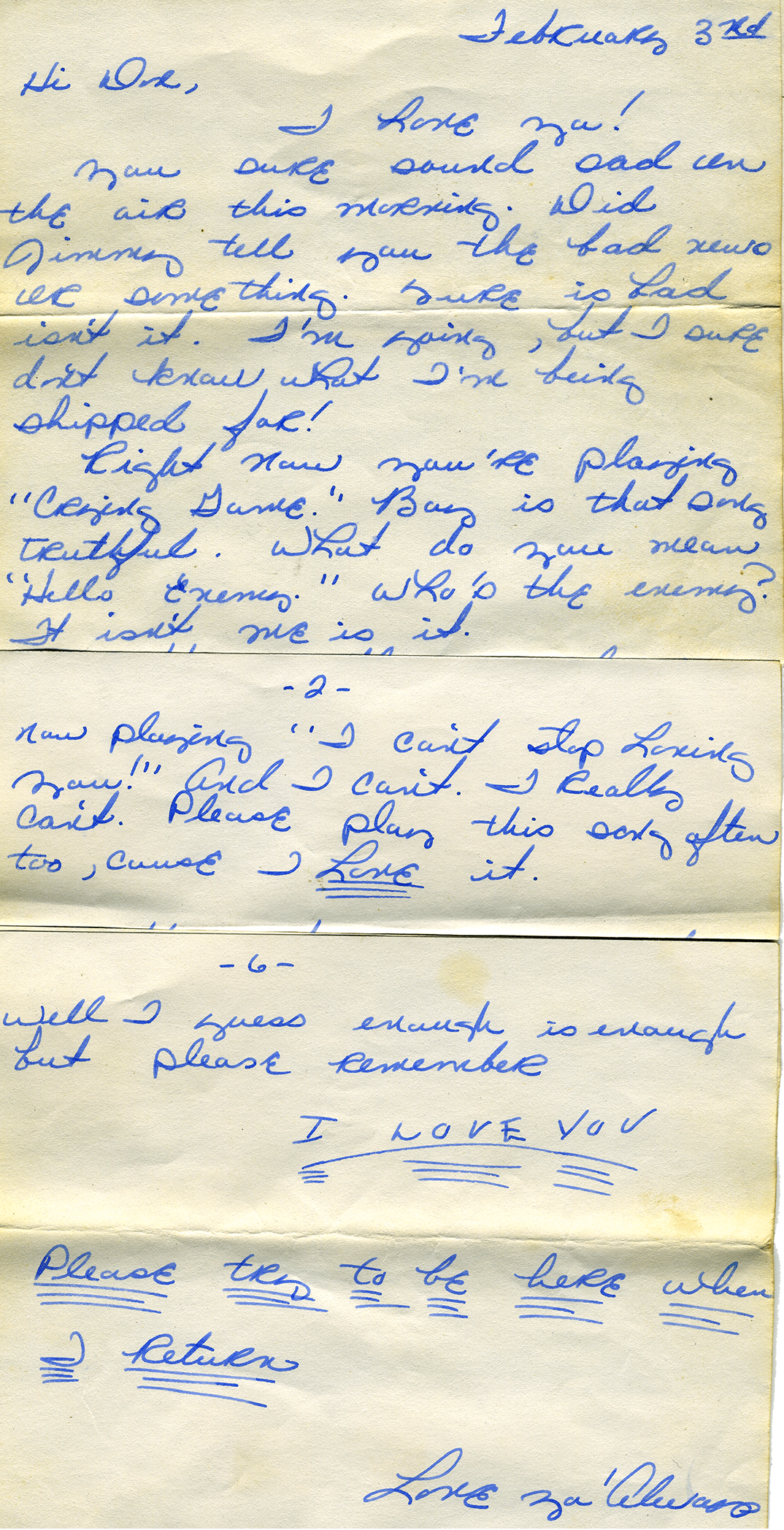

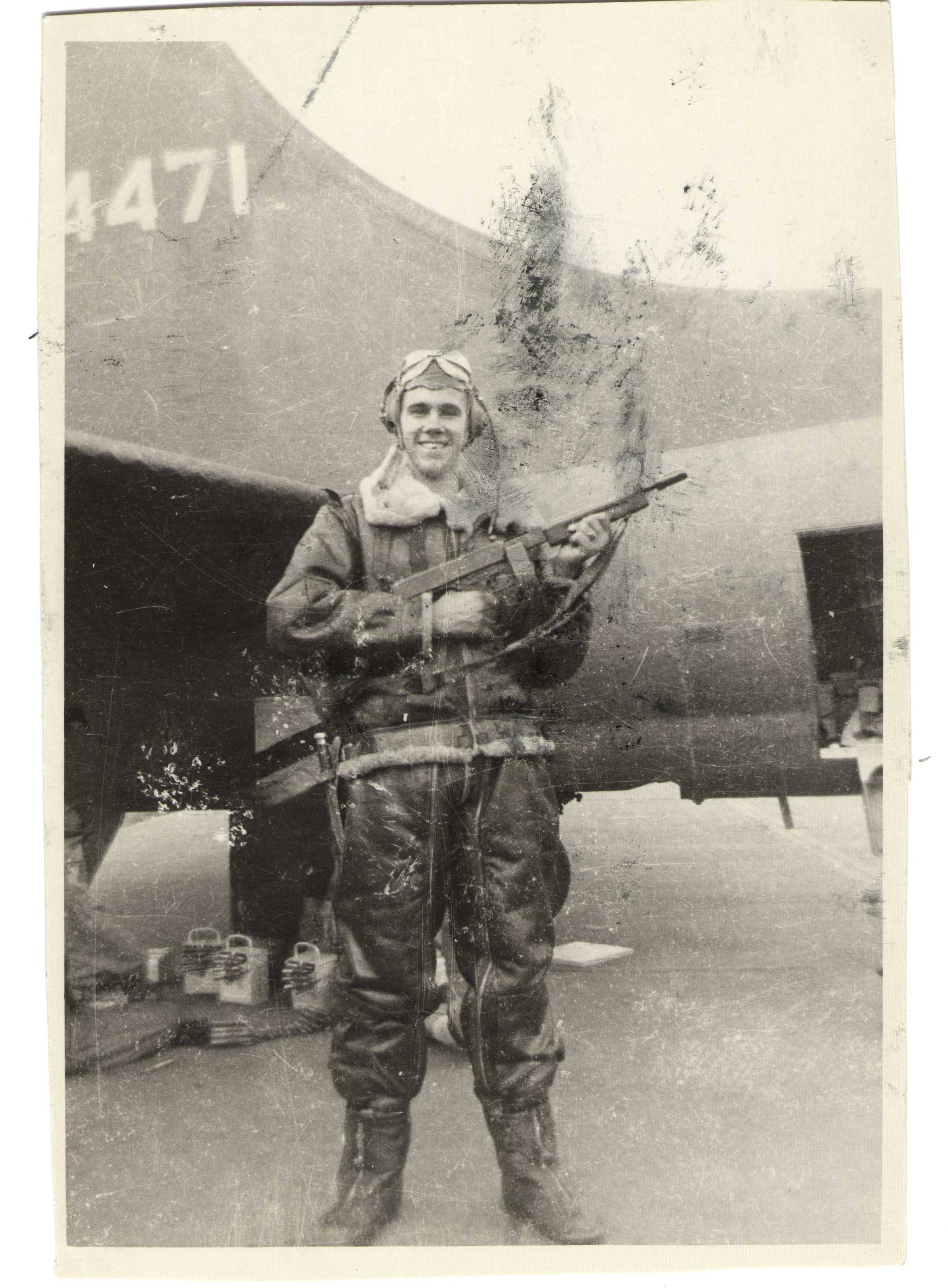


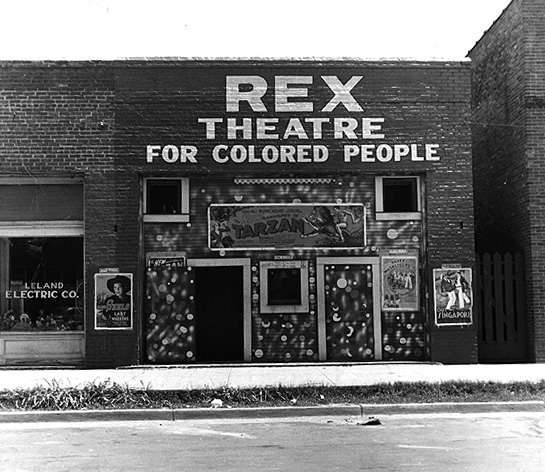
 Iconic scene from Spotsylvania Court House, Virginia. The eight-day battle in May 1864 resulted in 32,000 casualties. Deaths, in the Civil War, are most often quoted to be 623,026 about 2 percent of the U.S. population then, in today’s numbers, that would be the equivalent of more than 6 million! It claimed more fatalities, by far than any other single war or conflict in the Nation’s history! (Art Courtesy Wikimedia Commons)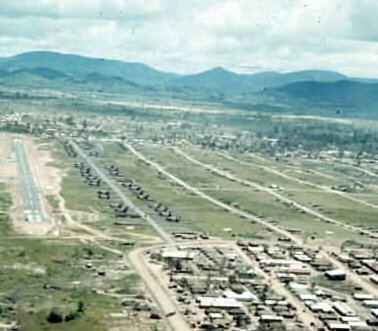
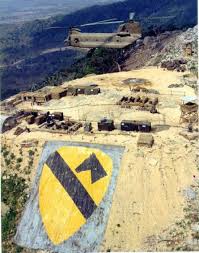
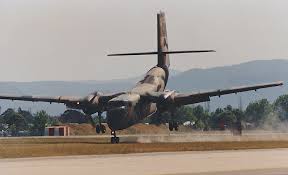

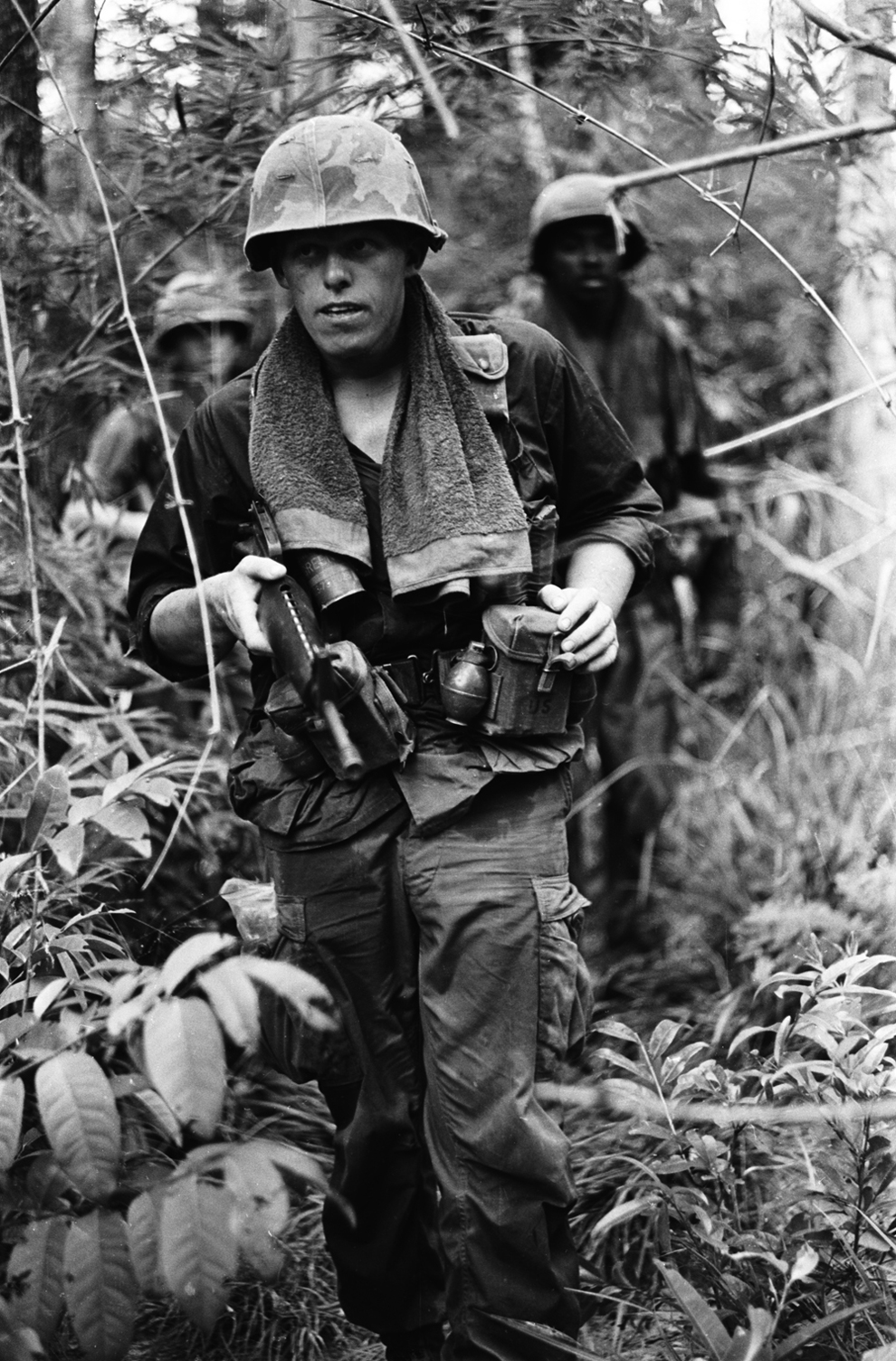
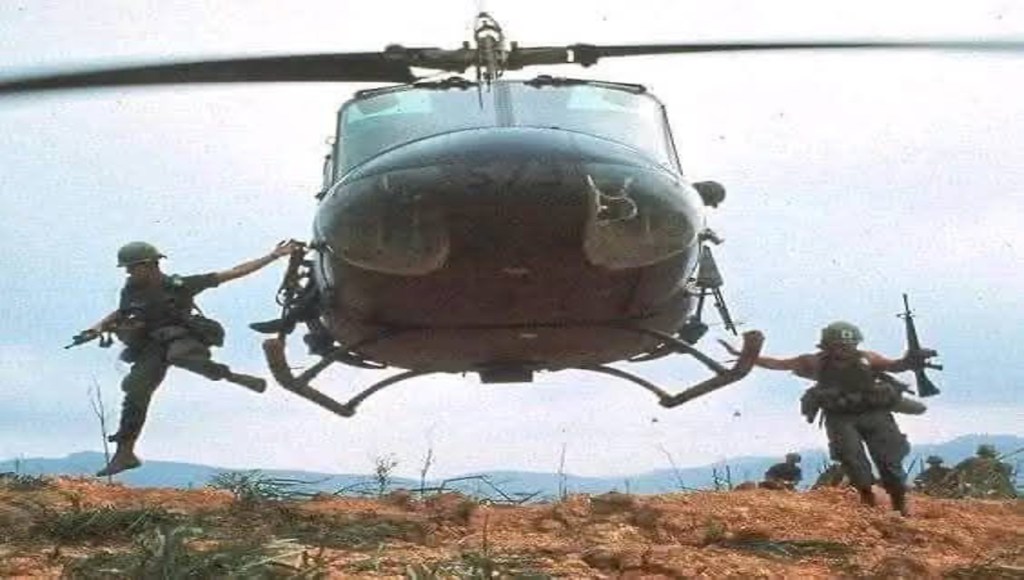


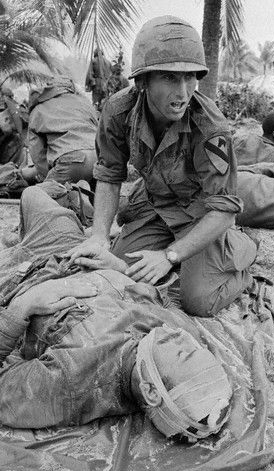
 Trained Killer: Swan dispatches his M-16 somewhere in the Binh Dinh Province, similar to the action at Ambush on 20 March 67. (U.S. Army PIO photo)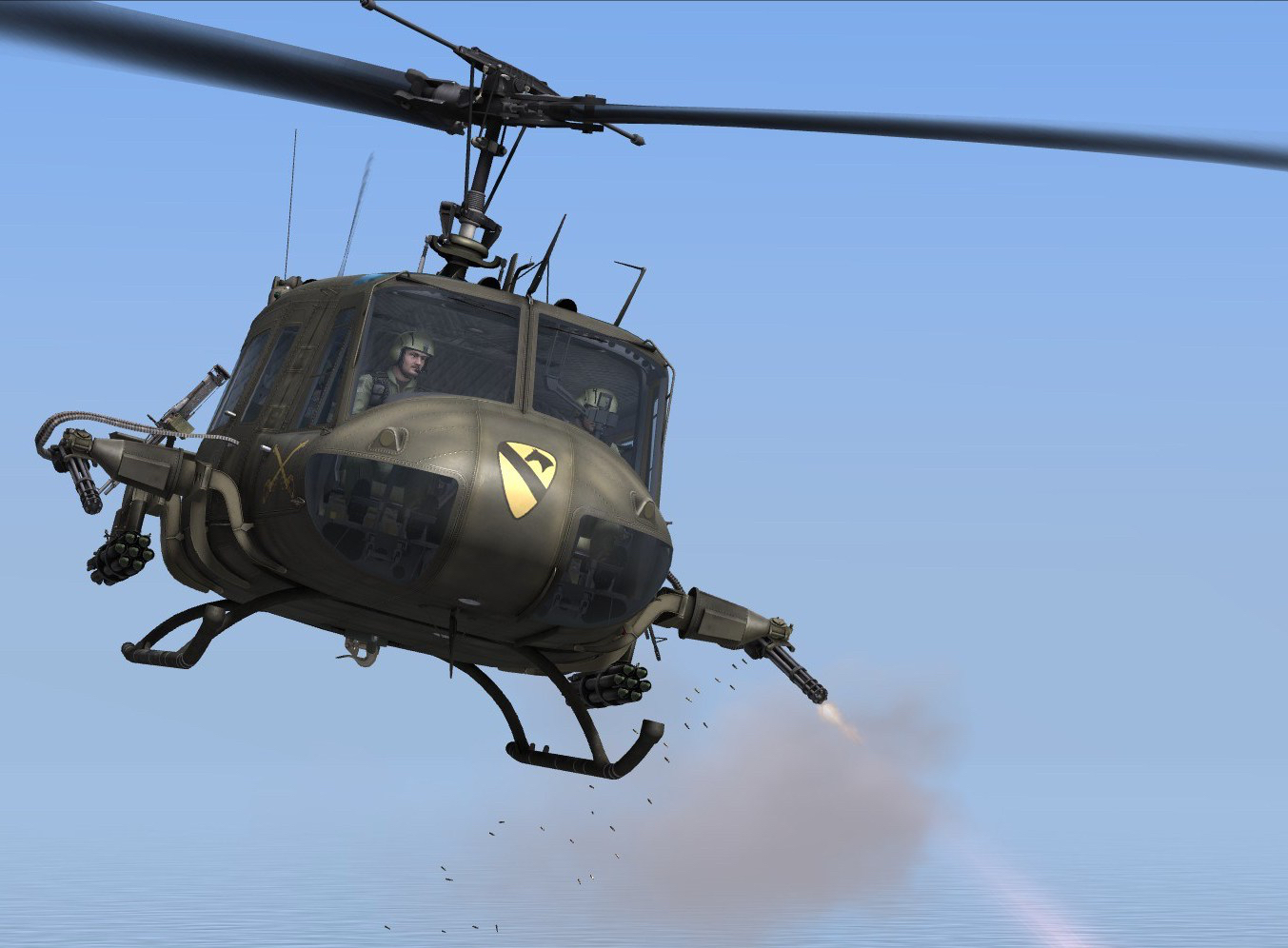
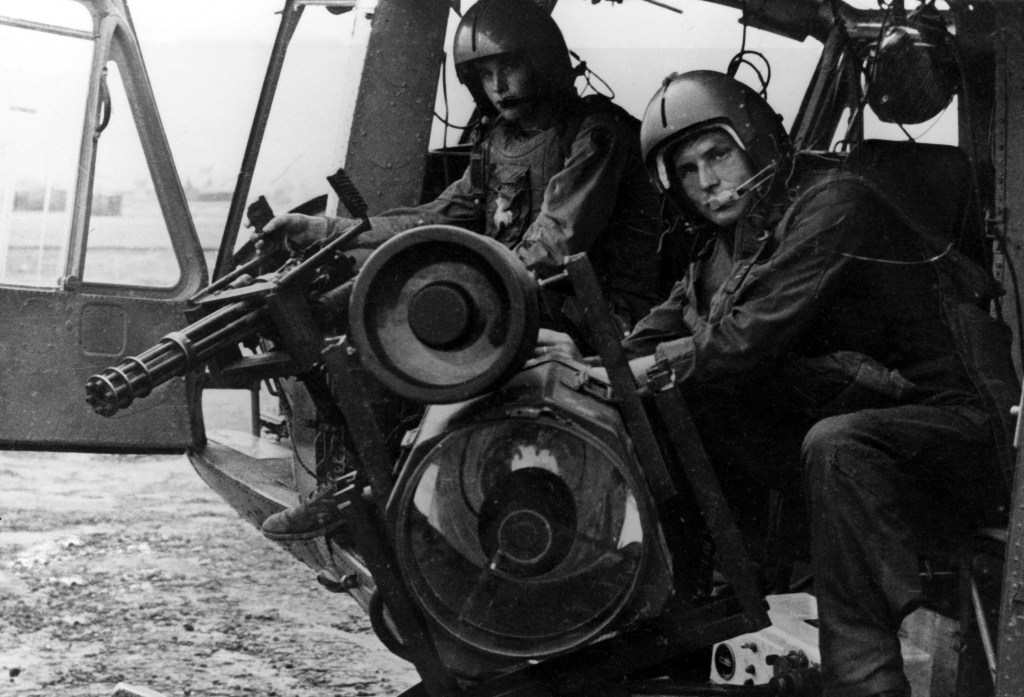
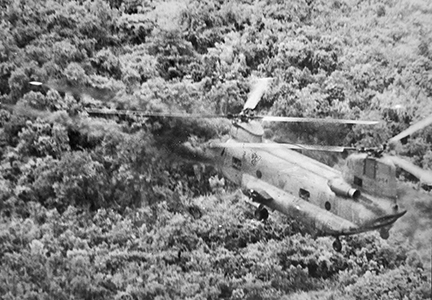


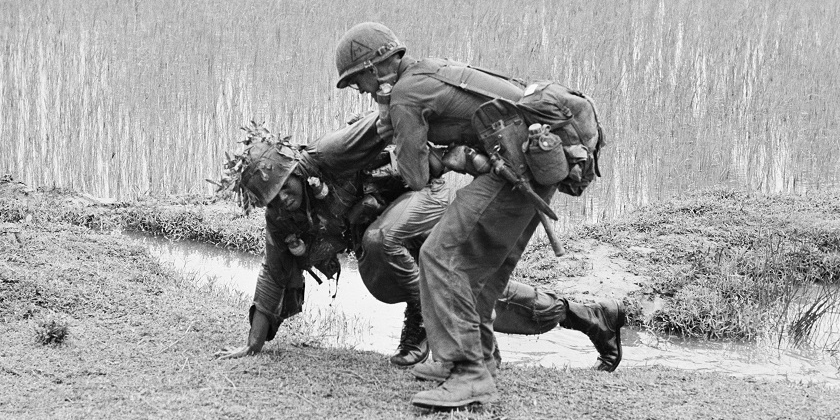

 Swan's Song Series
You must be logged in to post a comment.