By all measures, it was an impressive Celebration of Life at Veterans Hall in Garberville, California. George Mullins was alive and well-looking good, standing tall and surrounded by about 200 of his family and closest friends from across the country for his Ninety-Third birthday celebration (Now 100, 2025). There was good food, lots of great memories, and laughter.
But some friends were missing; friends bonded by brotherhood in battle and not just any battle.
At 19, Mullins was one of the men advancing on Utah Beach on D-Day through a fusillade of fire. “In Normandy, my machine gun section of 13 took terrible losses. When morning came, I was the only survivor who could continue. The others were killed or seriously injured,” recalled Mullins, who was a member of the renowned 101st Airborne Division. Later, in Holland, he would not be so fortunate.
Born in the small coal-mining town of Jenkins, Kentucky, Mullins thought he might miss the war, but was inducted into the U.S. Army on October 21st, 1943. So many were drafted or volunteered; they closed the high school he attended.
Mullins at age 18. (Mullin archives)
After training in Georgia, he sailed to Europe on a Liberty ship. Mullins landed in Ireland where there was more training; then he was assigned to C Company, 1st Battalion, 327th Glider Infantry, where the 130-pound teenager prepared for D-Day and quickly realized: “This was the real thing, this is real war! Here I viewed the ravages of war, the smell of death, the decaying human bodies,” Mullins recounted as he broke eye contact and started away at nothing in particular.
After he was dispatched to Holland, he made his first combat glider flight. At altitude, he heard steel hitting steel as flack pelted the frame of his venerable plane, Mullins and his men landed hard but safely. But that was just one lucky flight.
“In our seventy-two days in Holland, we dealt with mines; booby traps; snipers; constant enemy patrols; artillery and our foxholes filling with water, filth, and mud,” Mullins recalled. In one of those foxholes searing shrapnel from German artillery pierced a small area of his shoulder where it remains today.
But Mullin’s continued with his men only to be chewed out a couple of days later when they happened upon an aid station where he had his wounds checked. He was informed that anyone wounded needed to seek medical attention immediately; he assumed the complaining Captain had never been under fire like his platoon. He was cleared and returned to duty.
From Holland, he was sent to the extreme cold of Bastogne (Think: Battle of the Bulge). If the Luftwaffe constantly raining down bombs on his location was not enough, he soon found himself surrounded by German airborne troops. “Suddenly there was a thundering explosion, and I gained my composure, I found two of my fellow soldiers lying on top of me. Before I could pull myself free, blood from their wounds was running down my face, as far as I could tell, I was saved by their deaths,” sighed Sgt. Mullins.
Although not physically wounded, he was out of action for a few days, the only time he was away from his platoon during the war. “Thanks to Patton’s tanks coming to our rescue, we went on the offensive and fought our way out of the encirclement,’’ Mullins recalled.
In just over two year’s Mullins was a Staff Sgt. in the 101st Airborne Division. Promoted far ahead of his peers, he said modestly, because he was willing to take on responsibility. He was rewarded for his combat leadership, receiving the Bronze Star and Combat Infantryman Badge. He also was awarded the Purple Heart and other medals. And his unit received the prestigious Presidential Unit Citation.
A writer covering the war once asked Mullins why his unit had such a high survival rate. “Because we were diggers.” What, said the puzzled journalist? “When we stopped, even for a short period, we shoveled the earth and dug foxholes for our protection,” said Mullins, who had commandeered a higher quality German shovel for the task.
He returned to Kentucky after serving two years, two months and eleven days, most of which were in combat. His Dad had secured a “good job” for him in the coal mines. Instead, he finished high school in Virginia and then headed west. He was employed a few years in Washington state as a lumberjack before settling in California, where he worked in logging and tried commercial fishing.
As for making it to 100, through the war and those years of hard work? “You need to get with it while you’re still vertical, I can’t stop now I have too many responsibilities,” said Mullins a cogent communicator, who gets around well and looks to be in good shape; a young 100 for sure.
And for the inevitable question, how are you so healthy at this age? “I’ve had a good wife to keep me happy, I stay active and keep my mind sharp by thinking of things to invent.” He’s still an active member of the VFW Honor Guard.
To the people of Garberville where Mullin’s lived for 60 years: “You gave me a chance to get out of a ditch (when I came here) I couldn’t have bought you a hamburger then, or one for myself really, but today I can buy you a steak. It’s a little paradise on earth.” Mullins beamed. And it was here that he became a successful businessman as owner of G & M Construction.
If the past 100 years are any indication, George Mullins: husband, care provider, father, grandfather great-great-grandfather, WW II hero, and a good citizen of the country and community; he may remain vertical for a long while, and someone might just buy him a steak.
“I can’t say that I enjoyed the war, but it was the place to be,” said Mullins. “It took me a long time to get my brain straightened out, but our generation is, of course, different. I believe we were so thankful for having survived, we accepted the horrors of war differently than later generations. But you never forget, it’s a hard drive that can’t be erased.”
~~
Item: Approximately five WW II veterans die every hour, around 120 a day. Of the sixteen million who served less than 1% remain. The average age is 99.
Shewas a Flying Fortress or Reich Wrecker no more.The giant B-17 bomber, proudly adorned with 8th U.S. Army Air Force regalia exploded, broke in half, tipped into a dive and pinwheeled through the clouds — relegated to a wreckage of severed wings, flaming parts, and people plummeting — resonating the unmistakable shrill of a doomed plane spiraling assuredly and relentlessly back to earth.
Under clear skies, six B-17s from the 369th Bomb Squadron, laden with 5,000 lbs of bombs, ascended from their base in Thurleigh, England at 1300-hundred, 13 January 1943* Their target was the Nazi steel and engineering works in occupied Lille, France. Sgt. Tom McMahon, the 17-year-old** Tail-gunner from New York City, had eight missions remaining.
The bomber was not pressurized or heated. Conditions were miserable, at altitude, the crew breathed through oxygen masks which often clogged with ice. It was minus 37° where McMahon knelt with his guns. Exposed skin could freeze in minutes.
The Flying Fortress was tough, able to fly with two or more engines out, they regularly returned to England peppered with holes and sometimes with whole chunks shot away.
Though the B-17E bristled with five placements for machine guns, a total of nine including eight .50 cals and one .30 cal. They were positioned front and rear, waist, bottom, and top. Proponents of unescorted daylight bombing overestimated the plane’s ability to defend against the German fighters, which darted through formations and tore into the bombers.
Then there was the reality of statistics: On a mission, just months ago, to destroy several ball-bearing plants in Germany 60 B-17s were shot down, which left 564 empty bunks that night at air bases across England.
During the air war over Europe, McMahon’s unit, the 8th Air Force, would suffer more than 26,000 men killed in action — more than all the Marines killed in the South Pacific.
McMahon was on station in the tail section as they cruised at 180 knots, at 2,800 feet in their usual squadron box formation; As they neared their objective, the big bomber shook as the skies filled with flack. They had a visual on the target just ahead.
The Bombardier activated and finessed the Top Secret Nordon Bombsight, temporarily controlling the B-17E. Seconds later, ten 500 lb. bombs were released from their shackles with a click, click, click falling a millisecond apart to prevent them from colliding. As the tail finned bombs plummeted, a fading whistle howled as they gained a speed of about 130 knots.
In just over two minutes, they saw billowing white smoke behind them, emanating from the steel works. A sigh of relief fell over the 17-year-old McMahon but always alert with his guns, he never relaxed. The tips of his fingers were stinging cold, and he felt tingling like needles in his toes.
The pilot split left, turning in their usual formation, headed back to England when McMahon spotted a Messerschmitt Me-109 strafing his starboard wingman with 20-mm cannons.
He did not have a clear shot. McMahon needed to coordinate with his waist gunner, and the instant he activated his throat mic — a thundering explosion struck like lightening — McMahon was slammed into his guns and all around his cocoon. The two giants had collided. McMahon was alive but knocked unconscious. The impact severed the tail section from the fuselage.
When he regained his senses, McMahon was in eerily dead silence, completely alone, no pilot, no plane, no radio, no food, no water. He was at the mercy of the wind, gravity, and aerodynamics and likely gliding over enemy territory they had just bombed.
Now McMahon needed to get through the tiny opening that led to the escape hatch. After several contorted attempts, finally, he made it but ripped his parachute in the process.
McMahon was not sure how long he had been sailing in the B-17’s tail, where he was or what would greet him below except the hard earth, and it was approaching quickly. McMahon leaned out of his hatch, scanned the skies, took a breath, and leaped. Within seconds, he was plunging to the earth at 130 knots. He pulled the red rectangular-ring to activate his chute.
A sudden jolt restrained his body with four times the force of gravity and slowed his descent by about 80 percent. McMahon realized at about 200 feet altitude that his damaged parachute was not slowing him enough; he hit the soft ground with a thud, at about 25 miles-per-hour — injuring both knees.
McMahon retrieved his survival knife, freed himself, and gathered up the white silk that had saved his life. As he was hiding it, he saw a figure in the distance headed toward him. He unholstered his .45.
~~
McMahon got lucky. The person who approached him was a member of the French and Belgium resistance. McMahon was still in France, and he joined them in their movement against the Nazis for four and one-half months.
McMahon thought he might have been dead months ago, but now he was feeling relatively safe and thought he was on his way to freedom in England. His trip got off to a bad start when he was forced to surrender his AAF issued .45 and survival knife. Now in the back seat of a car between two strangers, and in the front the captain he’d been working with in the resistance, whom he suspected was a double agent. Within a quarter-mile, the car stopped near a group of men.
There McMahon was grabbed by his collar and slammed onto the side of the car. As he turned slightly to get a better look at his captors—a deafening boom echoed just behind his head. In that split second, McMahon thought this was the one. His parents would get the dreaded Telegram: “With Deep Regret.” By now, The War Department had already notified his parents that he was MIA.
The boom was from a pistol fired by the German Secret Police (GSP). Although his wound was not life-threatening, McMahon was rendered unconscious for six days. He awoke on the fourth floor of Belgium’s St. Gilles prison, where he would turn 18. McMahon was now a prisoner of the GSP who thought he was a spy.
They wasted no time interrogating and torturing him and throwing him into solitary confinement; the fourth floor was the execution ward. Sure enough, McMahon was tried and convicted of espionage at St. Gilles and sentenced to death by hanging; 25 June 1943.
Finally able to convince the Nazis he was not a spy, but an American Airman, McMahon was sent to Frankfurt’s Dulag Luft where he was interrogated and then thrown in the solitary.
~~
In August of 1943, six months after his crazy ride in the 30-foot tail of his B-17, McMahon was moved to Stalag 7-A POW Camp in Molpseberg, Germany. There he saw U.S. and Allied prisoners succumb to the hunger, boredom, and delirium. If he became one of them, McMahon knew it would be over for him. What he had to do was escape. That is just what McMahon did.
Every time POWs were moved to a different location, it gave McMahon a better opportunity to escape. When British officers were being relocated, he donned one of their uniforms and moved with them to a train. He and a fellow POW remarkably tore pieces from the boxcar and jumped from the moving train.
They were recaptured 26 days later by German civilians and assigned to a work camp in Stuttgart. He was forced to sleep on the cobblestone floor of a horse barn without any bedding. “A German officer, who was convinced I was a Jew, hit me over the head with his pistol and insanely shot at me several times until a ricocheting bullet struck me in my right ankle. A French medic from the work hospital treated me; when I was well enough, I was returned to Stalag 7-A, beaten and again put in solitary,” McMahon recalled.
In his short 18 years of life, nothing could have prepared McMahon for the cruelty of war, but somehow he refused to break and continued to plan and make escapes amongst the hunger, boredom, and beatings. “I dealt with the boredom by continually planning, 24 hours a day, how to escape. I’d rather be dead than be confined,” McMahon remembered.
~~
Then in September 1943, during relocation to Stalag 17-B in Austria, McMahon, although still in poor condition, jumped from the window of a moving train. Recaptured the next day, McMahon was beaten and again placed in solitary.
“I began to wonder if it was worth it, you know the perils of escaping, but that’s what a POW is supposed to do, according to the military code of honor,” said McMahon. He saw the trend; when a POW was recaptured, he’s beaten and thrown into solitary. As a matter of record, very few POWs escaped, perhaps six out of 5,000 successfully escaped from the camps where McMahon was held.
Unsurprisingly, escapees were singled out for extra punishment. “I was made to stand at attention against the prison courtyard wall, blindfolded with my hands tied behind my back, and told I was going to be shot. I stood there waiting for bullets to rip into me like shooting a watermelon.
Then the order was given, “Ready, Aim,” and I stood there for 20-30 minutes more and then: “Fire.” Incredibly, my body was intact; there was no shot; the volley never came. Instead, I was dragged back to my cell and chained hand and foot. This was an ordeal I can’t forget,” said McMahon.
“Another favorite of the guards was forcing me to stand on the prison scaffold, blindfolded with a hangman’s noose around my neck. I stood in that position for an endless time. I cried for the first time in captivity, not out of fear, but rather out of the deep hatred for my persecutors. My only desire was to kill them,” McMahon recalled.
“My worst day in captivity was actually three days. Two POWs, who were new arrivals, tried escaping almost as soon they were processed. An escape attempt is one thing, but suicide by Nazi? They penetrated the initial fence and tried to make it to the perimeter by crawling on their hands and knees. They were mowed down with an overkill of gunfire. For three days, their bodies were left where they lay to stiffen and rot, to teach us a lesson,” McMahon said with eyes unfocused in a thousand-yard stare. That look is unmistakable, sadly, the phrase has been desensitized.
Despite it all, McMahon would not break, and somehow the sergeant continued to defy and defile the Nazis. On 24 August 1944, he boarded an empty bread truck during an air raid and was recaptured the same day. McMahon was again beaten and thrown in solitary.
~~
“By the spring of 1945, the Russian advance had turned our camp into chaos, and Stalag 17-B was being evacuated except those who were hospitalized or couldn’t walk. But where were the prisoners headed,” McMahon wondered? Being marched to freedom the Nazis said; sure he thought, and the incipient 19-year-old airman, whose knees were already in sorry shape, made them worse by wrapping them with salt-filled stockings and beating them. McMahon’s painful ploy paid off; the Drs. agreed that he was unable to make the march.
It turned out to be a smart move because about ten days before the Hospital was liberated, McMahon, who knew a thing or two about breaking out, penetrated a fence making his final and permanent escape — never to be a POW again! McMahon had made it. He was free!
During his captivity, he had escaped an incredible seven times remaining free from one to 26 days! McMahon had been a prisoner of the Nazis for more than two years, including 226 days in solitary confinement!
His parents were informed in April 1945, not with the good news. Instead, they received the following telegram:
Telegram received by his parents, reporting his death as Jan. 13, 1945 (McMahon archives)
While recovering in a hospital in England, in June of 1945, his parents finally got the incredible news that he was not only alive; he was on his way home! McMahon disembarked from Queen Elizabeth in the U.S.A. July 4, 1945, and was hospitalized for four more months stateside. Upon discharge, McMahon was awarded multiple Purple Hearts and numerous Medals for Valor.
~~
With his stomach and colon acutely scared from malnutrition during his confinement; he subsisted on Gerber® baby food for two-and-one-half years after his discharge.
Tom McMahon and wife Katie at their home in 2017. (McMahon collection)
Readjustment did not come easily for McMahon. He struggled for years with alcoholism and emotional issues.
In time, he began to realize that only he could pacify his pain and restore his life, and that is exactly what McMahon did. He eventually found a rewarding career as a firefighter, married, and started a family now with 18 grandchildren and 38 (yes, 38!) great-grandchildren. For over four decades, McMahon lived with his wife, Katie, in Northern California in a house overlooking the Pacific. The man who survived the unimaginable, then reclaimed his life, lived to be 95.
The 25-ton four-engine giant packing 4,500lbs. of bombs and five defensive machine guns, is on the runway revved and readied. Ten souls aboard all-hands-on-deck, it’s the best America has to offer including full support back home. Sgt. Thomas D. McMahon, Shamrock 13, age 17, is on-station in the tail of his B-17E Flying Fortress looking at clear skies and double-checking his twin .50s.*** There is no place he’d rather be.
by Donald Swan
*Military times and dates used in chronicle for authenticity.
**He forged his parent’s signatures and joined at 17.
Binh Dinh Province, Kim Son Valley, Central Highlands,South Vietnam, 27 December 66.
It was just after midnight and pitch black. A dense tropical cloud is blotting out the moon and stars. Out in the darkness, just beyond our perimeter, hundreds of small, wiry, underfed bodies are slithering through elephant grass, closing in on us with uncanny stealth. They are two battalions of the NVA’s 22nd Regiment-well trained, well-disciplined, and motivated, reinforced by local VC insurgents. The total attack force is estimated at 1,000 men. Our combined field strength of infantry and artillery on LZ Bird that night is 170 men.
Matteson was in the weapons platoon, Charlie Company, 1st Battalion 12th Cavalry Regiment (Airborne) 1st Cavalry Division (Airmobile)
The hilltop position is about the size of a football field and relatively level — like a small plateau. The higher ridges nearby are used by the enemy to great effect by raining mortars rounds down on us once the battle begins. Strategically the position is questionable and many of us feel we are being used as bait.
A few minutes after 1 a.m. a thunderous roar of incoming mortar, rocket and small arms fire blows me out of my slumber and Charlie hits us with everything he has. From the opening salvo, it’s obvious we are vastly outnumbered, in the few seconds it takes me to reach my bunker, the two men on watch have already been wounded. One is hit in his arm, the other in the back of the head. Both are bleeding and calling out for help. I check them out in the glow of the incoming fire; the injuries appear to be superficial shrapnel wounds. I assure them they will be okay.
The deafening roar continues for what seems like an eternity. Individual blasts meld into one maelstrom, sounding bizarrely like a monstrous engine revving up. Charlie means to kill us all tonight and he’s off to a great start. During the first minutes of the battle, I try to get my bearings and figure out what to do. The main attack is not coming directly at us so I have time to think. The two guys on my position are down in the bunker, and there is no room for me. The M-60 machine gun which is assigned to me earlier that day sits on top of the bunker, resting on the overhead cover; I grab it and fire in the direction of the assault. After a few short bursts, the M-60 jams, it’s rendered useless and leaves me in the battle of my life with an Army issue Colt-45 automatic and a few clips of ammo.
To the right of my bunker is my squad leader’s position and midway between a stack of hand grenades still in the cartons brought in by our chopper too late to distribute. My squad leader Sgt. Delbert Jennings and two other men in the bunker to our right (the direction of the attack) and under such heavy fire they had to pull back — then come running toward our position. Jennings yells frantically for us to open the grenade boxes. We quickly set up an assembly line of sorts and three of us start doing this as fast as we can. Thanks to Jenning’s quick thinking, within seconds we are flipping the unpacked grenades to him, with pins straightened, so he just pulls the pins and let them fly. The steady stream of grenades we put out are highly effective. In the morning at first light, we find a dozen enemy dead and it’s anyone’s guess how many we wounded.
As the mortar and rocket fire subsides, the small arms fire goes heavier. The enemy is breaching our perimeter. They are coming in waves, and it isn’t long before we see them behind us in the perimeter. Sappers run in alongside the riflemen with satchel charges of TNT in small rucksacks strapped on their backs. They are attempting to blow up the artillery guns with them. Some blow, some don’t. It’s likely the detonators were wet. We find many of the crude-looking hand grenades unexploded the next day.
Eventually the onslaught is too much — it’s down to hand-to-hand combat now inside the permitter near the artillery pits and we start pulling back. On Jenning’s order, we retreat toward our left flank, away from the brunt of the attack, skirt around the far side of the hill from where the attack is coming and along the way come across several of the wounded. One of them lies at the bottom of a bunker, unable to get up. He screams for help out of the pitch-black darkness — there is nothing we can do for him. We tell him he will be OK, and we’ll be back for him as soon as possible. We try to calm him, but he’s insane with fear and crying out in pain pleading mournfully for help, but any attempt to get him out of the bunker in the heat of the battle, will most likely mean death for all of us. I feel sick for having to leave him there.
We make our way to the farthest point from where the attack originated, and we are not alone. It seems everyone not dead, wounded, or playing dead, has instinctively made their way to the same spot. We form a tight permitter around the one gun emplacement still in our possession, one of the smaller, 155-mm Howitzers. The firebase has been overrun except for this small cannon. We are terrified and expect to momentarily be annihilated.
We do, however, have a plan for this type of situation. It calls for a green signal flare to be sent up. Any of our men alive out front upon seeing the flare, are to keep their heads down and stay flat. Then we level one of the Howitzer barrels and let fly with a canister, a “Beehive” round (a shell about two feet long and about 4.5 inches in diameter that blasts out 8,000 red-hot “fléchettes” of metal). The plan works. The bee-hive rounds (so-called because of their buzz) have blunted the onslaught and Charlie begins to retreat. After the canister rounds are fired, the small arms fire diminishes and there is only sporadic firing, which continues through the night. This will turn out to be the first actual use of the bee-hive rounds [in Vietnam].
Dawn is a long time coming. Sometime during the night elements from the 1st Bn., 5th Cav shows up to reinforce us. We’ve taken a terrible beating — especially my company and especially my platoon, only six emerge without a scratch. I am one of them. We count 15 dead and five wounded. [All U. S. casualties at LZ Bird are 28 killed, 87 wounded.] The hilltop smolders and dead bodies are sprawled everywhere. A strange silence enveloped the hill (though I’m half deaf from the battle) and the scene is surreal like living in a Bosch painting. Demolition experts arrive to disarm the satchel charges that failed to explode. We carefully reconnoiter our old positions, wary of booby traps, searching for the wounded and assessing the damage in human terms.
Survivors and some of the U. S. fatalities after initial NVA onslaught at LZ Bird 27 December 66. (Photo Steve Hassett)
I spent the morning dragging the lifeless bodies of our comrades to a makeshift morgue and cleaning them up for graves registration. We pulled cigarette filters out of our [dead] artillerymen’s ears (improvised earplugs.) We close our eyes and do what we can to wipe the mud and blood off their faces and clothing. We put them on ponchos and lay them in rows where they wait for the choppers to spirit them away.
After our dead are gone, we use rope or wire, whatever we can find, looping it around a waist or an ankle, and drag the dead-riddled bodies along in the muddy, red clay, and the enemy goes into a mass grave dug by a bulldozer flown in that morning. None of us wants to touch them, especially the NVA dead. Rigor mortis has set in and it’s spooky. Death feels contagious; we don’t want to catch it. [In the four-day battle at LZ Bird, and enemy pursuit, there were 266 NVA fatalities. The number of wounded is unknown].
I think the day after is worse than the battle itself. In the heat of the battle, there’s no time to think. But when you’re exposed to the aftermath of a fierce firefight like this the experience becomes nightmarish. Still reeling from it all, we struggle to make sense of the horrific carnage, little knowing what we are experiencing will affect us for the remainder of our days. The battle was only an hour or two, but the cleanup goes on for a few days.
Patrols follow the cleanup. Patrols count the enemy dead and examine Charlie’s escape routes. Bodies and parts of bodies are found — bodies blown apart by the direct hits from the bee-hive rounds. Twisted grotesquely mangled limbs, body parts of all kinds hanging them from bushes and trees — everywhere the smell of blood and death and rotting flesh. I am so immersed in horror and death that I become psychically numb, going about my business with a vacuous, zombie-like feeling. I shut it out and feel nothing, which is all I can do to keep from going mad.
My squad leader, Sgt. Delbert Jennings was awarded the Medal of Honor for his actions that terrible night at LZ Bird.
~~
Thanking Spencer Matteson (author of the above article) for his service and allowing me to use his story seems wholly inadequate. As a veteran who was in combat, I can only give you my heartfelt gratitude for sharing your raw-personal-unabridged-story. Having interviewed several combat veterans — some of the stories included in this book — I can only imagine how difficult it was for you to relive those horrible scenes from Bad Night at LZ Bird. But please understand that I and many others needed to hear your story, and we are grateful for it. Thankfully, your story will live on long after we return to dust. And I’m honored to include it in my book.
Reprinted from Saber Magazine with permission.
SINTINO, JOSEPH EUGENE
IN THE EVENT OF MY DEATH
Joey (Sintino) wrote the following letter, Jan. 1, 1968, just before departing for Vietnam, he left one for his parents and another (below) for fiancée, Angela. Just 87 days later he was killed in Vietnam.
Dear Angela,
This is by far the most difficult letter I shall ever write. What makes it so difficult is that you’ll be reading this in the unhappy event of my death. You’ve already learned of my death; I hope the news was broken to you gently. God, Angie, I didn’t want to die. I had so much to live for. You were my main reason for living. You’re a jewel, a treasure, a woman whose attributes are sought by every man.
You were to be my wife. I thank God for giving me those few years with you. Our future was uncertain, but I did have a lot of confidence. No, I didn’t want to die, but death was part of my job.
Please don’t hate the war because it has taken me. I’m glad and proud that America has found me equal to the task of defending it.
Vietnam isn’t a far off country in a remote corner of the world. It is Sagamore, [his hometown in Massachusetts] Brooklyn, Honolulu, or any other part of the world where there are Americans.
Vietnam is a test of the American spirit. I hope I have helped in a little way to pass the test.
The press, the television screen, the magazines are filled with the images of young men burning their draft cards to demonstrate their courage. Their rejection is of the ancient law that males fight to protect his own people and his own land.
Does it take courage to flaunt the authorities and burn their draft card? Ask the men at Dak To, Con Tien, or Hill 875, they’ll tell you much courage it takes.
Most people never think of their freedom. They never think much about breathing either, or blood circulating, except when these functions are checked by a doctor. Freedom like breathing and circulating blood, is part of our being. Why must people take their freedom for granted? Why can’t they support the men who are trying to protect their lifeblood, freedom?
Patriotism is more than fighting or dying for one’s country. It is participating in its development, its progress and its governmental process. It is sharing the never fully paid price of the freedom which was bequeathed to us who enjoy it today. Not to squander, not to exploit, but to preserve and enhance for those who will follow after us.
Just as man will stand by his family be it right or wrong, so will the patriot stand where Stephen Decatur stood when he offered the toast, “Our country, in her intercourse with foreign nations, may she always be right, but our country, right or wrong.”
We must do the job God set down for us. It’s up to every American to fight for the freedom we hold so dear. We must instruct the young in the ways of these great United States. We mustn’t let them take these freedoms for granted.
I want you to go on to live a full, rich, productive life. I want you to share it with someone. You may meet another man and bring up a family. Please bring up your children to be proud Americans. Don’t worry about me honey. God must have a special place for soldiers.
I died as I’ve always hoped, protecting what I hold so dear to my heart. We will meet again in the future. We will. I’ll be waiting for that day.
I’ll be watching over you Angie, and if it’s possible to help you some way, I will.
Feel some relief with the knowledge that you filed my short life with much more happiness than most men know in a lifetime.
The inevitable, well, the last one: I will love you with all my heart and my love for you will survive into eternity.
Your Joey
Reprinted from Saber (with permission) Originally appeared in book by Laura Palmer. Random House, New York.

                                                   ~~


Joey had a plum assignment at Arlington National Cemetery, in the Honor Guard platoon, when he volunteered for Vietnam.
“We are not about to send American boys nine or ten thousand miles away from home to do what Asian boys ought to be doing.” President Johnson, October 21, 1964, two weeks before the presidential election.
Joseph Eugene Sintino, KIA Vietnam, March 27, 1968. (Fold3.com)
To President Johnson (deceased) and his Best and Brightest:
I doubt you ever saw Joey’s letter, “In the Event of My Death.”
I wish it was within my power to play his elegantly written words in your head, endlessly. This Amazing, Intelligent, Patriotic American soldier, who gave his life so willingly was not privy to what you and your close advisors were admitting privately about the war, what you were saying and doing, and your unconscionable conduct of the war; all before Joey selflessly he gave his life. He was the ultimate Patriot, a man who trusted his Government–You.
I’m not a religious person, especially after serving in Vietnam myself, but if there is a hell, you must be in it eternally, and I hope each day you think of the 36,756 great men and four dedicated women who were killed on your watch — that you were wholly responsible for — before your pathetic presidency ended. Oh, you did that Great Society thing, but these Americans never got to live it.
Sadly, with what we know now, Joey didn’t really Die For HisCountry — He Died Because of HisCountry! And LBJ, that’s all on YOU.
With my take on LBJ, my caveat on the war, no matter where you fall, conservative, liberal or somewhere in between, even extreme; how could you not be captivated by Joey’s intense Patriotism, his Idealism, his Spirit, his Eloquence, his Love for Angela? While reading his letter, if you didn’t feel a lump in your throat, or tingling of skin, well, you are one seriously cold-hearted creature.*
Senator Russel from Georgia, a Johnson confidant, told LBJ in early June of 1964, “It’s the damn worst mess I ever saw . . . . And I don’t how we ever going to get out of it without fighting a major war with the Chinese. We’re just in quicksand up to our necks. It would take a half-million men. They’d be bogged down in there for ten years.” Similar remarks came from his Defense Secretary, Robert McNamara. And there’s The Pentagon Papers.”
And LBJ Himself
IN MARCH 1965, Johnson said, “I don’t think it’s worth fighting for, I don’t see any way of winning.” LBJ said later in the same year, “A man can’t fight if he can’t see daylight. But there ain’t no daylight in Vietnam. There’s no end to the road.” Again, in early 1965, LBJ said, “I don’t see any way of winning in Vietnam.” (From Presidents of War M. Beschloss and various public sources.
I provide lots of scenarios about what could have done, at various stages, during that long Vietnam War in Chapter 23 of this book.
*If I hear what some Uber Left Wingers are most likely thinking, “He was stupid and got what he deserved.” I appreciate your freedom to speak. But I believe you may be a naïve, cold-hearted person. Is it okay to call you a person these days? Oh, never mind, I see the word contains “son” like Joey was. Please read chapters 17 in Book One and the next one, V, and get back to me. Or, you’ll be off my Christmas list.
Dying is very easy, living, living is the difficult thing.
Dr. Hal Kushner
I want you to know that I don’t do this often. I was captured 2 Dec.1967, and returned to American control on 16 Mar.1973. For those of you good at arithmetic – 1931 days. Thus it has been 32 years since capture and 26 years since my return. I have given a lot of talks, about medicine, about ophthalmology, even about the D-Day Invasion as I was privileged to go to Normandy and witness the 50th anniversary of the invasion in Jun.1944.
But not about my captivity. I don’t ride in parades; I don’t open shopping centers; I don’t give interviews and talks about it. I have tried very hard NOT to be a professional PW. My philosophy has always been to look forward, not backward, to consider the future rather than the past. That’s a hell’uva thing to say at a reunion, I guess. In 26 years, I’ve given only two interviews and two talks. One to my hometown newspaper, one to the Washington Post in 1973, and a talk at Ft. Benning in 1991 and to the Military Flight Surgeons in 1993. I’ve refused 1,000 invitations to speak about my experiences. But you don’t say no to the 1-9th, and you don’t say no to your commander. Col Bob Nevins and Col Pete Booth asked me to do this and so I said yes sir and prepared the talk. It will probably be my last one .
I was a 26-year-old young doctor, just finished 9 years of education, college at the University of North Carolina, med school at Medical College of VA, a young wife and 3 year old daughter. I interned at the hospital in which I was born, Tripler Army Med Center in Honolulu, HI. While there, I was removed from my internship and spent most of my time doing orthopedic operations on wounded soldiers and Marines. We were getting hundreds of wounded GIs there, and filled the hospital. After the hospital was filled, we created tents on the grounds and continued receiving air evac patients. So I knew what was happening in Vietnam.
I decided that I wanted to be a flight surgeon. I had a private pilot’s license and was interested in aviation. So after my internship at Tripler, I went to Ft. Rucker and to Pensacola and through the Army and Navy’s aviation medicine program and then deployed to Vietnam. While in basic training and my E&E course, they told us that as Doctors, we didn’t have to worry about being captured.
Doctors and nurses they said were not PWs, they were detained under the Geneva Convention. If they treated us as PWs, we should show our Geneva Convention cards and leave. It was supposed to be a joke and it was pretty funny at the time.
I arrived in Vietnam in Aug.1967 and went to An Khe. I was told that the Div. needed two flight surgeons; one to be the div. flight surgeon at An Khe in the rear and the other to be surgeon for the 1-9th, a unit actively involved with the enemy. I volunteered for the 1-9th. The man before me, CPT Claire Shenep had been killed and the dispensary was named the Shenep Memorial Dispensary. Like many flight surgeons, I flew on combat missions in helicopters, enough to have earned three air medals and one of my medics, SSG Jim Zeiler used to warn me: “Doc, you better be careful. We’ll be renaming that dispensary, the K&S Memorial Dispensary.”
I was captured on 2 Dec 67 and held for five and a half years until 16 Mar 73. I have never regretted the decision that I made that Aug to be the 1-9th flight surgeon. Such is the honor and esteem that I hold the squadron. I am proud of the time I was the squadron’s flight surgeon.
On 30 Nov.1967, I went to Chu Lai with MAJ Steve Porcella, WO-1 Giff Bedworth and SGT McKeckney, the crew chief of our UH-1H. I gave a talk to a troop at Chu Lai on the dangers of night flying. The weather was horrible, rainy and windy, and I asked MAJ Porcella, the A/C commander, if we could spend the night and wait out the weather. He said, “Our mission is not so important but we have to get the A/C back.” I’ll never forget the devotion to duty of this young officer; it cost him his life.
While flying from Chu Lai to LZ Two Bits, I thought we had flown west of Hwy. 1, which would be off course. I asked Steve if we had drifted west. He called the ATC at Duc Pho and asked them to find him. The operator at Duc Pho said that he had turned his radar off at 2100. He said, “Do you want me to turn it on and find you?” MAJ Porcella replied “Roj” and that was the last thing he ever said.
The next thing I knew I was recovering from unconsciousness in a burning helicopter which seemed to be upside down. I tried to unbuckle my seat belt and couldn’t use my left arm. I finally managed to get unbuckled and immediately dropped and almost broke my neck. My helmet was plugged into commo and the wire held me as I dropped out of the seat which was inverted. The helicopter was burning. Poor MAJ Porcella was crushed against the instrument panel and either unconscious or dead. Bedworth was thrown, still strapped in his seat, out of the chopper. His right anklebones were fractured and sticking through the nylon of his boot. SGT Mac was unhurt but thrown clear and unconscious. I tried to free Porcella by cutting his seatbelt and moving his. However, I was unable to. The chopper burned up and I suffered burns on my hands and buttocks and had my pants burned off. While trying to free Porcella, some of the M-60 rounds cooked off and I took a round through the left shoulder and neck. My left wrist and left collarbone were broken in the crash, and I lost or broke 7 upper teeth.
Well, after we assessed the situation – we had no food or water, no flares, no first aid kit or survival gear. We had two 38 pistols and 12 rounds, one seriously wounded WO co-pilot, a moderately wounded doctor, and an unhurt crew chief. We thought we were close to Duc Pho and Hwy 1 and close to friendlies. Bedworth and I decided to send Mac for help at first light.
We never saw him again. Later, 6 years later, COL Nevins told me that SGT Mac had been found about 10 miles from the crash site, shot and submerged in a rice paddy.
So on that night of 30 Nov.1967 I splinted Bedworth’s leg, with tree branches, made a lean-to from the door of the chopper, and we sat in the rain for three days and nights. We just sat there. We drank rainwater. On the third morning, he died. We could hear choppers hovering over our crash site and I fired most of the rounds from our 38’s trying to signal them, but cloud cover was so heavy and the weather so bad, they never found us.
I took the compass from the burned out helicopter and tried to go down the mountain towards the east and, I believed, friendlies. My glasses were broken or lost in the crash and I couldn’t see well: the trail was slippery and I fell on rocks in a creek bed and cracked a couple of ribs. I had my left arm splinted to my body with my army belt. My pants were in tatters and burned. I had broken teeth and a wound in my shoulder. I hadn’t eaten or drunk anything but rainwater for three days. I looked and felt like hell. One of the cruel ironies of my life, you know how we all play the what if games, what if I hadn’t done this or that, well, when I finally reached the bottom of the mountain, I estimated 4 hours after first light, the weather cleared and I saw choppers hovering over the top. I knew I couldn’t make it up the mountain, and had to take my chances. But if I had only waited another 4 hours
I started walking up the trail and saw a man working in a rice paddy. He came over and said Dai- wi, Bac-si- CPT Doctor. He took me to a little hootch, sat me down and gave me a can of sweetened condensed milk and a C-ration can, can opener and spoon. This stuff was like pudding and it billowed out of the can and was the best tasting stuff I ever had. I felt very safe at that point. One minute later, my host led a squad of 14 VC with two women and 12 rifles came upon me.
The squad leader said, “Surrenda no kill.” He put his hands in the air and I couldn’t because my left arm was tied to my body. He shot me with an M2 carbine and wounded me again in the neck. After I was apprehended, I showed my captors my Geneva Convention card, white with a red cross. He tore it up. He took my dogtags and medallion which had a St. Christopher’s (medal) on one side and a Star of David on the other, which my dad had given me before leaving. They tied me with commo wire in a duck wing position, took my boots and marched me mostly at night for about 30 days. The first day they took me to a cave, stripped my fatigue jacket off my back, tied me to a door and a teenage boy beat me with a bamboo rod. I was told his parents were killed by American bombs.
We rested by day, and marched by night. I walked on rice paddy dikes, and couldn’t see a thing. They would strike these little homemade lighters and by the sparks they made, see four or five steps. I was always falling off the dikes into the rice paddy water and had to be pulled back up. It was rough. On the way, I saw men, women and kids in tiger cages, and bamboo jails. I was taken to a camp, which must have been a medical facility as my wound was festering and full of maggots and I was sick. A woman heated up a rifle-cleaning rod and gave me a bamboo stick to bite on. She cauterized my through and through wound with the cleaning rod and I almost passed out with pain. She then dressed the wound with mercurochrome and gave me two aspirin. I thought, what else can they do to me. I was to find out.
After walking for about a month through plains, then jungles and mountains, always west, they took me to a camp. I had been expecting a PW camp like a stalag with Hogan’s Heroes; barbed wire, search lights, nice guards and red cross packages – and a hospital where I could work as a doctor. They took me to a darkened hut with an oriental prisoner who was not American. I didn’t know whether he was Vietnamese, Cambodian, Laotian or Chinese. He spoke no English and was dying of TB. He was emaciated, weak, sick and coughed all day and night. I spent two days there and an English-speaking Vietnamese officer came with a portable tape recorder and asked me to make a statement against the war. I told him that I would rather die than speak against my country. His words which were unforgettable and if I ever write a book, will be the title. He said, “You will find that dying is very easy; living, living is the difficult thing.”
A few days later, in a driving rain, we started the final trek to camp. I was tied again, without boots, and we ascended higher and higher in the mountains. I was weak and asked to stop often and rest. We ate a little rice which the guards cooked. We actually needed ropes to traverse some of the steep rocks. Finally, we got to PW camp one. There were four American servicemen there, two from the US and two from Puerto Rico. Three were Marines and one in the Army. These guys looked horrible. They wore black PJs, were scrawny with bad skin and teeth and beards and matted hair. The camp also had about 15 ARVNs who were held separately, across a bamboo fence. The camp was just a row of hootches made of bamboo with elephant grass roofs around a creek, with a hole in the ground for a latrine. This was the first of five camps we lived in the South-all depressingly similar, although sometimes we had a separate building for a kitchen and sometimes we were able to pipe in water thru bamboo pipes from a nearby stream.
I asked one of the Marines, the man captured longest and the leader, if escape was possible. He told me that he and a special forces CPT had tried to escape the year before and the CPT had been beaten to death, while he had been put in stocks for 90 days, having to defecate in his hands and throw it away from him or lie in it. The next day I was called before the camp commander and chastised and yelled at for suggesting escape. My fellow PW then told me never to say anything to him that I didn’t want revealed, because the Vietnamese controlled his mind. I threatened to kill him for informing on me.
He just smiled and said I would learn. Our captors promised us that if we made progress and understood the evils of the war they would release us. And the next day, they released the two Puerto Ricans and 14 ARVNs PWs. The people released wore red sashes and gave anti-war speeches. Just before the release, they brought in another 7 American PWs from the 196th Light Bde who were captured in the TET offensive of 1968. I managed to write our names, ranks and serial numbers on a piece of paper and slip it to one of the PRs who was released. They transported the information home and in Mar 68 and our families learned we had been captured alive.
We were held in a series of jungle camps from Jan. 68 to Feb 71. At this time, conditions were so bad and we were doing so poorly, that they decided to move us to North Vietnam. They moved 12 of us. In all, 27 Americans had come through the camp. Five had been released and ten had died.
They died of their wounds, disease, malnutrition and starvation. One was shot while trying to escape. All but one died in my arms after a lingering, terrible illness. Five West German nurses in a neutral nursing organization, called the Knights of Malta, similar to our own Red Cross, had been picked up (I always thought by mistake) by the VC in the spring of 69. Three of them died and the other two were taken to North Vietnam in 1969 and held until the end of the war.
The twelve who made it were moved to North Vietnam on foot. The fastest group, of which I was one, made it in 57 days. The slowest group took about 180 days. It was about 900km. We walked thru Laos and Cambodia to the Ho Chi Minh trail and then up the trail across the DMZ until Vinh. At Vinh, we took a train 180 miles to Hanoi in about 18 hours. We traveled with thousands of ARVN PWs who had been captured in Lam Song 719, an ARVN incursion into Laos in 1971.
Once in Hanoi, we stayed in an old French prison called The Citadel or as we called it, The Plantation until Christmas 72 when the X-mas bombing destroyed Hanoi. Then we were moved to the Hoa Lo or Hanoi Hilton for about three months. The peace was signed in Jan 73 and I came home on Mar 16 with the fourth group. In the North we were in a rough jail.
There was bucket in the windowless, cement room used as a latrine. An electric bulb was on 24 hours. We got a piece of bread and a cup of pumpkin soup each day and three cups of hot water. We slept on pallets of wood and wore PJs and sandals and got three tailor made cigarettes per day. We dry shaved and bathed with a bucket from a well twice per week, got out of the cell to carry our latrine bucket daily.
Towards the end, they let us exercise. There were no letters or packages for us from the south, but I understood some of the pilots who had been there awhile got some things. In the summer, it was 120 in the cell and they gave us little bamboo fans. But there were officers and a rank structure and commo done through a tap code on the walls. No one died. It was hard duty, but not the grim struggle for survival which characterized daily life in the camps in the south. In the north, I knew I would survive. In the south, we often wanted to die. I knew that when they ordered us north, I would make it. In the south, each day was a struggle for survival. There were between three and twenty-four PWs at all times.
We ate three coffee cups of rice per day. In the rainy season, the ration was cut to two cups. I’m not talking about nice white rice, Uncle Ben’s. I’m talking about rice that was red, rotten, and eaten out by bugs and rats, cached for years, shot through with rat feces and weevils. We arose at 4, cooked rice on wood ovens made of mud. We couldn’t burn a fire in the daytime or at night unless the flames and smoke were hidden, so we had these ovens constructed of mud which covered the fire and tunnels which carried the smoke away.
We did slave labor during the day, gathering wood, carrying rice, building hootches, or going for manioc, a starchy tuberous plant like a potato. The Vietnamese had chickens and canned food. We never got supplements unless we were close to dying then maybe some canned sardines or milk. We died from lack of protein and calories. We swelled up with what is called hungry edema and beriberi. We had terrible skin disease, dysentery, and malaria. Our compound was littered with piles of human excrement because people were just too sick or weak to make it to the latrine.
We slept on one large pallet of bamboo. So the sick vomited and defecated and urinated on the bed and his neighbor. For the first two years, we had no shoes, clothes, mosquito nets or blankets. Later, in late 69, we got sandals, rice sacks for blankets, and a set of clothes. We nursed each other and helped each other, but we also fought and bickered. In a PW situation the best and the worst come out. Any little flaw transforms itself into a glaring lack. The strong can rule the weak. There is no law and no threat of retribution. I can report to you that the majority of the time, the Americans stuck together, helped each other and the strong helped the weak. But there were exceptions and sometimes the stronger took advantage of the weaker ones. There was no organization, no rank structure.
The VC forbid the men from calling me Doc, and made me the latrine orderly to break down rank structure. I was officially forbidden from practicing medicine. But I hoarded medicine, had the men fake malaria attacks and dysentery so we could acquire medicine and keep it until we needed it. Otherwise, it might not come. I tried to advise the men about sanitary conditions, about nutrition and to keep clean, active and eat everything we could; rats, bugs, leaves, etc. We had some old rusty razor blades, and I did minor surgery, lancing boils, removing foreign bodies, etc. with them, but nothing major.
At one time, in the summer of 68, I was offered the chance to work in a VC hospital and receive a higher ration. The NVA Political officer, who made the offer and was there to indoctrinate us, said it had been done in WW II. I didn’t believe him and didn’t want to do it anyway, so I refused and took my chances. Later, upon return, I learned that American Army doctors in Europe in WW II, had indeed worked in hospitals treating German soldiers. But I’m glad now I did what I did. We had a 1st Sergeant who had been in Korea and in WW II. He died in the fall of 68 and we were forbidden from calling him “Top.” The VC broke him fast. I was not allowed to practice medicine unless a man was 30 minutes away from dying, then they came down with their little bottles of medicine and said “Cure him!” At one point we were all dying of dysentery and I agreed to sign a propaganda statement in return for chloromycetin, a strong antibiotic, to treat our sick. Most of us were seriously ill, although a few never got sick, maintained their health and their weight. I never figured it out.
When a man died, we buried him in a bamboo coffin and said some words over his grave and marked it with a pile of rocks. I was forced to sign a death certificate in Vietnamese. I did this 13 times. The worst period was the fall of 68. We lost five men between Sept and Christmas. Shortly before the end of Nov., I thought I was going to lose my mind. All of these fine young strong men were dying. It would have been so easy to live, just nutrition, fluids, and antibiotics.
I knew what to do, but had no means to help them. I was depressed and didn’t care whether I lived or died myself. At this time, we were simply starving to death. As an example of how crazy we were, we decided to kill the camp commander’s cat. Several of us killed it, and skinned it. We cut off its head and paws and it dressed out to about three pounds. We were preparing to boil it when one of the guards came down and asked us what was going on. We told him we had killed a weasel by throwing a rock. The guards raised chickens and the chickens were always being attacked by weasels. Well, the guard, who was a Montagnard, an aborigine, found the feet, and knew it was the cat. The situation became very serious.
The guards and cadre were mustered … it was about 3 am. The prisoners were lined up and a Marine and I were singled out to be beaten. He was almost beaten to death. I was beaten badly, tied up with commo wire very tightly (I thought my hands would fall off and knew I would never do surgery again) for over a day. I had to bury the cat. And I was disappointed I didn’t get to eat it. That’s how crazy I was.
Shortly thereafter, the Marine who had been beaten so badly died. He didn’t have to. He simply gave up, like so many. Marty Seligman, a professor of ology at University of Pennsylvania has written a book about these feelings called Learned Helplessness and Death. The Marine simply lay on his bamboo bed, refused to eat, wash or get up and died. So many did this. We tried to force them to eat, and to be active, but nothing worked. It was just too hard. This Marine wavered in and out of coma for about two weeks. It was around Thanksgiving, the end of November. The rains had been monstrous and our compound was a muddy morass littered with piles of feces. David Harker of Lynchburg, VA and I sat up with him all night. He hadn’t spoken coherently for over a week. Suddenly, he opened his eyes and looked right at me. He said, “Mom, dad …I love you very much. Box 10, Dubberly, Louisiana.” That was Nov 68.
We all escaped the camp in the south. Five were released as propaganda gestures. Ten Americans and three Germans died and twelve Americans and two Germans made it back. I am the only PW who was captured before the end of 67 to survive that camp. I came back Mar 16, 1973 and stayed in the hospital in Valley Forge, PA for a month getting fixed up with several operations and then went on convalescent leave. The first thing I did was go to Dubberly, LA and see the Marine’s father. His parents had divorced while he was captured. I went to see five of the families of those that died and called the others on the phone.
It was a terrible experience, but there is some good to come from it. I learned a lot. I learned about the human spirit. I learned about confidence in yourself. I learned about loyalty to your country and its ideals and to your friends and comrades. No task would ever be too hard again. I had renewed respect for what we have and swore to learn my country’s history in depth (I have done it) and to try to contribute to my community and set an example for my children and employees.
I’m thankful for my life and I have no bitterness. I feel so fortunate to have survived and flourished when so many braver, stronger and better trained men did not.
In December of 1972, B-52 bombers began battering Hanoi in Operation Linebacker II. Kushner said he and his fellow captives cheered as the payloads were dropped. A day after the bombing started, the camp’s commander gave the prisoners a shovel and pick to build a shelter if they chose.
“It was hard with a cement floor,” said Kushner. “But we shared the work and dug a pit and covered it with our pallets.”
The bombings would continue for 12 days.
“When the bombings resumed, we jumped in the hole, covered it and cheered them,” Kushner said
On March 16, 1973, Kushner walked out of a shed at Gia Lim Airport in Hanoi to a C-141 Starlifter with an American flag emblazoned on the tail. It was the first time in five and a half years he’d seen the United States flag.
“I was overwhelmed,” he said. “I almost fainted. I can’t describe the deep emotion that I felt when I saw [the Flag].”*
“I swore to myself I would sing God Bless America if I ever got back to American soil,” he said. “There were 1,500 people receiving us at three in the morning, including a bunch of reporters. They all joined in with us in singing.”
He met his then-five-year-old son for the first time and greeted again his daughter, then in the fifth grade. Kushner was on convalescent leave for the next few months and used the time to travel the country and visit the families of those POWs who perished while imprisoned.
“I’ve done missions all over the world on every continent except Antarctica and I just feel so lucky that I was born an American,” he said. “I love my country so much and I’m just proud and honored that I could serve it under the most difficult and harrowing circumstances and I could return with even more love for my exceptional America.”
*Observation from the author of this book: I am open-minded about protests; it’s a sacred right. However, if you defile the U. S. Flag in my presence, I will ask you to stop, as I know this is “protected speech.” But if you don’t comply, be prepared to protect yourself because I will shut you down with extreme prejudice and take my chances with a trial by jury since a convicted felon loses most of their VA benefits.
Another Observation by the author: When you think you’re having a bad day, I suggest rereading Dr. Kushner’s story. Incidentally, the doctor and I were in and out of An Khe during the same period (from August until his capture in December 1967).
Author’s note: Having read this far, you probably have a good sense of my ideology. If you thought open-minded-compassionate-conservative who welcomes opinions, ideas, and discussion on topics that oppose my own, you would be correct. And you will remember, I’m a registered Independent and have been for many years.
This book will never be a platform for “radical causes” or notoriety for people engaged in egregious behavior. That said, you will understand me including a POW story from an entirely different perspective, juxtaposing “Death is Very Easy, Life, Life’s the Difficult Thing,” Chapter VII. Although I strongly oppose the traitorous acts that men in the following article are accused of; one can never be sure how they would endure imprisonment — with no known end — by an enemy determined to break an individual or group with starvation and torture.
.
The following article originally appeared in the Washington Post, Sept. 22, 2017.
MOSCOW, Idaho — The six young servicemen, fresh from the prison camps of North Vietnam, stood at attention, saluted and wept as their comrade was lowered into his grave that Monday in a Denver cemetery.
Marine Corps Sgt. Abel Larry Kavanaugh, 24, had been like a brother to them and before he had fired a bullet into his brain a few days earlier, they had shared many grim years together as POWs.
But they had another bond: Kavanaugh and his buddies had all been accused of collaborating with the enemy while imprisoned. They had made antiwar broadcasts, cooperated with their captors and had written letters condemning the conflict, a senior officer charged.
Two were accused of making crude wooden models of American aircraft so the North Vietnamese could hone their marksmanship. Fellow prisoners called them traitors and communists, and named them the “Peace Committee.”
Formal military charges had been filed after their release. But the prospect of more incarceration was too much for Kavanaugh. After his suicide on June 27, 1973, his wife said the Pentagon had murdered her husband.
“The North Vietnamese kept him alive for five years,” she said. “Then he came back to America and his own people killed him.”
This month, as filmmakers Ken Burns and Lynn Novick retell the tragedy of the Vietnam War on public television, the story of the POW Peace Committee seems a footnote to the sprawling conflict that tore the country apart.
But 50 years after the war’s peak years of 1967 and 1968, it serves to show how the bitter divisions extended even to the prison camps, and how deep they remain.
Some former POWs still believe the Peace Committee members betrayed fellow prisoners and their country.
“They were sworn military personnel,” said one who was incarcerated with the Committee but did not want his name used. “They took the oath to uphold the Constitution, and you can’t turn on your fellow prisoners.”
Hal Kushner, an Army physician and POW who appears in the Burns documentary, (and previous chapter of this book), said, “We all thought they collaborated and we all thought that they got special favors for the collaboration.”
Such conduct for military men was “morally wrong,” he said. “You don’t have the same moral choices you have in civilian life.”
But Robert P. Chenoweth, 69, a Committee leader and one of those accused of making the plane models, celebrates the day he was captured.
“For me . . . it was the beginning of a new way of looking at the world,” he said in an interview in his home here this month.
He studied Marxism while in captivity, came to understand the North Vietnamese point of view and considered seeking asylum in Sweden.
Was he brainwashed?
Maybe, he said. But no more so than he had been by American culture before he went to war.
As he was being released in 1973, his captors asked if there was anything he wanted to take. Among other things, he asked for a North Vietnamese flag, with its gold star and red background.
Today, almost 50 years after his capture in 1968, Chenoweth, who would befriend antiwar activists Tom Hayden and Jane Fonda, still has the black gym bag he brought from prison in Hanoi.
Inside, wrapped in acid-free paper, are his old prison uniforms, his rubber sandals made from car tires and the small flag – its colors now faded and stained, but its fabric intact.
Six Marines carried Sgt. Kavanaugh’s casket into All Saints Catholic Church in Denver on July 2, 1973. The Rev. Roland Freeman, who had married Kavanaugh and his wife, Sandra, in 1967, said the funeral Mass, (sic) according to old news accounts. Hundreds of people were in attendance.
All but one of the eight members of the Peace Committee had come to act as honorary pallbearers, even as the charges hung over them.
Chenoweth, then a 25-year-old Army sergeant, attended with his father, Leston.
Also there were Marine Sgt. Alfonso Riate, of Santa Rosa, California; Marine Pvt. Frederick L. Elbert Jr., of Brentwood, New York; Army Sgt. James A. Daly Jr., of Brooklyn; Army Sgt. King D. Rayford, of Chicago; and Army Sgt. James A. Young, of Grayslake, Illinois.
Only Army Spc. Michael P. Branch, of Highland Heights, Kentucky, had been unable to attend.
All eight had been accused by U.S. Air Force Col. Theodore W. Guy, who was the senior officer in their POW camp at a place called “Plantation Gardens.”
Guy filed the charges May 29, 1973, claiming the men had aided the enemy, conspired to undermine discipline, accepted preferential treatment and disobeyed orders.
Most of the POWs held in Vietnam had just been released that March after spending years in captivity, often in deadly, disease-ridden camps. Many POWs had starved and perished. Some had been tortured.
The eight denied the charges, noting that other POWs had cooperated with the enemy in various ways. One called the accusations “ridiculous.” Chenoweth said his father offered to drive him to Canada if he was put on trial.
The case made front-page headlines across the country. The men had already been ostracized, and the pressure on them was enormous.
Kavanaugh, who had been captured April 24, 1968, became depressed and paranoid.
He thought his phone was being tapped, that he was being followed and would speak only in whispers to his wife, a psychologist testified at a coroner’s inquest into his death.
On his first night home with his wife and 5-year-old-daughter, he had packed his bags and said he was leaving the country. His wife dissuaded him.
On June 27, 1973, in a bedroom of his father-in-law’s house in Colorado, Kavanaugh shot himself with a .25-caliber pistol.
The psychologist said later that he had become “borderline psychotic” and had been unable to tell the difference between reality and fantasy.
The war-weary helicopter [guy] Bob Chenoweth was assigned for the run up to Da Nang in February 1968 was so banged up he had to remove the cargo doors because they wouldn’t open or close properly.
It would be a chilly flight, so he packed a warm jacket for the trip.
Chenoweth, the son of a telephone company technician, was from Portland, Oregon. He had just turned 20, but was an experienced helicopter crewman.
He had been in Vietnam for more than a year and had grown increasingly disturbed by what he saw as the racist views of most Americans toward the Vietnamese.
“I was constantly asking myself, ‘How could we possibly be helping these people with the attitude that nearly every GI had toward them,’ ” he said.
That attitude was: “These people were subhuman. They couldn’t help themselves. They lived in dirt floors and grass houses,” he said. “Plus all the names – gooks and dinks and everything you could imagine.”
An aviation geek, he had joined the Army in 1966 and was trained to work on UH-1 Huey helicopters. He arrived in Vietnam in January 1967 and began flying combat, medevac and resupply missions as a machine-gunner.
On Feb. 8, 1968, he was flying back to Da Nang in the beat-up Huey, with a black cat painted on its nose, when it came under heavy ground fire and crashed in a cemetery.
All six men on board got out, but they were quickly hemmed in by local Viet Cong forces, and surrendered.
Thus began Chenoweth’s five-year odyssey in enemy hands.
He said the emergence of the Peace Committee began early in his imprisonment, in a camp called “Portholes.”
He said he and fellow POW King Rayford, a 20-year-old African-American who had been drafted off a Ford assembly line in Detroit, spent many hours talking in their tiny cells.
Other POWs have recounted how the North Vietnamese began to probe into the prisoners’ backgrounds, often feeding them communist propaganda and pointing out the inequalities and upheaval back in the United States.
The cells had radio speakers over which enemy broadcasts and antiwar broadcasts by POWs were heard, prisoners have recounted.
Chenoweth said his captors were also intent on giving lessons in Vietnamese history.
Gradually, he began to see things differently and to sympathize with the North Vietnamese.
“Both my willingness to commit to an antiwar position publicly, in other words my willingness to write letters, to broadcast on the radio, to try to share with people something of what I had learned” came over time, he said.
He said he began to see the American effort in Vietnam as “a war of aggression . . . on a massive scale.”
“Every one of those pilots that was captured . . . was captured on a bombing mission,” he said. “They were killing Vietnamese with their bombs.”
He said in prison he read the writings of Ho Chi Minh, the founder of the communist revolution in Vietnam; Mao Tse Tung, the Chinese communist leader; and Vladimir Lenin, the Russian communist revolutionary.
He said he became a Marxist.
Other POWs called members of the Committee traitors and referred to them as “the ducks,” because they seemed to follow the guards around.
But Chenoweth denied the committee sought, or got, preferential treatment and believes he never did anything to endanger other POWs.
“I thought the people . . . running the war, the people who had gotten us into the war in the first place, those were the traitors,” he said. Those opposed were the patriots.
He and his friends started publishing an antiwar camp magazine called New Life.
He built the aircraft models of bamboo and branches for the North Vietnamese later, after moving to a prison in Hanoi, he said.
“They wanted planes to put on sticks to . . . train the people to lead the planes and stuff like that,” he said. “I helped them do that. I helped them make some planes, just wooden silhouettes.”
“It wasn’t just something to do,” he said. “By that time, I probably would have done a lot to help the Vietnamese.”
“The thing that people didn’t understand about the war, and I think most Americans still don’t understand it today, was what the Vietnamese were trying to do,” he said. “They just wanted the Americans to go home.”
“What was the American purpose in Vietnam?” he asked. “You still can’t say today.”
Chenoweth said the group expected to get in trouble for its actions once the war ended.
“We talked about staying in Vietnam,” he said. “We talked about going to Sweden . . . [But] we wanted to go home and share our knowledge.”
Today, of the eight members of the committee, Daly and Riate are deceased. Elbert is in poor health and living in Ohio. Rayford is retired and lives in Michigan. Young and Branch could not be reached for this story.
Col. Guy and Sandra Kavanaugh are also deceased.
Chenoweth worked for a time with the Smithsonian Institution in Washington. Later, he said he was forced out of a job as a historian for the Navy because of his antiwar activities – an official telling him, “We know who you are.”
He retired earlier this year after 27 years with the National Park Service.
Sgt. Kavanaugh, meanwhile, was buried in Fort Logan National Cemetery in 1973.
Scores of friends and family were in attendance, along with the Peace Committee members in their crisp military uniforms.
Chenoweth, who had just had a visit from Kavanaugh, his wife and daughter a few weeks earlier, remembers the anger.
It was “beyond description,” he recalled. “It wasn’t just us. It was the families too . . . They were just angry.”
And there was sadness, he said.
“I knew Larry’s life,” he said. “He gets captured . . . He goes through . . . all this time away from his family. He gets home, where he’s supposed to be safe and sound, and he can’t do it.”
The day after the funeral, the Pentagon dismissed all the charges.
Reprinted from American Legion Magazine, with permission. Originally appeared in Washington Post.
This concludes Other Veterans' Stories. Now for some pleasant reading in the next three chapters. What I've Learned, and two chapters of Don's Greatest Hits.
Bonus: Thoughts before I leave you; my final Collective Chapter
WISH I’D NEVER LIVED TO SEE
GLAD I LIVED TO SEE
WHAT I’M MOST THANKFUL FOR
PEOPLE WE COULD LIVE WITHOUT
I CAN’T COMPREHEND
WHAT I’VE LEARNED
Never thought I was mature early in life (or even now) so, I’ll begin my observations in 1961 when I was 14, and realized you could turn the number upside down and it was still 1961. It was also the year that I seriously began longing for a paying job. I’m not making this list to be dissimulative, I’m serious. (All listings in random order)
WISH I’D NEVER LIVED TO SEE:
Antifa
KKK
Failure of Bay of Pigs
Kennedy assassination
Berlin Wall
Vietnam War
MLK assassination
Kent State killings
Charles Manson
OPEC embargo
Invention of Smiley Face
Man buns
Watergate
Closing of Project Blue Book
(Commons)
Death of Elvis
Al-Qaeda, ISIS
9/11
The story of Kathleen Willey’s cat
&
Corona Virus COVID-19 (Had to think long & hard to come up with that one).
GLAD I LIVED TO SEE:
Polio vaccine
Civil Rights Legislation, respect and treatment of women, the disabled, and our efforts to understand people of all ethnicities.
U.S. first on Moon
Combat (unbelievably)
Ronald Reagan
Internet, WWW, HDTV
Cell phones & digital cameras
Fox News, when the Dems are in power
Spell check & word processors
Microwaves, ATM, On-line shopping
Improvement in taste of frozen foods, especially pizza.
Google Maps & GPS
D’Oh!
MOST THANKFUL FOR:
Food & Shelter
Love & Relationships, Women who were in my life.
Great Food
The absence of excruciating pain
Martial intimacy
Endorphins, dopamine, serotonin, oxytocin.
Living in freedom in the USA
My accomplishments
Achieving a goal and the satisfaction that comes with it.
Continuing to learn, but the more I learn, the more I realize how little I know.
Children playing (at a distance, of course)
A good nap
Working actually, (well sometimes)
(Commons)
Love from my pets & my satisfaction of doing things with them, they most enjoy (& me trying to be the person they think I am).
Music
My wife, my brother, my friends.
My wife’s hummingbird feeding addiction & her art, like the drawing of flowers.
Reading & Writing
Did I mention citizenship & living in the USA?
A good fire in the stove with wood I gathered and split.
Paying off debt
Looking through my tools, die cast cars & admiring other stuff I’ve collected.
Driving my sports cars-fast, in appropriate confines, of course.
Cheri’s Car BMW M2
Keeping the faith
My sense of humor, my positive outlook, my retirement income.
People We Could Live Without:
Casey Anthony
Joy Behar on TV
Chuck Schumer in politics.
People with their own agenda who have convinced millions — who don’t bother to look for themselves — an inaccurate and dishonest interpretation of the constitutional requirement for separation of church and state.
Pundits, especially on TV, bloviate about subjects, with many having no expertise. Mostly, they are just spinning propaganda.
Hypocrites
No, I like him. (Courtesy Fox
Trust Fund Liberals who don’t have to work, just make life miserable for those who do.
I CAN’T COMPREHEND:
The Nobel Peace Prize to: B.O. & A.G.
An Academy Award for: A.G.
Women & Men who stay in abusive relationships.
Churches destroyed by acts of God
Terrible things happening to good people.
How awful life must be for the scores who were affected by COVID-19, especially for those who were already struggling.
People who prey on children.
Why Karma isn’t always 100% and Sooner rather than Later.
People (like young U.S. citizens) who proudly wear Che Guevara T-shirts are apparently unaware of who he really was.
Why so-called Progressives seem to believe that Caucasians must be classified Bad — and other Races Good — if we are to redress past injustices.
Why pets lives are so short and not forever.
How I finished a book when I can hardly spell or type. Approximately 81 percent of Americans think they should write a book; 2 percent have completed a manuscript.
A World without Love
WHAT I’VE LEARNED (I don’t claim all were my original ideas.)
Ninety percent of the things we worry about never happen.
That said, If I don’t have anything to worry about at any given time, I’ll think of something.
I have a Conscience.
There is no safety in Denial.
The biggest lie young people are told: “You can be Anything you want as long as you’re Dedicated and Work Hard toward your goal.” (I’d add that unless you have no talent in the profession you seek, etc.)
The harder you work, the luckier you are (Attributed to Abe Lincoln).
There is no failure except in no longer trying.
You can’t build a reputation on things you’re going to do.
You can be a Victim or You can be Successful — You Can’t be Both, However.
Equal opportunity doesn’t mean equal results.
Self-pity costs nothing, and it is worth just as much.
A good way to fail is to try to please everyone.
If at first you don’t succeed, you’re about average.
Success is the ability to go from one failure to another with no loss of enthusiasm. Winston Churchill
Only a Mediocre person is always at his best.
There may be a time to slow down or even quit, but never give up.
If you’re not complaining, you might be too sick to, or you’re not sick enough.
Wish I didn’t know Now what I didn’t know Then.
Nothing is more conductive to peace of mind than not having any opinions at all. Lichtenberg (1742-1799)
If liberty means anything at all, it means the right to tell people what they do not want to hear. George Orwell.
Life is extinct on other planets because their scientists were more advanced than ours.
A person convinced against their will is a person not convinced.
It’s easier to be tolerant of others, when not worried about your next rent or mortgage payment.
The trouble with loving is that pets don’t last long enough and people last too long.
Parenting is by far the hardest job.
(Commons)
Everything is relative.
A happy medium is the secret in balancing family & career.
Serious depression is the worst malady.
Screw up a little, you’re a jerk, screw up a lot, you’re a victim.
Where do we draw the line?
Women, From a Partner, Want: You to make a good living but not be away too much, well known, but not too. Good-looking, but not too. Your love and affection when they feel the need in just the correct dose, naturally.
It’s Hard to Find a Mother F–cker to Love You. Richard Pryor
A person is the sum of his/her experiences.
If not for people, this world wouldn’t be a bad place.
Some people are alive, simply because it’s illegal to kill them.
I can’t complain, but sometimes I still do..
Life isn’t fair, nor will it ever be, and it’s full of little injustices.
Goodness is not always Rewarded.
Living Well is the best Revenge.
(Pinterest)
I don’t want much; I just wantmore.
Meaning of life; if you have to ask you don’t need to know (OK, OK, it has something to do with love.)
But you don’t have to know the Meaning of Life to Enjoy it Fully.
Some people, no matter their profession, are just inept jerks.
Today, nothing is sacred.
We’re too damn soft, we’re too damn sensitive.
Beliefs you thought to be mainstream 30 years ago probably wouldn’t be welcomed in mixed company, meaning people of different political persuasions.
If you’re a conservative (even a compassionate one, like me) you might be careful where you speak, or even if you should speak.
(Commons)
Professional Soldiers, Sailors, and Marines guarding the gates of freedom have an average salary of $38,000 annually; Professional athletes in the top four sports have an average salary of about $4.0 million.
We often take for granted, the things we should appreciate most. Cynthia Ozick
Those who fought for freedom enjoy a peace the protected will never know. P.M. Thornton
Don’t take yourself too seriously.
He who Laughs, Lasts.
Nobody ever committed suicide while reading a good book, but many have while trying to write one. Robert Byrne
I Infer, You imply.
There is probably a good reason for the road — less traveled.
Something to do, someone to love, and something to hope for. Rita Mae Brown.
Maslow had a good theory.
Forgiveness is an important cleanser of the soul.
I believe you Clarence (Supreme Court Justice)
A top biochemist working on a life-saving vaccine can make up to $100k a year: Top professional athletes can and do make at least $32 million in that same time.
A handicapped diplomat can park anywhere she pleases.
You haven’t lived until you’ve almost died. Special Forces maxim.
Mary Tyler Moore watched Fox News.
(Commons)
She/He who dies with the most toys was probably overextended.
Never trust someone based solely on the knowledge of the back of their hands.
When I’m down, I feel bad for feeling bad, and feeling bad just makes me feel worse.
To live is to suffer, to survive is to find meaning in the suffering.
Sorrow is the great equalizer.
We make time for things we really want to do.
You always remember what you’d like most to forget.
If we don’t do something, they are going to do nothing.
One of the wonderful things about getting older is that I don’t need to conform. I don’t need to fit in, nor do I need to prove a damn thing to anybody. Alton Brown
If you don’t live it, you don’t really believe it.
Not for systemic racism, a relatively unknown, first-term senator from Illinois might have gone far in life. Sarcasm aside, Hehad the guts to give the OK for the UBL raid when most of his advisors were against it, like Joe Biden.
You Never Know.
That I can’t remember all I’ve learned that is worthy of imparting.
Had I been born with half a brain, natural talent and not befallen with a debilitating and incurable malady at age 27, I might have amounted to something.
In many of the so-called aspects of life, I consider myself to be less than average; in a few though, I’m pretty damn lucky.
My assets must be in a blind trust, because, I can’t see any of them.
Who knew?
If I could, I really would.
To be less judgemental and assertive, to be more gentle and understanding.
“People say, ‘I’m taking it one day at a time.’ You know what? So is everybody. That’s how time works.” Hannibal Burgess
Statistics provide overwhelming evidence that we (you) are going to die.
It is oft said, the two most important days in your life is the day you were born and the day you find out why (Mark Twain). I can’t remember the first, and I’m still working on the latter.
AND FINALLY
I’ve had the occasion to interact with, be around, and know all kinds of people all over the world. I can say with certitude that some are evil, incorrigible, and malevolent, as to be unfit for habitation in a free society. (You need not be kind to these people.)
Fortunately, these wicked cretins are in the minority. Overwhelmingly, people are decent law-abiding, altruistic members of the race we commonly refer to as human, err, humankind. So, I leave you with this:
Be Kind, Everyone has a Cross to Bear
If my story kindled a Smile, a Laugh, or, most importantly, inspired you to Think, neither of us wasted time; Not me writing, Not you reading.
If you enjoyed my book, appreciated my efforts, would like to see more of my work, and wish to donate or have a comment, contact me at donaldswan@msn.com
The next time you spot a grey-haired old man ambling about (possibly on a cane) wearing a Vietnam veteran cap with a distinctive Cav patch, you may be in the midst of, minus 55 years: “The Baddest Ass in the Jungle.“
The next two chapters list my greatest hits
About the Author: Swan is a decorated Vietnam veteran who served in the United States Army as a Combat Correspondent with the elite 1st Cavalry Division (Airmobile). He’s authored several feature articles about veterans and their combat experience. Swan holds both BA and MA degrees from the University of Denver. He was a senior public affairs officer in the U.S. Air Force, a Denver DJ, a Pro-Am race car driver, and for many years, a single parent. MY LIFE AT THE LIMIT, a memoir, is his first full-length book. He lives on the Pacific in Northern Calif. with his wife and three canines.
I hope the songs on this list bring back some good memories.
I’ve highlighted some 1,000 songs in the following two chapters, covering thirty-six years of my favorite music (this chapter lists songs from 1955 to 1976).
This first grouping is my pre-DJ listing for Older Readers, like Me.
My Favorites in ALL CAPS or Bold
(In no particular order)
The Great Pretender (1955) Only You, Smoke Gets In Your Eyes (1958)-The Platters;
Save The Last Dance For Me (1960) Up On A Roof, This Magic Moment–The Drifters;
Tears On My Pillow, Think I’m Going Out of My Head–Little Anthony & The Imperials;
Photo credits listed end of next chapter
Hit The Road Jack (1961) Busted, Georgia, What’d I Say, I Can’t Stop Loving You–Ray Charles;
I Wanna’ Be Around–Tony Bennett; You Really Got A Hold On Me–Miracles;
Then He Kissed Me–The Crystals; From A Jack To A King–Ned Miller;
Peggy Sue–Buddy Holly; Only Love Can Break A Heart–Gene Pitney;
My Precious Love–Jerry Butler; What Kind Of A Fool Do You Think I Am–Tams;
Venus In Blue Jeans–Jimmy Clanton; ThisTime–Troy Shondel;
Sealed With A Kiss–Brain Hyland;
I’mLeaving It Up To You–Dale & Grace; Rhythm Of The Rain–Cascades;
There’s A Moon OutTonight–The Capris; Pretty Little Angel Eyes–Curtis Lee;
AngelBaby–Rosie & The Originals; Little Star–The Elegants;
The Birds & The Bees–Jewel Akens; Rhythm of The Rain-Cascades
What Becomes Of The Brokenhearted–Jimmy Ruffin;
The Wanderer–Dion;
Blame It On The Bossa Nova–Eydie Gorme; Why–Frankie Avalon;
Remember (Walking In The Sand)–The Sangri-Las; Stand By Me–Ben E. King.
Courtesy Rolling Stone.
In June of 1963, I began a 7-year runas a Disc Jockey (with breaks for the US Army and so forth) that took me to Elvis’ hometown, the Carolina’s, Vietnam, and finally Denver. Allow me to share some of the best music I spun for the masses, rated by yours truly:
ELVIS Favorites:
Favorites in Bold or all CAPS
Little Sister, Wear My Ring Around Your Neck (1957), (Marie’s The Name) Of His Latest Flame (1961) (Now And Then There’s) A Fool Such As I, Wooden Heart, Please Don’t Stop Loving me, It’s Now Or Never, I Need Your Love Tonight, One Night, Surrender, (You’re The) Devil In Disguise, Stuck On You (1959) and That’s All Right (regional hit),and later In The Ghetto, Burning Love, Suspicious Minds, Kentucky Rain.Worst Elvis Song: Hound Dog.
1580 5,000 Watts
Big Man In Town, Save It For Me, Dawn, Big Girls Don’t Cry, I’ve Got You Under My Skin, Candy Girl, Ronnie, Walk Like Man, Bye Bye Baby, Stay–The Four Seasons;
1490
Paperback Writer, I Want To Hold Your Hand, Please Please Me, Something, She Loves You, The Long & Winding Road, P. S. I Love You, Follow The Sun, Do You Love Me, Girl, Across The Universe, My Guitar Gently Weeps, Hey Jude–The Beatles;
(I Can’t Get No)Satisfaction, The Last Time, Ruby Tuesday, As Tears Go By, 19th Nervous Breakdown, Play With Me, Play With Fire, Paint It Black, Lady Jane, I Used To Love Her, Heartbreaker, Jumping Jack Flash–Rolling Stones;
Stop! In The Name Of Love, Where Did Our Love Go, Love Child, Some Day We’ll Be Together, My World Is Empty Without You–The Supremes;
Don’t Worry Baby, I Get Around, Surfer Girl, Wouldn’t It Be Nice, 409, Little GTO, Sloop John B, In My Room, California Girls, Fun Fun Fun–Beach Boys;
Fingertips Part II, I Was Made To Love Her, Suspicion, A Place In The Sun & I Just Called To Say I Love You (1984)–Stevie Wonder;
Oh, Pretty Woman, In Dreams, Blue Bayou, Crying, Only The Lonely, Blue Angel –Roy Orbison;
You Don’t Mess Around With Jim, I Have To Say I Love You In A Song, Big Bad Leroy Brown–Jim Croce;
How Can You Mend A Broken Heart, Night Fever, How Deep Is Your Love, Tragedy, Words, More Than A Woman-The Bee Gees;
Rocket Man (1972) EmptyGarden,Candle In The Wind, Goodbye Yellow Brick Road (1973) -Elton John;
Dedicated To The One I Love (1976) It’s Getting Better, California Dreaming, Creeque Alley–Mamas & Pappas;
I’ll Never Fall In Love Again (1970), AnyoneWho Had A Heart,Reach Out For Me-Dionne Warwick;
Respect, I Say A Little Prayer, I Ain’t Never Loved A Man–Aretha Franklin;
Gentle On My Mind, Rhinestone Cowboy, Wichita Lineman–Glenn Campbell;
Roses Are Red, Blue On Blue, Sealed With A Kiss, Blue Velvet–Bobby Vinton;
Don’t Let The Sun Catch You Crying, I’ll Be There–Gerry & The Pacemakers;
Long Cool Woman (In A Black Dress), The Air That I Breathe–The Hollies
Deep Purple Dreams-Nino Tempo & April Stevens; Space Oddity-David Bowie;
Wishing And Hoping, I Only Want To Be With You–Dusty Springfield;
Lying Eyes, Hotel California, Witchy Woman- Eagles;
Runaway, Keep Searching, Hats Off To Larry–Del Shannon;
I Knew You When, Down In The Boondocks–Billy Jo Royal;
Young Turks, Maggie May (1971), Do Ya Think I’m Sexy–Rod Stewart;
Summer Breeze, Get Closer, I’ll Play For You–Seals & Crofts;
Castles In The Air, American Pie, Vincent–Don McLean;
A World Without Love, Nobody I Know–Peter And Gordon;
Sister Golden Hair, Ventura Highway–America;
Never My Love, Windy–The Association;
It’s Up To You, Young World, Travelling Man–Rickey Nelson;
Heart Of Gold, Old Man (1972), Ohio–Neil Young;
Everything I Own, If (1970-2)–Bread;
Handy Man, You’ve Got A Friend (1971)–James Taylor;
Hello I Love You, Light My Fire, People Are Strange, Love Me Two Times-The Doors;
Diamonds & Rust (1975) The Night They Drove Old Dixie Down–Joan Baez;
Everybody Loves A Clown, Save Your Heart For Me-Gary Lewis & The Playboys;
Can’t Help Myself, Standing In The Shadows Of Love, Baby I Need Your Loving–The Four Tops;
I Will Follow Him-Little Peggy March; He’s So Fine (1963)–The Chiffons;
Don’t Let Me Be Misunderstood (1965)-The Animals
The Bird Is TheWord (1963)–The Trashmen; Rock Your Baby (1974)-George McCrae
Double Shot of MyBabie’s Love-The Swinging Medallions;
Before The Next Teardrop Falls–Freddy Fender;
The One Who Really Loves You–Mary Wells;
Neither One Of Us Wants To Be The First To Say Goodbye (1973)–Gladys Knight & The Pips;
Unchained Medley- Righteous Brothers;
Going Out Of My Head-Little Anthony & The Imperials;
Love Hurts-Nazareth (1976); Love Me With All Your Heart-The Letterman
I’d Really Love To See You Tonight–England Dan & John Ford Coley;
Happy Together (1967), Elanor, It Ain’t Me Babe (1965)–The Turtles;
Hanky Panky–Tommy James & The Shondells;
Blinded By The Light–Manfred Man’s Earth Band;
You’re My World-Helen Reddy;
Be My Baby–Ronettes; Lay Lady Lay (1969)- Bob Dylan;
Memphis, Mountain OfLove-Johnny Rivers;
You Don’t Own Me–Leslie Gore;
Forget Him If He Doesn’t Love You–Bobby Rydell; Little Green Bag-George Baker;
Hold On To What You Got–Joe Tex; Deadman’s Curve-Jan & Dean
Feelings (1974)–Morris Albert; Long Tall Glasses (1974)–Leo Sayer;
1330 An Khe
Do You Love Me–The Contours; Ballad Of The Green Berets–SSG Barry Sadler;
96 Tears–Question Mark And The Mysterians; Lola–The Kinks;
When A Man Loves A Woman–Percy Sledge; A Groovy Kind Of Love–The Mindbenders;
Don’t Leave Me This Way–Thelma Houston; Turn Around & Look At Me–The Vogues;
Summer In The City, You Didn’t Have To Be So Nice (1966)–Loving Spoonful;
Bad To Me–Billy J Kramer; Sounds Of Silence–Simon And Garfunkel;
Taking Care Of Business, Down On The Corner-Bachman Turner Overdrive;
Crusin’–Smokey Robinson; Land Of 1,000 Dances–Wilson Pickett; My Guy–Mary Wells;
I Go To Pieces–Peter & Gordon; Traces–The Classics IV; Girl Watcher–O’Kasions;
Only Want To Be With You–Dave Clark Five; Concrete & Clay–Unit 4 + 2;
Elusive Butterfly–Bob Lind Group; Nice To Be With You–The Gallery;
Suspicion–Terry Stafford (sounds like Elvis);
Taking Care Of Business, Down On The Corner-Bachman Turner Overdrive;
Something Stupid–Nancy & Frank Sinatra; Little Green Apples-O. C. Smith;
Knock On Wood–Eddie Floyd; It Must Be Him–Vicki Carr;
Will It Go Round In Circles (1972)–Billy Preston; The Weight (1968)–The Band;
You’re So Vain (1972)–Carly Simon; Don’t Call Us, We’ll Call You (1975)–Sugarloaf;
You Are So Beautiful To Me (1974)–Joe Cocker; Danny’s Song (1972)–Loggins & Messina;
White Rabbit (1967)–Jefferson Airplane; Reflections Of My Life (1970)–Marmalade;
Signs (1970)–Five Man Electrical Band; Baby, I Love Your Way (1975)–Peter Frampton;
Shake Your Botty-K. C. & The Sunshine Band
Going Down Country (1968)–Canned Heat; Miracles (1975)-Jefferson Starship;
Here Comes The Night (1965)–Van Morrison;
Treat Her Right–Roy Head; Hush, Hush Sweet Charlotte–Patti Page;
For What’s Its Worth–Buffalo Springfield; My Pledge Of Love–Joe Jeffery Group;
Aquarius/Let The Sunshine In–The Fifth Dimension; One–Three Dog Night;
Sugar, Sugar–-The Archies; Walk Don’t Run–The Ventures;
Another Day–Paul McCartney & Wings; These Eyes–The Guess Who;
Traces–Dennis Yost & The Classics 4; United We Stand–Brotherhood Of Man;
Hawaii 5-O–The Ventures; Poke Salad Annie–Tony Joe White;
Games People Play–Joe South;
Alone Again (Naturally)–Gilbert O’Sullivan; Let’s Stay Together–Al Green;
The City Of New Orleans–Arlo Guthrie; I Can See Clearly Now–Johnny Nash;
Hold Your Head Up–Argent; Sylvia’s Mother–Dr. Hook And The Medicine Show;
Anticipation–Carley Simon; Kiss An Angel Good Morning–Charley Pride;
Wipe Out–Safaris; I Love You Because–Al Martino;
I Will Follow Him–Little Peggy March; Freddie’s Dead–Curtis Mayfield;
I Got You Babe–Sonny & Cher; Let Your Love Flow–The Bellamy Brothers;
Walk Right In–Rooftop Singers; It’s My Party–Lesley Gore;
I Like Dreamin’–Kenny Nolan; Honey, Little Things-Bobby Goldsboro
If You Wanna’ Be Happy–Jimmy Soul; Easier Said Than Done–Essex;
North Carolina 580
I Just Can’t Stop Believing (1971)–B. J. Thomas; Mr. Bojangles (1970)–Nitty Gritty Dirt Band;
Wild World (1970)–Cat Stevens;
When You Hot, You’re Hot (1971)–Jerry Reed; Silence Is Golden (1967)–Tremeloes;
Angel Of The Morning (1968)–Juice Newton; Photograph (1973)–Ringo Starr;
If You Could Read My Mind (1970)-Gordon Lightfoot
Rings (1972)–Cymarron; I’m Not In Love–Will To Power;
Give Me Love–George Harrison (1973); This Guy’s In Love With You (1968)–Herb Alpert;
Smiling Faces (1971)–Undisputed Truth; My Pledge Of Love (1969)–Joe Jeffery Group;
Treat Her Like A Lady (1971)–Cornelius Bros & Sister Rose;
All By Myself–Eric Carmen; It’s Your Thing-Isley Bros;
Ain’t No Sunshine (1971)–Bill Withers;
Classical Gas (1968)–Mason Williams; Black Dog (1971)–Led Zeppelin;
MacArthur Park (1968)–Richard Harris; Delilah (1968)–Tom Jones; Rings–Cymarron;
At Seventeen (1975)–Janis Ian
Dancin’ Queen–ABBA; Grease, My Eyes AdoreYou (1975)–Frankie Valli;
Young Girl (1968),Lady Willpower–Gary Puckett & The Union Gap;
Proud Mary (1969) Bad Moon Rising, Run Through The Jungle (1970)–Creedence Clearwater Revival;
Falling In Love–Hamilton-Joe Frank & Reynolds;
Bad Blood–Neil Sedaka; Kicks–Paul Revere & The Raiders; Hush-Deep Purple;
Kiss You All Over–Exile; Show Me The Way-Peter Framptom
Honestly–Billy Joel; California Sun–The Rivieras; Sometimes When We Touch–Dan Hill;
It’s So Easy–Linda Ronstadt; We’re All Alone–Rita Coolidge;
Don’t Leave Me This Way–Thelma Houston;
Weekend In New England–Barry Manilow; Walk This Way–Aerosmith;
You’re My World–Cilla Black; Go Now–The Moody Blues;
Groovin’ Together–Smokey Robinson; She’s Not There–The Zombies;
Turn Around Look At Me–The Vogues; Rock On–David Exxes;
It’s Your Thing–The Isley Brothers; Oh Girl–Chi Lites;
Venus–Baananarama; We’re All Alone-Boz Skaggs
The Moment You Left Me–The Temptations; Make Me Your Baby–Mary Wells;
Me And Bobby McGee (1969)–Janis Joplin;
Please Come To Boston (1974)–Dave Loggins; D’Yer Mak’er(1973)–Led Zeppelin;
Will It Go Round In Circles (1972)–Billy Preston;
50 Ways To Leave Your Lover (1975)–Paul Simon; All By Myself (1975)–Eric Carman;
You’re So Vain (1972)–Carley Simon;
One Of A Kind Love Affair–The Spinners; Ode To Billie Jo–Bobbie Jentry;
After The Loving–Englebert Humperdinck;
More Love–Smokey Robinson & The Miracles; Space Oddity (1972)-David Bowie;
Bad To Me–Billy Kilmer; Engine Engine #9–Roger Miller;
You Keep Me Hanging On–Vanilla Fudge;
I’d Wait A Million Years–Grass Roots; No No Song-Ringo Starr (1974);
You Really Got Me–The Kinks; Get Down Tonight–K. C. & The Sunshine Band;
Hey Joe (1967)–Jimi Hendricks Experience;
Thick As A Brick (1972)–Jethro Tull;
There’s nothing like hearing the favorite song of you and your significant other on the radio when you’re apart, even for a short while. Or, a song that you remain in your car, so you can hear it to the end, after you’ve reached your destination.
More Great Music continues in the next chapter. . .
I hope the songs from this list brings back some good memories.
Favorites in Bold
In 1977, I began my annual countdown, of the top hits of the year. My New Year’s Eve Party was to place to be if you had a love of music, and were anxious to hear Don Swan’s pick for the #1 song of the year.
The countdown had a thirteen-year run through 1990. Some of the greatest Rock hits I played: Tonight’s The Night (Gonna’ Be Alright)-Rod Stewart; Hotel California-Eagles; Things We Do For Love-CC; Three Times A Lady-Commodores; It’s A Heartache-Bonnie Tyler; Lifes Been Good-Joe Walsh; Dust In The Wind–Kansas; Too Much Heaven & Tragedy-Bee Gees; We Are Family-Sister Sledge. (Favorites in all caps )
MORE OF MY GREATEST POP/ROCK SONGS In Random Order:
You Look Wonderful Tonight (1977)–Eric Clapton.
Baby Hold On (1977)-Eddie Money;
Bohemian Rhapsody; We Will Rock, (1977) We Are The Champions–Queen;
Gold–John Stewart (1979);
Telephone Line (1977)–Electric Light Orchestra;
The Way We Were-Barbra Streisand;
I Love LA, Short People–Randy Newman;
I Am . . . I Said, Love On The Rocks, Sweet Caroline, Girl You’ll Be A Woman Soon, Cracklin’ Rose–Neil Diamond;
Free Fallin’, It’s Good To Be King, Learning To Fly, Into The Great Wide Open–Tom Petty;
Me And You And A Dog Named Boo, I Want You To Want Me–Lobo;
Night Moves, Still The Same (1978)–Bob Seger & The Silver Bullet Band;
Cheeseburger In Paradise, Volcano, Margaretville, He Went To Paris–Jimmy Buffett;
Urgent, Hot Blooded, I Want To Know What Love Is, Waiting For A Girl Like You–Foreigner;
Feeling Stronger Every Day, If You Leave Me Now, Hard To Say I’m Sorry–Chicago;
The Tide Is High, Rapture–Blondie;
Rhiannon, Gold Dust Woman, The Chain, Tusk–Fleetwood Mac;
Jack & Diane, Little Pink Houses–John J. Mellencamp;
Sultans Of Swing,Money For Nothing–Dire Straights;
Californication, Otherwise–Red Hot Chili Peppers;
Kodachrome–Graceland, You Can Call Me Al- Paul Simon
Material Girl (1984)–Madonna; We’re All Alone-Boz Skaggs
You Don’t Send Me Flowers Anymore–Barbara Streisand & Neil Diamond;
Killing Me Softly With His Song–Roberta Flack; Touch Of Grey–Jerry Garcia;
Every Breath You Take–The Police;
What’s Love Got To Do With It–Tina Turner;
She Drives Me Crazy–Fine Young Cannabis;
Uneasy Rider-Charlie Daniels Band;
The Boxer–Simon & Garfunkel;
Boys of Summer, Dirty Laundry–Don Henley;
Angry Like The Wolf–Duran Duran; Maneater-Hall & Oates
I Love The Nightlife (1978)–Alica Bridges;
Losing My Religion–R.E.M.; Drive–The Cars:
She Believes In Me–Kenny Rogers (1979); Imaginary Lover–Atlanta Rhythm Section (1978);
Driver’s Seat–Sniff N’ The Tears; Dreams–Van Halen;
Right Down The Line–Gerry Rafferty; Tainted Love–Soft Cell;
I Go Crazy-Paul Davis (1977);Another Brick In the Wall (1979)-Pink Floyd
Land Of The Dragon–Wilson Pickett; Do You Know What I Mean–Leon Michaels;
Hush–Deep Purple; Sometimes When We Touch–Dan Hill & Gloria Gaynor;
I Can See For Miles, I’m Free, Pinball Wizard–The Who;
Feel Like Making Love–Bad Company; Unbreak My Heart–Toni Braxton;
One Sweet Day–Marvin Gaye & Boyz To Men; You And Me–Alice Cooper;
Imagine, Watching The Wheels–John Lennon;
You’ve Got A Friend–James Taylor;
Born To Run, Badlands, Dancing In The Dark, Hungry Heart–Bruce Springsteen;
Nobody But Me–Human Bienz; I Touch Myself–Divinyls;
Couldn’t Get It Right–Climax; Morning Train–Sheena Easton;
I Like Dreaming–Kenny Nolan; Drift Away–Dobie Gray;
Cool Changes–Little River Band; Bette Davis Eyes–Kim Carnes;
I Love Rock ‘n’ Roll–Joan Jet & The Black Hearts;
Private Eyes–Daryl Hall & John Oates; Funky Cold Medina–Tone Loc;
Every Time You Go Away–Paul Young;
Steal Away–Robert Dupree; Monkey–George Michael;
Werewolves Of London–Warren Zevon; I Will Survive–Gloria Gaynor;
We Don’t Talk Anymore–Cliff Richard (1979);
I’m Not In Love–Will To Power; Don’t Stop Believin’ (1981)–Journey;
You Spin Me’Round (Like A Record) (1985)–Dead Or Alive;
Addicted To Love–Robert Palmer (1985); The Safety Dance-Men Without Hats;
Everybody Wants To Rule The World (1985)–Tears For Fears;
Thriller–Michael Jackson (1982); Jessie’s Girl–Rick Springfield (1981);
Take My Breath Away–Berlin; With A Little Luck–Wings (1978);
It’s A Heartache–Bonnie Tyler (1978); On My Own-Patti LaBelle & Michael McDonald;
We Don’t Talk Anymore–Cliff Richard (1979); Higher Love–Steve Winwood;
I Just Fall In LoveAgain–Anne Murray (1979); Rock Me Amadeus–Falco;
What Becomes Of The Brokenhearted (1983)–David Ruffin;
Is She Really Going Out With Him–Joe Jackson (1979)
You Give Love A Bad Name–Bon Jovi (1986); Yesterday, When I was Young– Glenn Campell:
From A Distance–Bette Midler (1990); Draggin’ The Line–Tommy James (1991);
TOP ROCK:
Favorites in Bold
(I Can’t Get No) Satisfaction— Start Me Up–Oh,Pretty Woman— Rockin’ In The Free World-Whole Lotta’ Love– Me And Bobbie McGee– Rocket Man– Smoke On The Water– Sultans Of Swing– Life’s Been Good To Me (So Far)–
Won’t Get Fooled Again– Born To Run– Long Cool Woman In a Black Dress– Free Fallin’— Great Balls Of Fire– Whole Lotta’ Shaking– You Really Got Me– Eve Of Destruction– For Your Love– Go Now– Seventh Son–
Memphis— Love Portion Number Nine– Tell Her No– She’s About A Mover– All Of The Day and All Of theNight, Lola–Kinks; Celebrate–-Three Dog Night;
A Whiter Shade Of Pale–-Procol Harmen; Hello I Love You–The Doors; Show Me The Way–-Peter Framptom; Born To Be Wild–-Steppenwolf; Here Comes The Night–-Them; You Shook Me All Night Long–-AC/DC.
TOP POP–LITE:
Heart of Gold— Dueling Banjos– Little Green Apples– Girl You’ll Be A Woman Soon–American Pie– Imagine– Photograph— Something– Little Darlin– Wake Up Little Susie– Teddy Bear– By By Love– You Send Me– Bits And Pieces– The Shoop Shoop Song (It’s In His Kiss)– The Little Old Lady–
The Girl From Ipenama– Leader Of The Pack– Chug-A-Lug– Hey Little Cobra– My Boy Lollipop– Um, Um, Um ,Um, Um, Um– I Got You Babe– Baby Don’t Go– Hush, Hush Sweet Charlotte– I Know A Place– The Name Game– The Game Of Love–
What’s New Pussycat– Mr. Tambourine Man– Down In The Boondocks– I Like It Like That– It’s Not Unusual– She’s About A Mover– Ferry Cross The Mersey– California Girls– Goldfinger– Baby The Rain Must Fall– Everybody Loves Somebody– People–
A Summer Song– Navy Blue— Where Did Our Love Go– It Hurts To Be In Love– Come A Little Bit Closer– A World Without Love– Baby Love– Glad All Over– Under The Boardwalk– Don’t Let The Rain Come Down– Dead Man’s Curve– Little G.T.O.
TOP POP–LOVE:
Fools Rush In– Young Love– Love Letters In The Sand– Love Letters Straight From Your Heart– Take My Breath Away–
It’s Now Or Never– Can’t Help Falling In Love– Let’s Stay Together– Can’t Get Enough Of Your Love– Endless Love & Young Love–
Do You Want To Know A Secret– Please Please Me— She Loves You– Because– Anyone Who Had A Heart– See The Funny Little Clown– Yes I’m Ready– Back In My Arms Again– Baby I’m Yours– Red Roses For A Blue Lady– I’m Telling You Now– Little Things– I Go To Pieces–
What The World Needs Now Is Love– Save Your Heart For Me– My Guy– Last Kiss– Walk On By– Little Children– Rag Doll– Dawn— Love Me With All Your Heart– Let It Be Me– Baby Love– I Honestly Love You.
TOP POP–ROMANTIC:
We’ve Got Tonight— I Will Always Love You— You Light Up My Life— Hawaii Wedding Song– Are You Lonesome Tonight— If— Have I Told You Lately That I Love You– Unchained Melody– It’s Now Or Never– And I Love You So
Endless Love– I Can’t Stop Loving You– I Just Called To Say I Love You— Don’t Let The Sun Catch You Crying– The Door Is Still Open To My Heart– All By Myself.
TOP SOUL–R&B:
I’m Walking– Let’s Get It On– When Doves Cry– Superstition— Soul Man– All Night Long– Respect– On Blueberry Hill– I Can’t Help Myself– Papa’s Got A Brand New Bag– The “In”Crowd– Shotgun– Stop!In The Name Of Love–
Tracks Of My Tears– Nowhere To Run– Rubberband Man– Johnny B Goode– Dancin’ In The Street— WhyCan’t We Be Friends— Louie Louie– Can’t Get Enough Of Your Love– CaribbeanQueen.
TOP COUNTRY–BLUEGRASS:
Friends In Low Places– Take It Easy– I’m So Lonesome I Could Cry— Wichita Lineman–
I Walk The Line– Ring Of Fire–Raggedy Old Flag-Sunday Morning Coming Down– Coal Miners Daughter– The Gambler– I Fall To pieces– Stand By Your Man–
Crazy Arms– Jolene– Blues Eyes Crying In The Rain– Mama’s Don’t Let Your Babies Grow Up To Be Cowboys, Always On My Mind– Cold Cold Heart– Hello Walls–Country Bumpkin—
Take It Easy– I’m So Lonesome I Could Cry— On The Other Hand– He Stopped Loving Her Today— 500 Miles Away From Home– Sixteen Tons–
Blue Moon Of Kentucky– Rolling In My Sweet Baby’s Arms– John Henry– Wabash Cannonball– A White Sport Coat (And A Pink Carnation)–Marty Robbins; Storms Of Life–
TOP GOSPEL:
How Great Thou Art– I’llFlyAway– This Old House– Amazing Grace– Just A Little Talk With Jesus– Peace In The Valley– Rock-A-My Soul– Daddy Sang Bass–
Power In The Blood– The Great Speckled Bird– Turn Your Radio On– Wings Of A Dove– Put Your Hand In The Hand– Precious Memories– Why Me Lord.
DISCO:
I Love The Nightlife– Don’t Let Me Be Misunderstood (Disco Beat)– Disco Inferno– Night Fever– Dancing Queen– Disco Lady– Hot Stuff.
RAP:
GangstersParadise— Collio
WORST SONGS:
Pineapple Princess– Yum Yum Yummy— The Clapping Song– Judy In Disguise (With Glasses)– Dandelion– Wake Me Up Before You Go-Go– Achy Breaky Heart– Sussudio– Tuttifrutti– Kung Fu Fighting– Karma Chameleon– Cherry Pie.
A few songs I liked after 1992 when I began enjoying pop music less: My Heart Will Go On–Celine Dion, I Don’t Want To Miss A Thing–Aerosmith and You’ll Be In My Heart–Phil Collins.
Then came Adele:
Someone Like You, one of the best voices full of conviction and soul to come in decades. Talking To The Moon–Bruno Mars; All Of Me–John Legend; Waiting For The World to Change-John Meyer; I’ll Stand By You-The Pretenders; One Headlight–The Wallflowers; A Thousand Years–Christina Perri. OK, maybe post-1992 pop music isn’t so bad.
~
After arriving at your destination and parking, you remain in your car till the song ends. Now, That’s a Good Song.
My Bakers's Dozen list of my All-Time Favorites:
I Don’t Want to Miss a Thing– Aerosmith (10 Million views on YouTube) 3rd Honorable Mention X
Please Don’t Stop Loving Me– Elvis Presley (5.9 Million views on YouTube) 2nd Honorable Mention
Still the One– Shania Twain (300 Million views on YouTube) 1st Honorable Mention
13. Talking to the Moon– Burno Mars (194 Million hits on YouTube)
12. I’ll Stand by You-The Pretenders (14 Million hits on YouTube)
11. I’ll will Aways Love You-Whitney Houston, Dolly Parton version good too (1.6 Billion hits on YouTube)
10. Please Please Me-Beatles (30 Million hits on YouTube)
9. Are You Lonesome Tonight-Elvis Presley (15 Million hits on YouTube)
8. All of Me -John Legend (2.4 Billion hits on YouTube)
7. I Just Called to Say I LoveYou -Stevie Wonder (80 Million hits on YouTube)
6. You Lite Up My Life– Debbie Boone (5.6 Million hits on YouTube)
5. Unchained Melody-Righteous Bros. (75 Million hits on YouTube)
4. Honey -Bobby Goldsboro (10.9 Million hits on YouTube)
3. Someone Like You-Adel (2.3 Billion hits on YouTube)
2. (I Can’t Get No) Satisfaction-Rolling Stones (172 Million hits on Youtube)
Wait for it . . .
1. Oh, Pretty Woman Roy Orbison Listen on Black and White Nights DVD (291 Million hits on YouTube)
X the number of views may be skewed due to the date of Youtube debut or DATE of itsRELEASE
To quote an early Bart Simpson,” Don’t have a Cow” if you disagree with some if not many of my choices. These are my favorites from my era as a professional DJ and music lover. I am glad to have readers of all ages and most are younger than me.
Make your own list and send it my way. You may be featured on this site if I choose your Baker’s Dozen favorites. I accept bribes when choosing lists and the prominence I give them on the site. donaldswan@msn.com
(Open to residents in all 50 States and its territories.)
“THIS IS DON SWAN IN NORTHERN CALIFORNIA, USA. I HOPE YOU’VE ENJOYED THIS MUSICAL JOURNEY — FORTY YEARS OF GREAT POP AND ROCK — AND BROUGHT YOU MANY GREAT MEMORIES. IT SURE DID THAT FOR ME. and speaking in my best radio voice to my fans worldwide, “THANKS FOR LISTENING, AH, READING. I HOPE THE MUSIC AND I REMAIN IN YOUR MEMORIES.. MAYBE WE’LL MEET AGAIN AND SHARE MORE GREAT SONGS.
THE END
If you enjoyed my book, appreciated my efforts, would like to see more of my work, and wish to donate or have a comment, contact me at donaldswan@msn.com
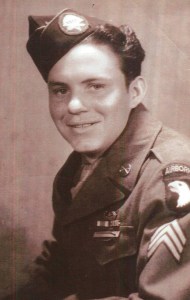
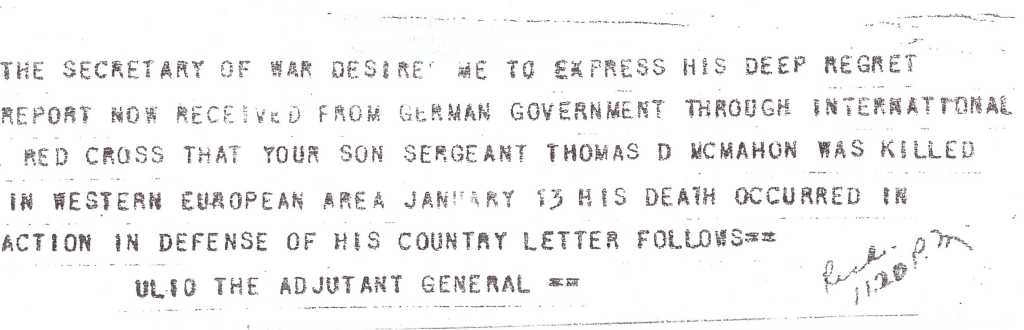
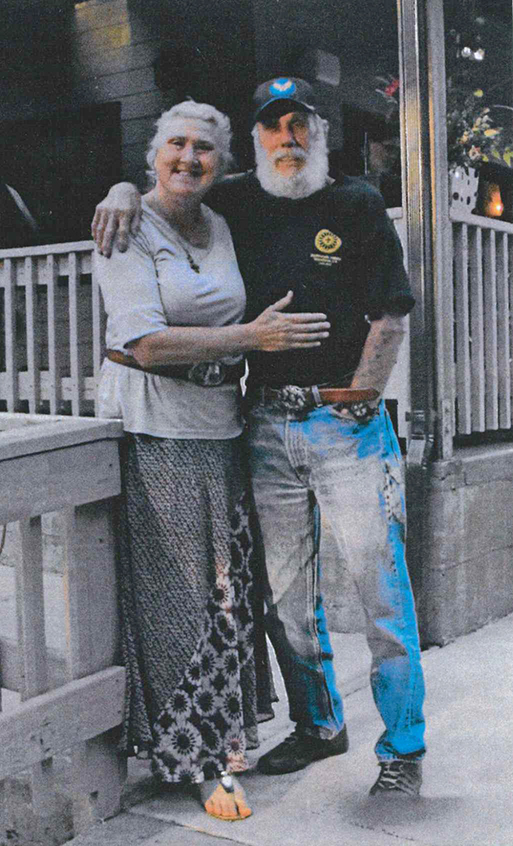
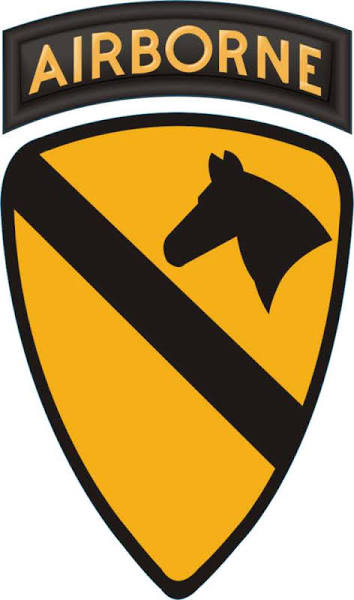


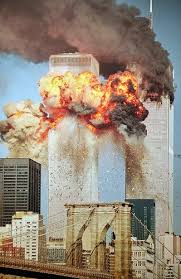

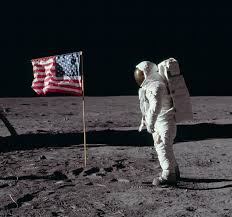





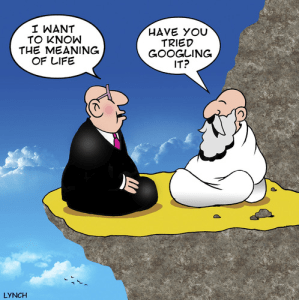

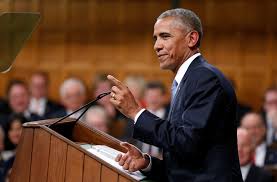
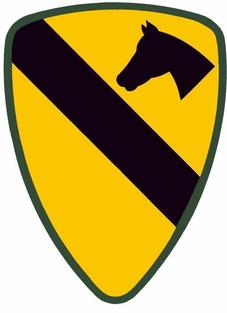



























 Swan's Song Series
You must be logged in to post a comment.